This post may contain affiliate links, which means I may receive a small commission should you decide to click that link and make a purchase. For more information please refer to the Terms & Conditions.
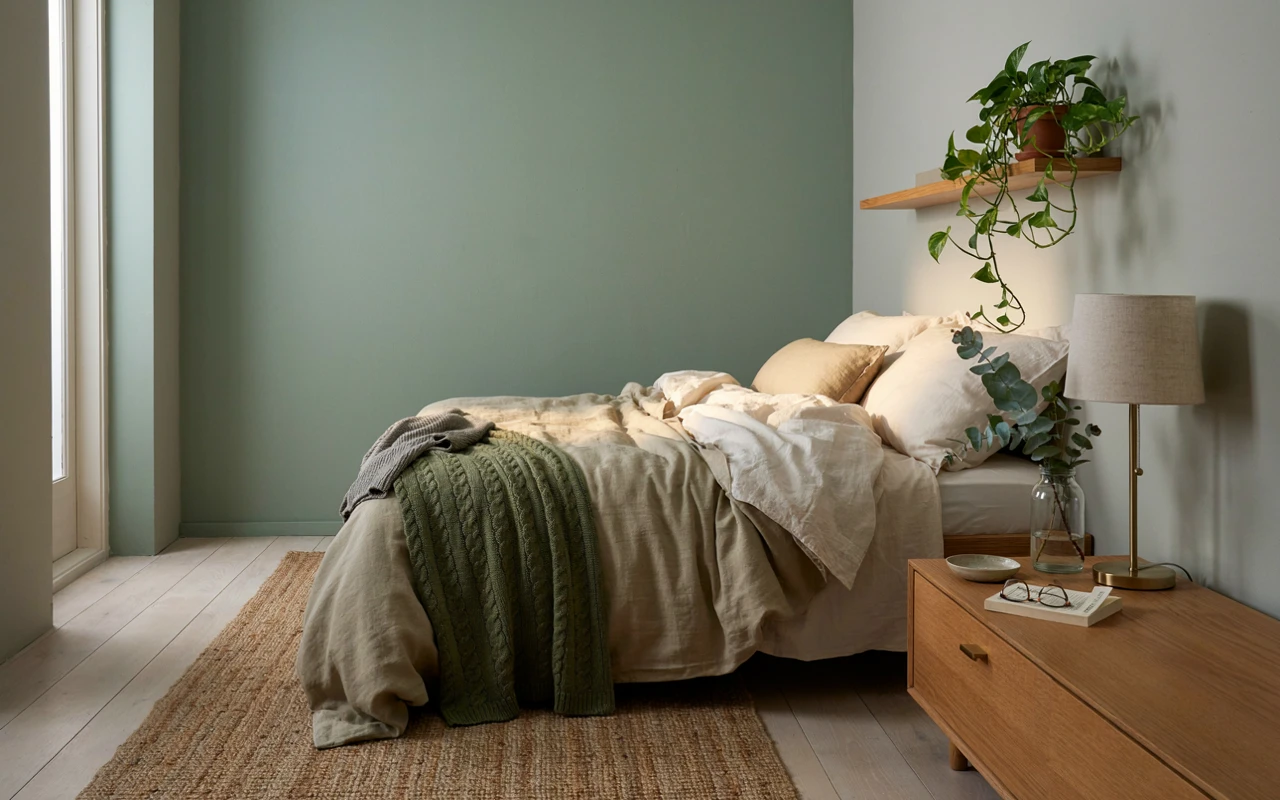
Sage green is a lovely way to make a bedroom feel cozy and stylish without changing everything.
Green aesthetic bedroom ideas can be as simple as painting one wall, adding soft green bedding, or placing a few plants around the room.
Green also works well with natural wood, cream, and brass, making it easy to create a space that feels calm and welcoming.
It looks beautiful in natural daylight and feels just as cozy when the lamps are on in the evening.
You don’t have to change everything at once, either.
Start with a few small touches and build on them as you find ideas that suit your style and budget.
Below, you’ll find 17 green aesthetic bedroom ideas to inspire your space, from a sage green accent wall to a simple jar of eucalyptus on your nightstand.
1. Paint a Sage Green Accent Wall Behind the Bed
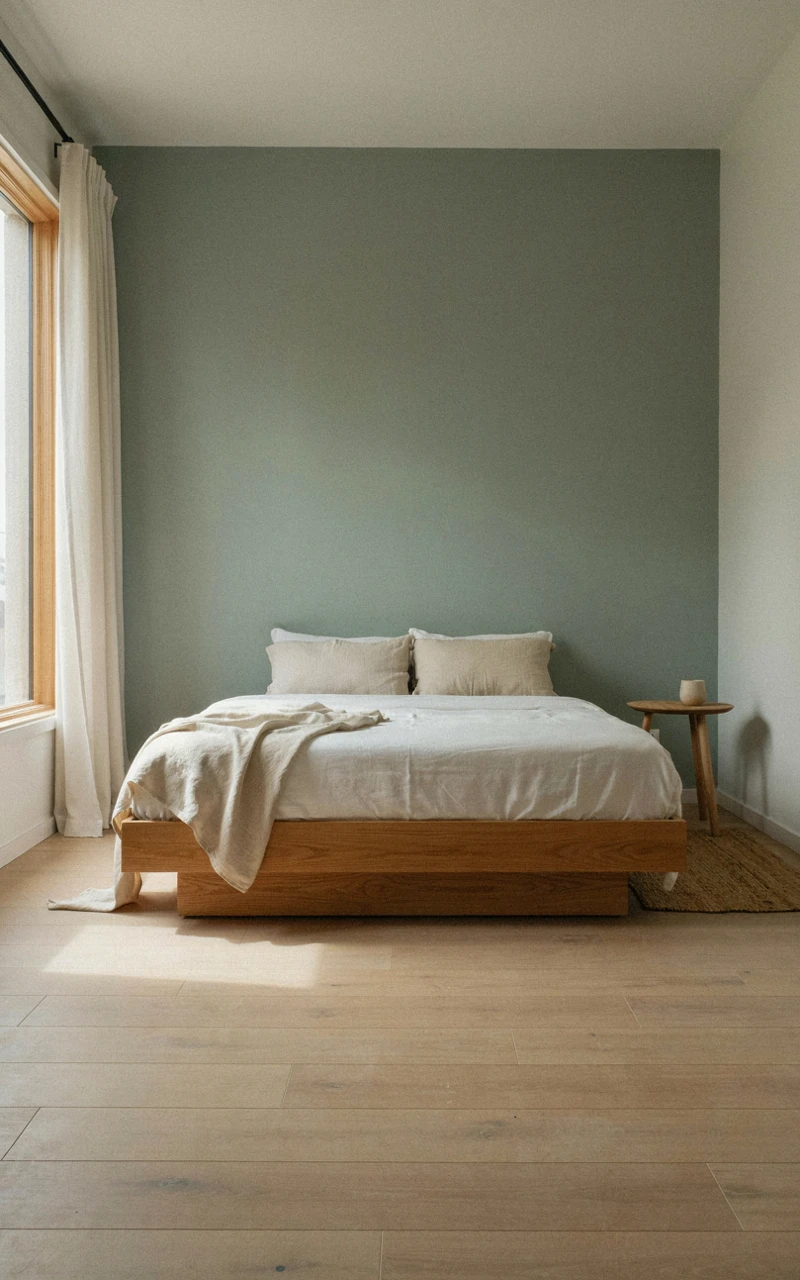
If you only try one of these sage green bedroom ideas, make it this one. The wall behind your bed is the first thing you see when you walk in, so painting just that wall changes the whole feel of the room in an afternoon.
Sage works because it’s a soft, grayish green that sits somewhere between a plant and a stone. It looks calm in daylight and warm at night, and it plays nicely with almost any bedding you already own.
One gallon of paint usually covers around 350 to 400 square feet, so a typical wall behind a bed (about 12 x 8 feet, or 3.7 x 2.4 m) only needs one gallon for two coats. A few sage shades people love are Sherwin-Williams Clary Sage and Benjamin Moore Saybrook Sage.
- Buy two or three sample pots and paint big swatches, at least 2 x 2 feet (60 x 60 cm).
- Look at them in the morning, the afternoon, and at night with your lamps on.
- Pick an eggshell finish, which wipes clean without looking shiny.
- Tape the edges where the wall meets the ceiling and the side walls before you start.
Quick tip: Sage can look a little cold in a north-facing room. If yours gets cool light, choose a sage with a touch of yellow in it instead of blue.
2. Go Moody With a Dark Green Bedroom
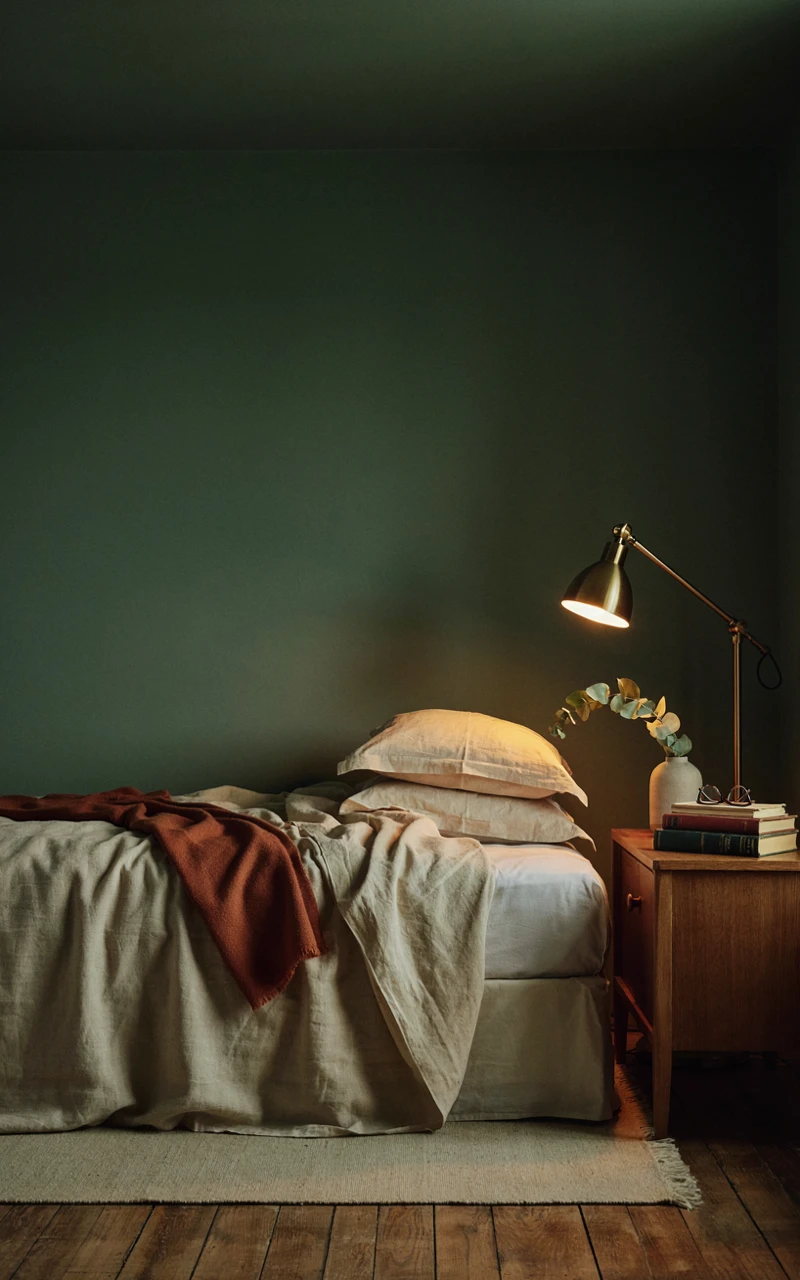
A dark green bedroom feels like being tucked into a forest at night. Deep shades like forest, hunter, and bottle green wrap around you, which is exactly what you want in the room where you sleep.
People worry that dark paint will make a bedroom feel tiny. In my experience, the opposite often happens, because the corners seem to fade away and the walls stop drawing your eye.
The trick is balance. Pair the dark walls with lighter bedding in cream, oatmeal, or soft white so the bed stands out instead of disappearing into the wall.
- Choose a green with warm, yellowish undertones so it doesn’t look gray or cold at night.
- Go with a matte or flat finish, which hides little bumps and makes the color look richer.
- Add at least two lamps, since overhead lights can make dark walls look flat.
- Use warm wood and brass to keep the room from feeling heavy.
If painting every wall feels like too much, start with the wall behind the bed and live with it for a month. You’ll know pretty quickly whether you want to keep going around the room.
3. Layer Sage and Olive Linen Bedding
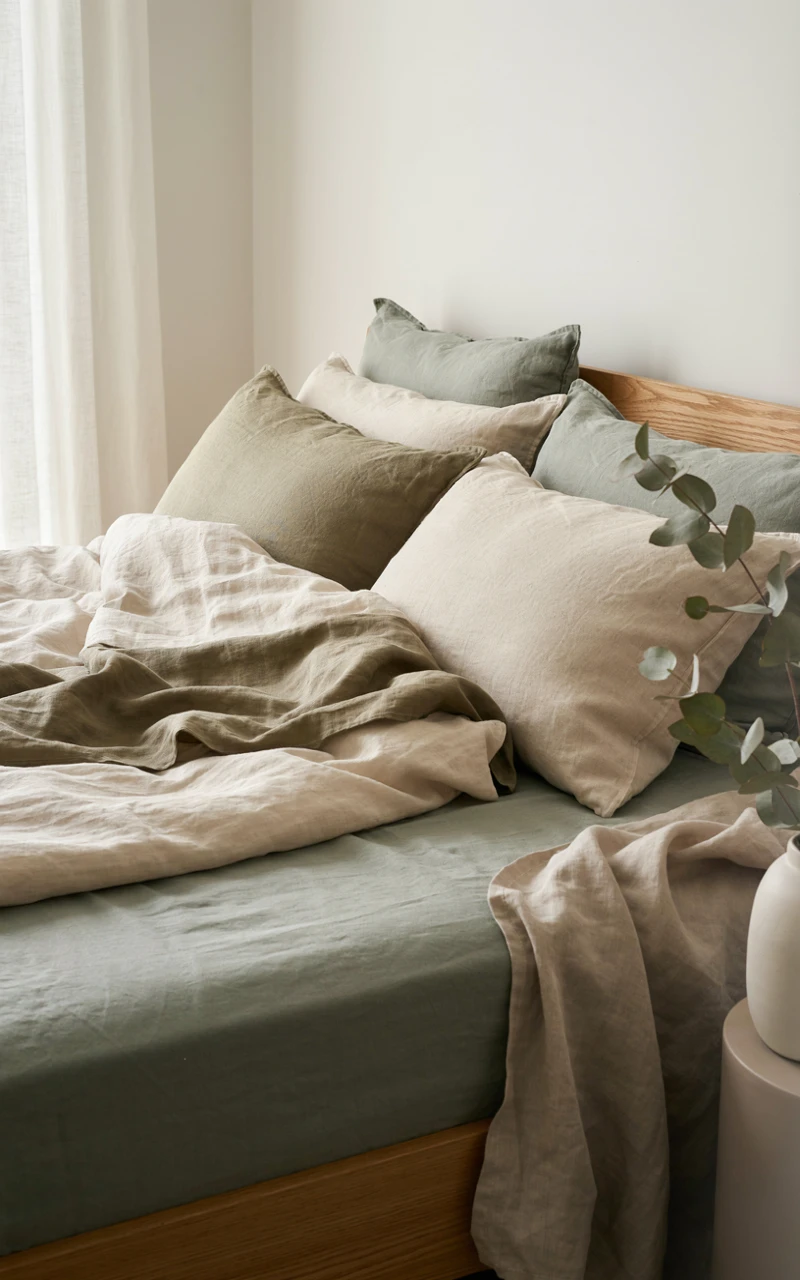
Your bed is the biggest thing in the room, so changing the bedding is one of the fastest ways to get a green bedroom aesthetic without picking up a paintbrush. Sage and olive look lovely together because one is soft and light while the other is deeper and earthier.
Linen is my favorite fabric for this. It gets softer every time you wash it, it stays cool in summer, and those relaxed wrinkles make the bed look lived-in rather than stiff.
Here’s an easy way to layer it from the mattress up:
- Cream or white fitted sheet and flat sheet
- Sage linen duvet cover
- Two sleeping pillows in olive pillowcases
- Two sleeping pillows in sage or cream pillowcases in front
- One small accent cushion in a deeper green or a soft stripe
Linen bedding can be pricey, so you don’t need to buy the whole set at once. Start with a pair of olive pillowcases and add the duvet cover later.
To care for it, wash linen in cool or warm water on a gentle cycle and tumble dry on low. Pull it out while it’s still a little damp and let it finish drying on the bed to keep it soft.
4. Add a Green Velvet Headboard
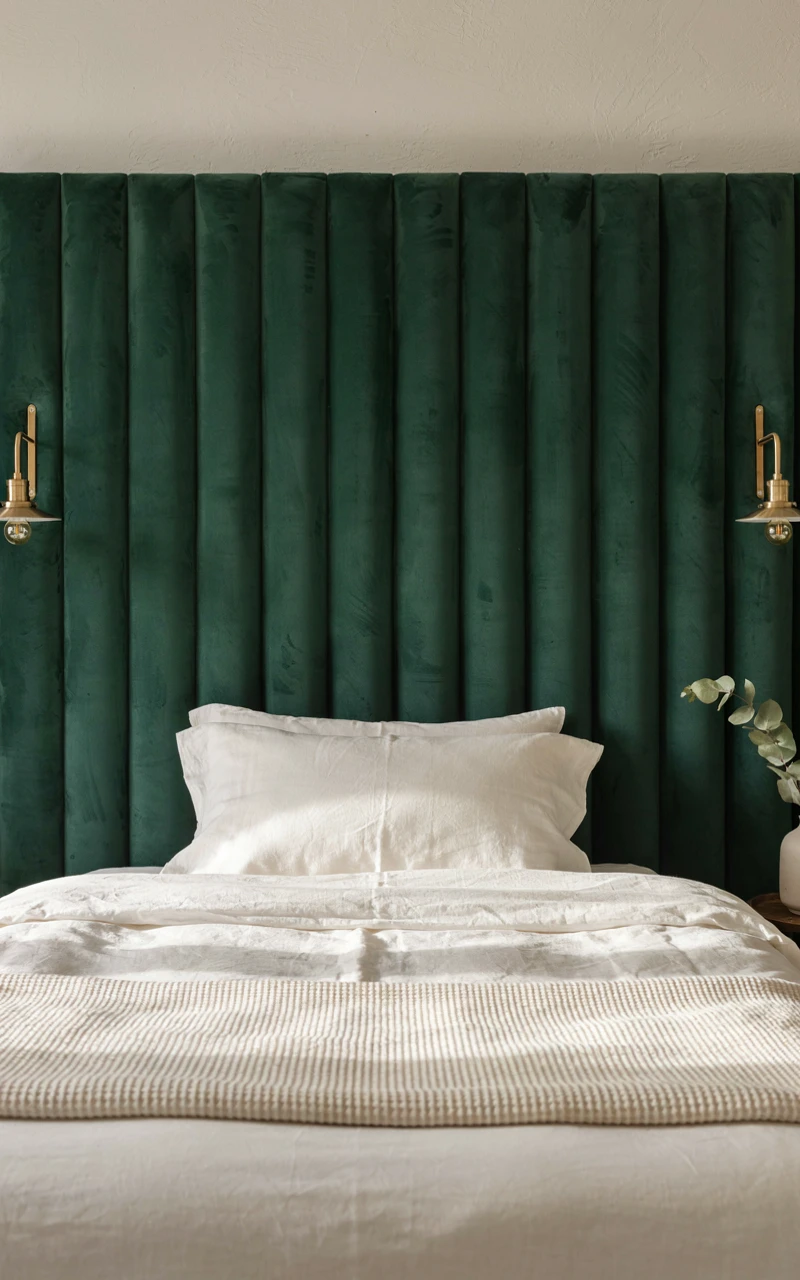
A green velvet headboard makes a bed feel like something from a boutique hotel. Velvet catches the light in a way flat fabric doesn’t, so the green looks deeper in some spots and lighter in others.
It also makes reading in bed so much nicer. Leaning back against soft velvet beats a cold wall or a hard wooden frame every time.
You have three good options, depending on your budget and how handy you are:
- Buy one: Many stores sell wall-mounted or bed-frame headboards in emerald, olive, and sage velvet.
- Use a slipcover: Stretch-on velvet covers fit over an old upholstered headboard and cost far less.
- Make one: Cut plywood slightly wider than your bed, glue on 2 inch (5 cm) foam, wrap it in batting and velvet, and staple the fabric tight on the back.
A queen bed is 60 inches (152 cm) wide, so a homemade headboard around 62 to 64 inches (157 to 163 cm) wide looks right. Mount it so the top sits about 48 to 60 inches (122 to 152 cm) off the floor.
To keep velvet looking fresh, run the upholstery brush of your vacuum over it every couple of weeks. That stops dust from settling into the soft pile.
5. Hang Olive Green Linen Curtains
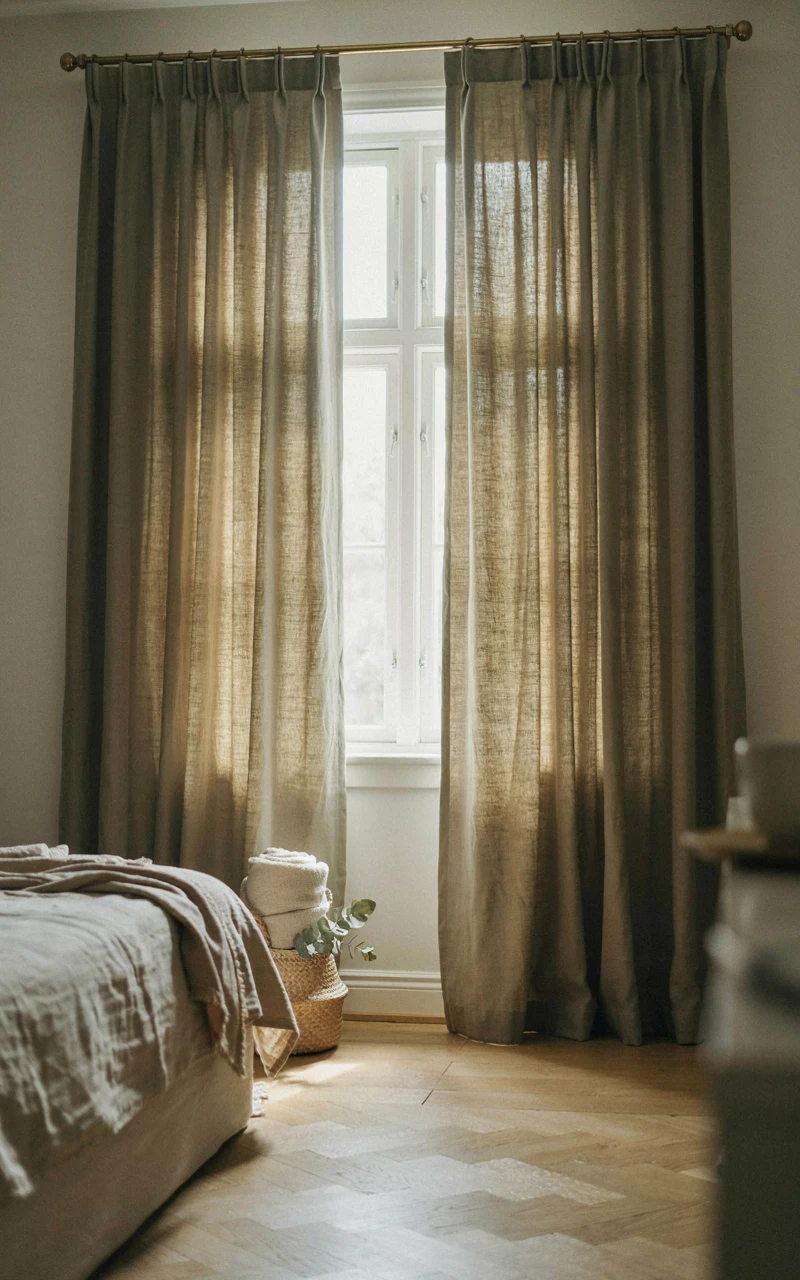
Curtains are a great way to bring in a big block of green if you’re renting or not ready to paint. Olive linen looks good against white walls, sage walls, and even dark green walls, so it’s hard to get wrong.
The way you hang them matters as much as the color. When curtains hang high and wide, your window looks bigger and your ceiling looks taller.
- Mount the rod 4 to 6 inches (10 to 15 cm) above the window frame, or even closer to the ceiling.
- Let the rod extend 8 to 12 inches (20 to 30 cm) past the frame on each side.
- Choose a length that just kisses the floor, not one that stops short in the middle of the wall.
- Pick two panels that together are about twice the width of your window so they look full when closed.
Unlined linen lets soft green light filter through during the day, which feels lovely. If you’re a light sleeper, look for curtains with a blackout lining, or hang a plain blackout panel behind your olive ones.
A simple wooden or brass rod finishes the look. Both warm up olive green beautifully.
6. Line the Windowsill With Easy Houseplants
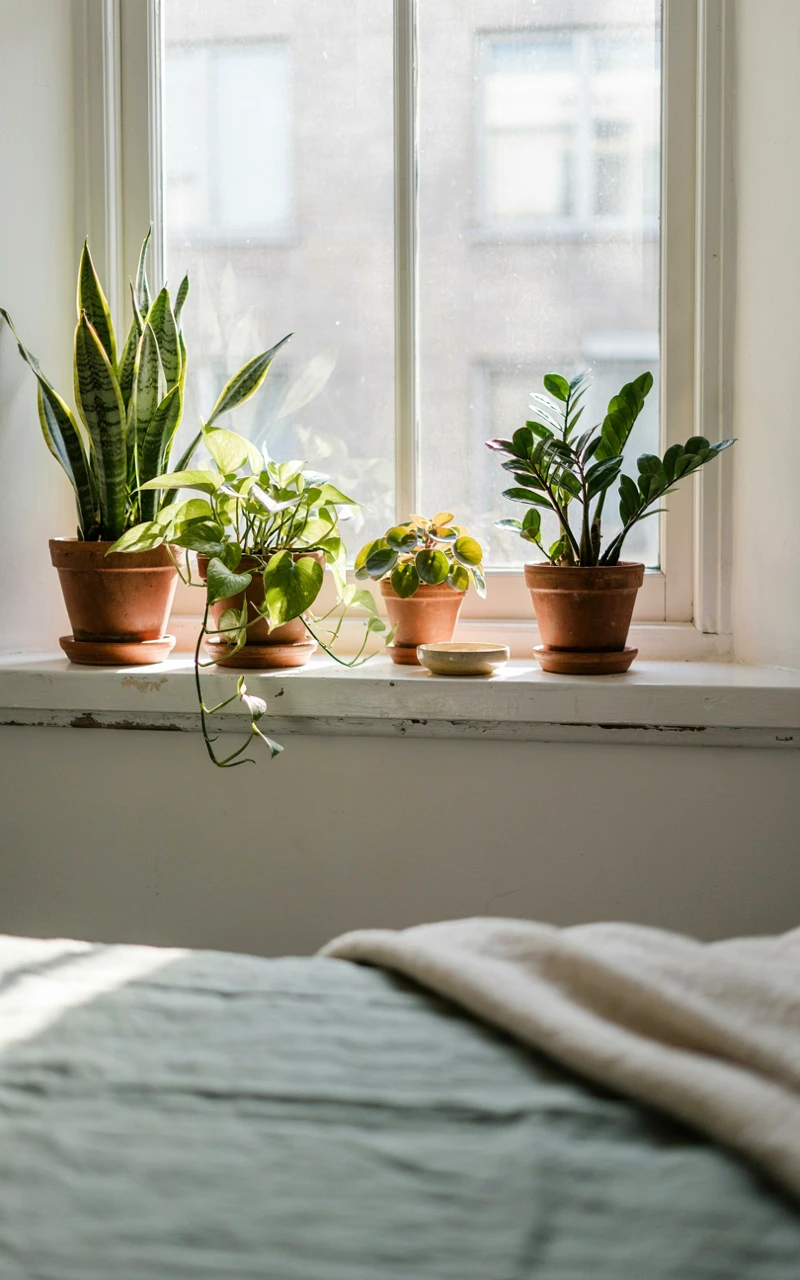
Real plants are the most natural way to add green to a bedroom. A row of small pots on the windowsill looks pretty, gives you something to care for, and makes the room feel fresh.
Stick to easy plants that forgive a missed watering. Here are a few I’ve had luck with:
| Plant | Light | Watering | Safe for cats and dogs? |
|---|---|---|---|
| Pothos | Low to bright, indirect | When the top inch of soil is dry | No |
| Snake plant | Low to bright | Every 2 to 3 weeks | No |
| Spider plant | Bright, indirect | About once a week | Yes |
| Peperomia | Medium, indirect | When the soil is mostly dry | Yes |
If you have pets, check any plant against the ASPCA’s list of toxic and non-toxic plants before you buy it. Pothos and snake plants are both on the toxic list, while spider plants and peperomia are considered safe.
Use matching pots in terracotta or cream so the windowsill looks tidy rather than random. If you want even more ideas, I shared a whole post on greenery bedroom ideas with plants that do well in different kinds of light.
7. Try a Green Botanical Wallpaper
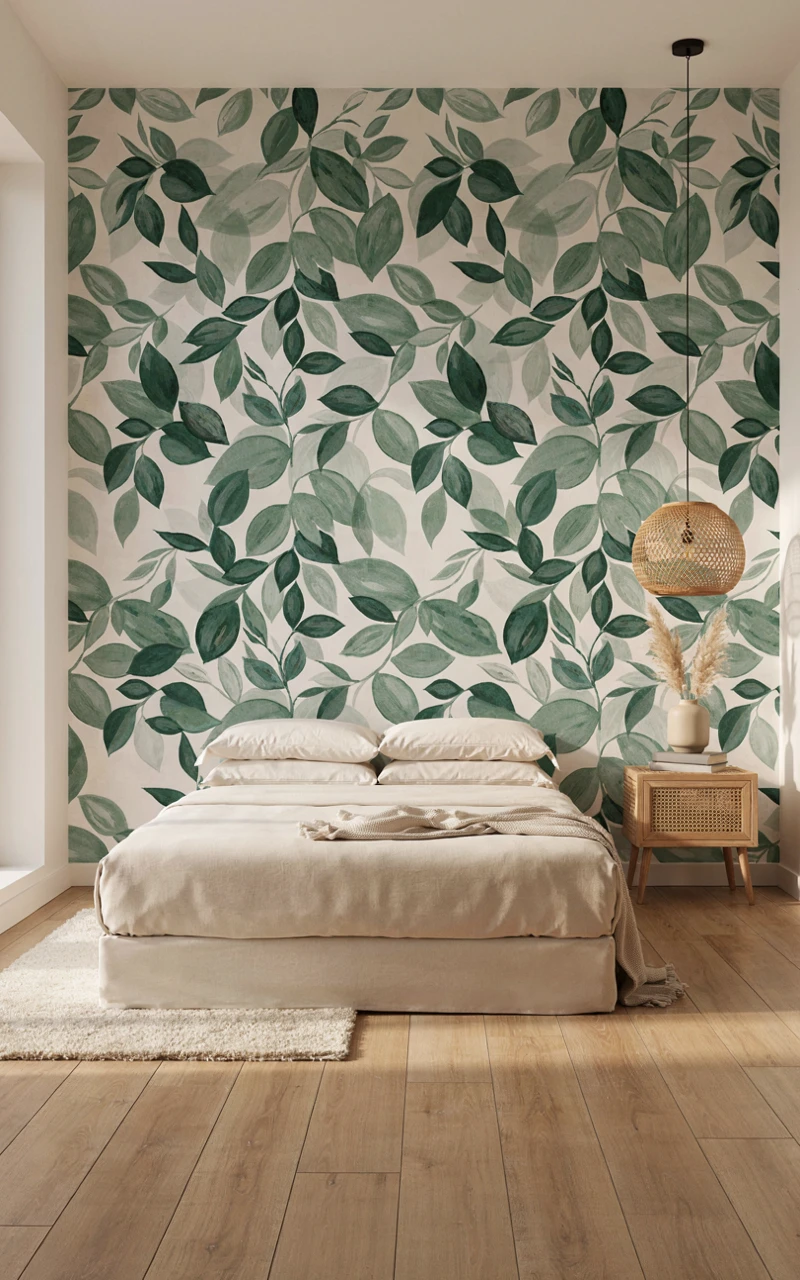
Botanical wallpaper is like bringing a whole garden onto one wall. Big leaves, delicate ferns, and climbing vines all look amazing in green, and they give the room a bit of personality that paint alone can’t.
If you’re renting, look for peel-and-stick wallpaper. It goes up without paste and comes off without damaging the wall, which makes it perfect for trying a bold pattern without a big commitment.
You don’t have to cover the whole room to get the effect. Here are a few places where botanical wallpaper looks especially good:
- The wall behind your bed
- The inside of a closet, so you get a happy surprise every time you open it
- The back panel of an open bookcase
- A small nook or the wall beside a reading chair
Always order one extra roll. Patterns have to line up from strip to strip, and that matching uses up more paper than you’d expect.
Keep the rest of the room fairly quiet if you go with a busy print. Plain bedding in sage or cream and simple curtains let the wallpaper be the star instead of fighting with everything else.
8. Lay a Green Rug Under the Bed
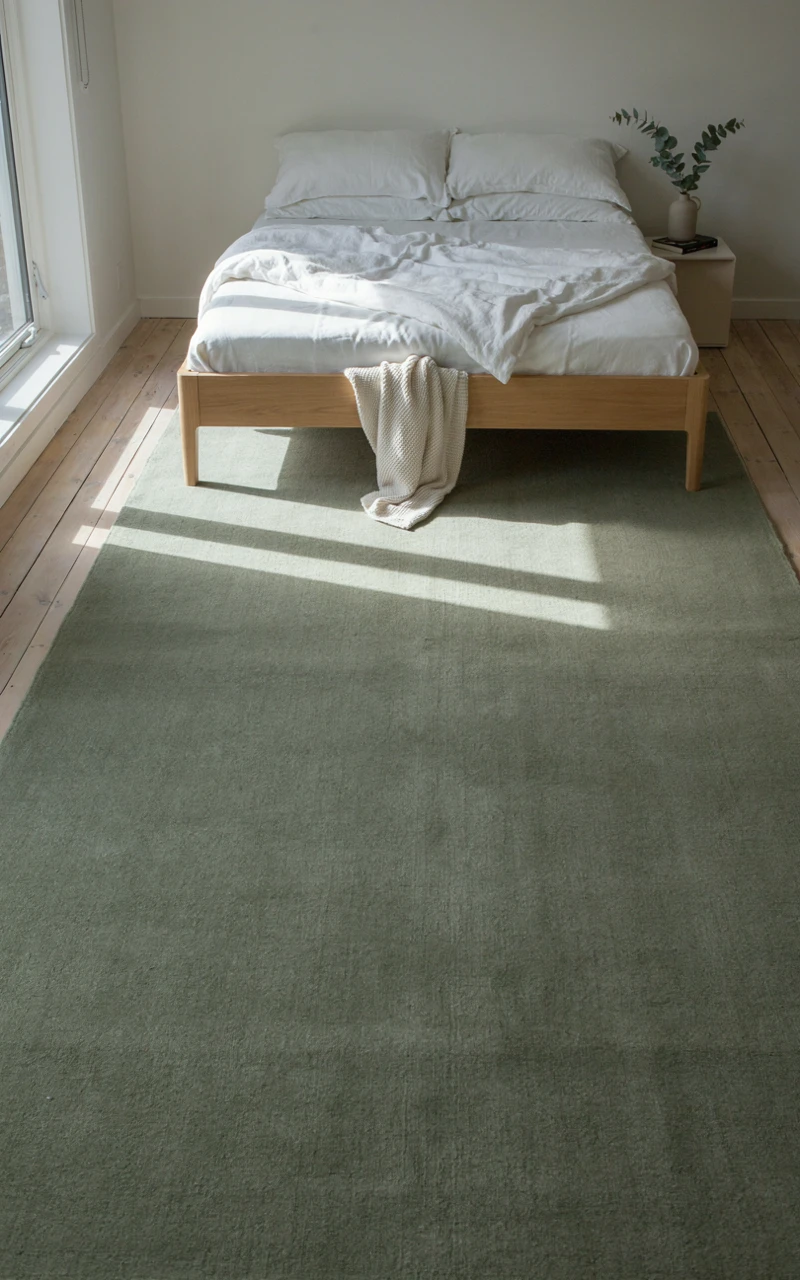
A green rug grounds the bed and gives your feet something soft to land on in the morning. It’s also a sneaky way to add green if your walls and bedding are neutral.
Faded, vintage-style rugs in moss and olive tones are my favorite. They have a worn look that hides dust and pet hair, and they make a new room feel like it’s been loved for years.
Getting the size right makes a big difference. A rug that’s too small looks like a bath mat floating under the bed.
| Bed size | Rug size | How to place it |
|---|---|---|
| Twin | 5 x 8 feet (150 x 240 cm) | Under the bottom two-thirds of the bed |
| Full or queen | 8 x 10 feet (240 x 300 cm) | Leave 18 to 24 inches (45 to 60 cm) showing on each side |
| King | 9 x 12 feet (270 x 365 cm) | Leave 18 to 24 inches (45 to 60 cm) showing on each side |
Wool rugs feel soft, last a long time, and resist stains well. Low-pile or flat-woven rugs are easier to vacuum and won’t trip you up on the way to the bathroom at night.
Add a rug pad underneath so the rug stays put. It also makes thinner rugs feel a lot cushier.
9. Paint an Old Dresser Forest Green
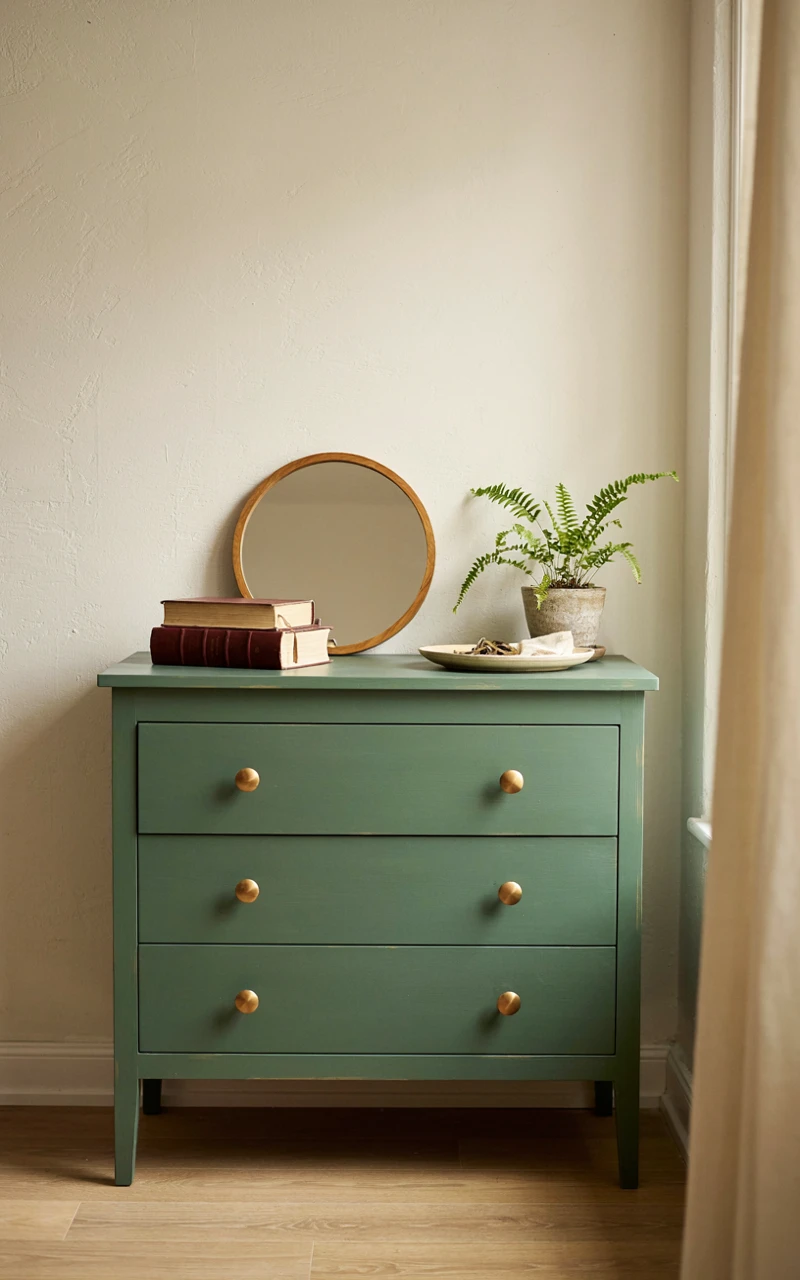
A forest green dresser is one of my favorite budget projects. You can find solid wood dressers at thrift stores and yard sales for very little money, and a can of paint turns them into something that looks custom.
Forest green is deep enough to feel cozy but not as dramatic as painting the walls. It looks especially good with brass knobs and a lamp on top.
Here’s the basic process I follow:
- Take out the drawers and remove all the hardware.
- Clean everything with warm soapy water and let it dry.
- Lightly sand the surface so the primer can grip.
- Wipe off the dust and brush on a coat of primer.
- Paint two thin coats of forest green, letting each dry fully.
- Seal the top with a clear water-based topcoat to protect it from scratches.
- Add new brass or wooden knobs.
One important safety note: furniture painted before 1978 may have lead paint. The EPA’s lead information page explains how to test for it, and if the test comes back positive, skip the sanding and find a different piece.
Give the paint a few days to cure before you load the drawers back up. That keeps the finish from sticking or scuffing.
10. Pair Green Walls With Warm Wood Furniture
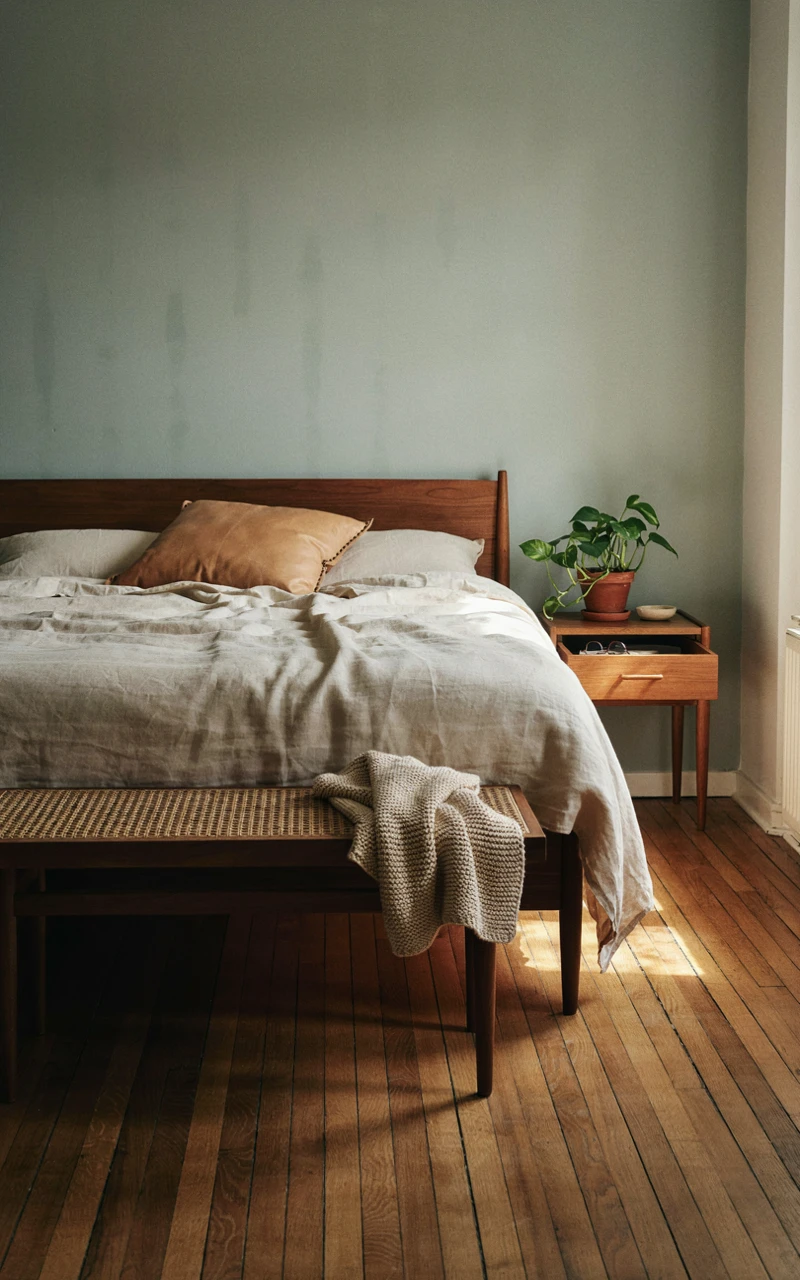
Green and wood go together because you see them together outside all the time. Think about tree trunks and leaves, or a forest floor covered in moss.
That’s why green walls look so good next to oak nightstands, a walnut dresser, or a pine bed frame. The wood keeps the green from feeling cold, and the green makes the wood look richer.
You can mix different wood tones, but it helps to have one that leads. Here’s an easy way to think about it:
- Light woods like oak, ash, and pine feel fresh and relaxed next to sage.
- Medium woods like teak and cherry look warm and a little retro with olive.
- Dark woods like walnut look rich and moody against dark green.
- Rattan and cane add a light, beachy feel to any shade of green.
Pick your main wood for the biggest pieces, like the bed and dresser. Then use one other tone in smaller things, like a picture frame or a bedside stool, so it looks like a choice instead of an accident.
You probably already own some wood furniture, so this idea might cost nothing at all. Try moving a wooden chair or bench into the bedroom and see how it looks against the green.
11. Add Brass Touches Against Green
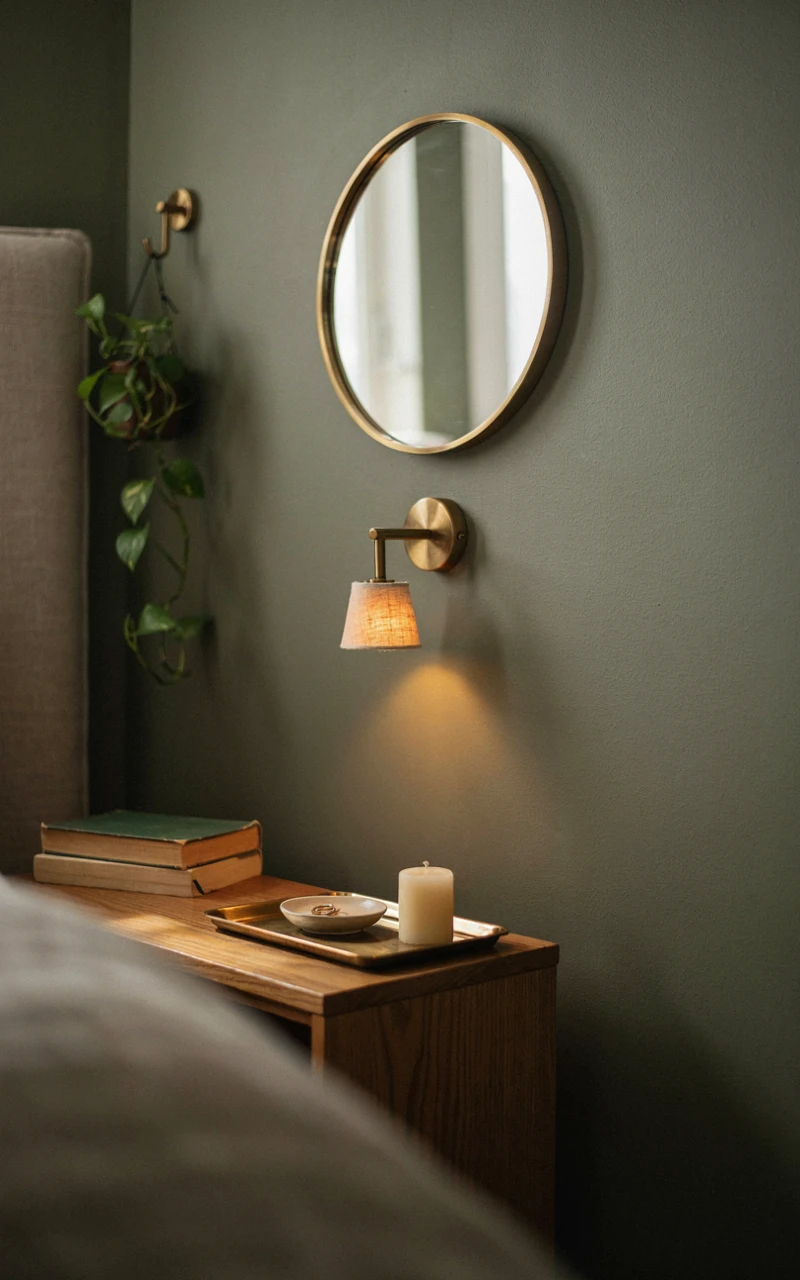
Brass is like jewelry for a green bedroom. Its warm gold color pops against sage, olive, and forest green, and just a few small pieces make the room look finished.
You don’t need much. Three to five brass touches spread around the room is plenty, and any more than that can start to look busy.
Some easy places to add brass:
- Drawer pulls or knobs on a dresser or nightstand
- A round mirror with a thin brass frame
- A brass lamp base or reading sconce
- Candle holders or a small tray on the dresser
- A curtain rod with brass finials
Unlacquered brass will darken over time and develop a soft, aged look. I actually love that, but if you prefer shiny gold, look for lacquered brass, which keeps its glow.
Thrift stores are full of old brass candlesticks and trays. A quick polish with a soft cloth and some brass cleaner brings them right back to life.
12. Choose a Green Glass Lamp for the Nightstand
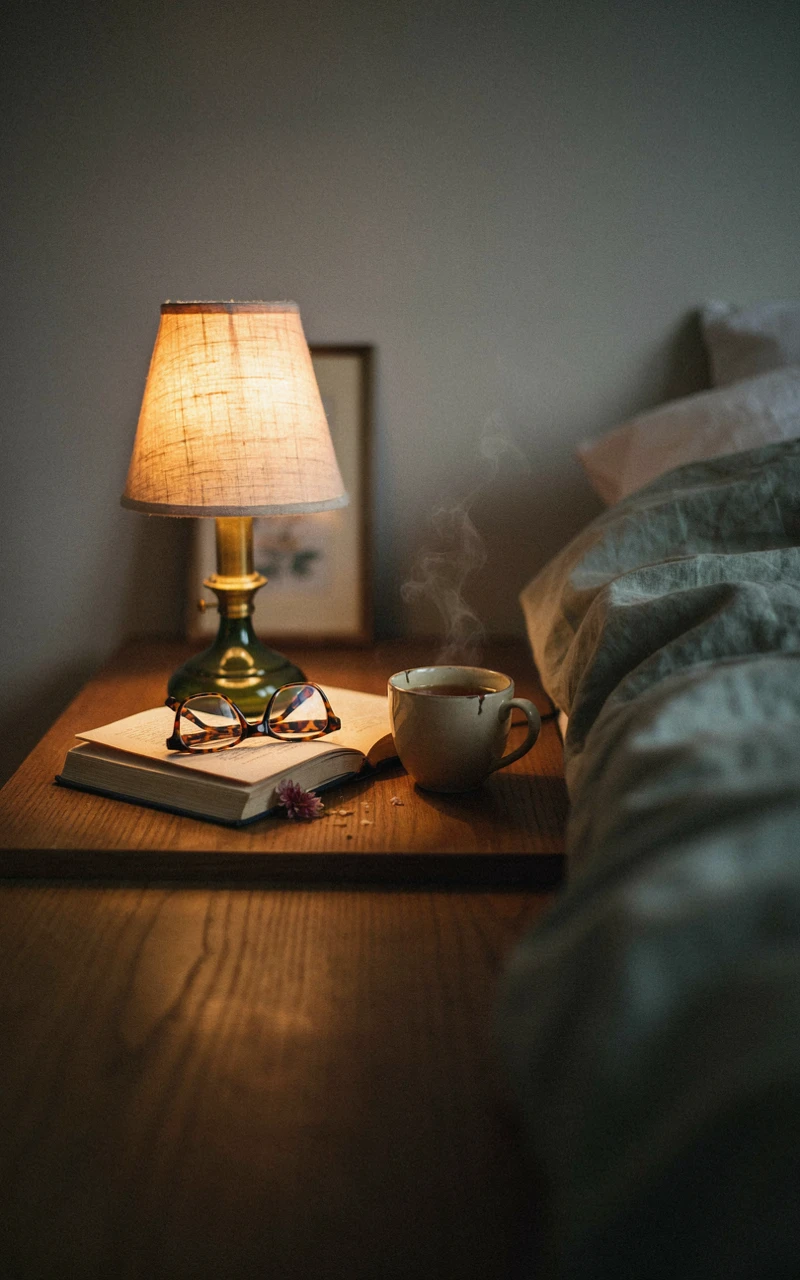
A green glass lamp is one of those little things that makes a nightstand feel special. When you switch it on, the glass glows a soft green that looks amazing against cream bedding or dark walls.
There are a few styles to look for. The classic banker’s lamp with its green shade and brass base looks a little vintage, while green glass mushroom lamps and fluted glass lamps feel softer and more modern.
Pay attention to size so the lamp actually works for reading:
- A lamp around 24 to 28 inches (60 to 70 cm) tall suits most standard nightstands.
- The bottom of the shade should land about at chin height when you’re sitting up in bed.
- Smaller mushroom lamps work best as mood lights rather than reading lights.
Use a warm white bulb around 2700K. Cool white bulbs can make green glass look harsh and bluish.
If you want two lamps, they don’t have to match exactly. A green glass lamp on one side and a brass lamp on the other looks relaxed and pulled together.
13. Hang Framed Botanical Prints Above the Bed
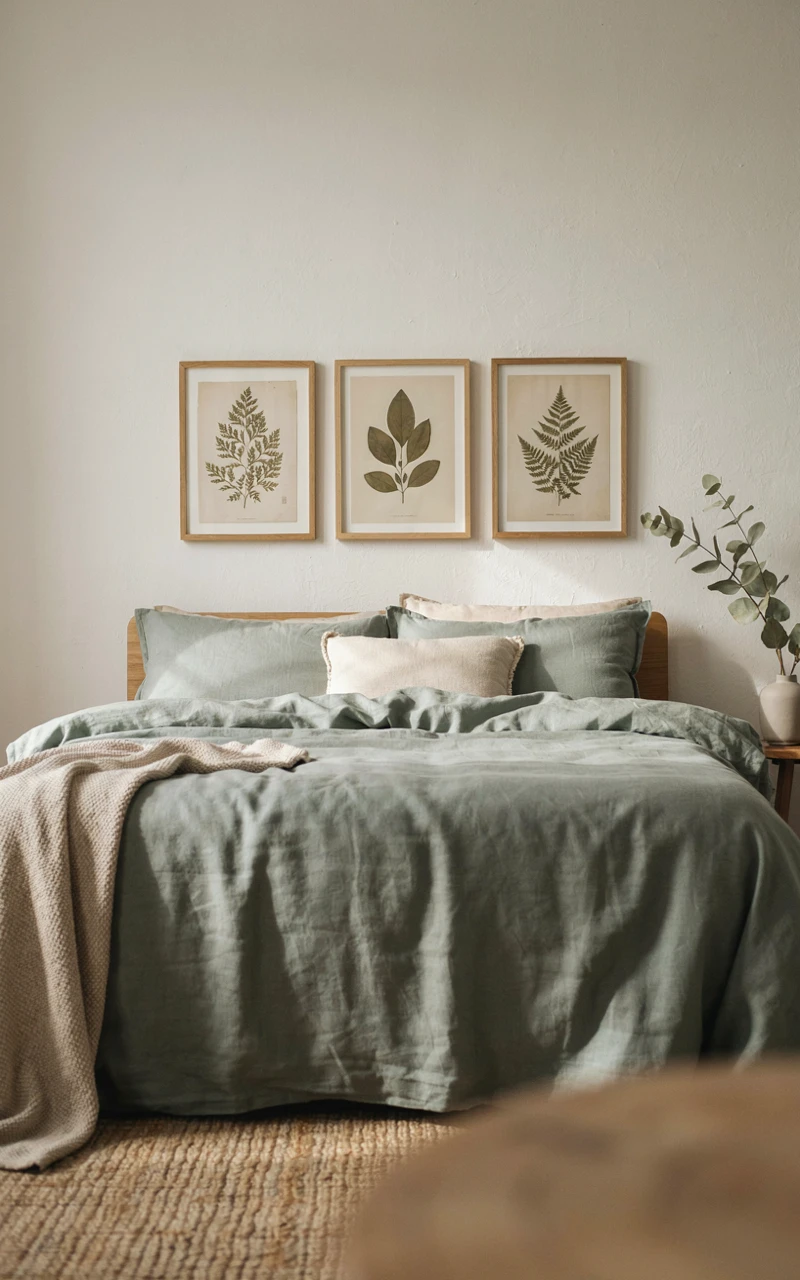
Botanical prints bring green to the wall without paint or wallpaper. Old-fashioned drawings of ferns, leaves, and wildflowers look gentle and timeless, and they suit almost any style of bedroom.
Many vintage botanical illustrations are free to download because they’re old enough to be in the public domain. You can print them at home or at a local print shop and pop them into simple frames.
Here’s how to hang them so they look right above the bed:
- Choose one large print or a set of two or three smaller ones in matching frames.
- Aim for the whole group to be about two-thirds the width of your bed.
- Hang the bottom edge 8 to 10 inches (20 to 25 cm) above the headboard.
- Leave 2 to 3 inches (5 to 8 cm) between frames in a set.
Thin wooden or brass frames look lovely with green. Add a white or cream mat around each print so the drawing has room to stand out.
If you’re renting, lightweight frames can go up with removable picture-hanging strips. Just follow the weight limit on the package so nothing slides down onto your head at night.
14. Paint the Ceiling a Soft Green
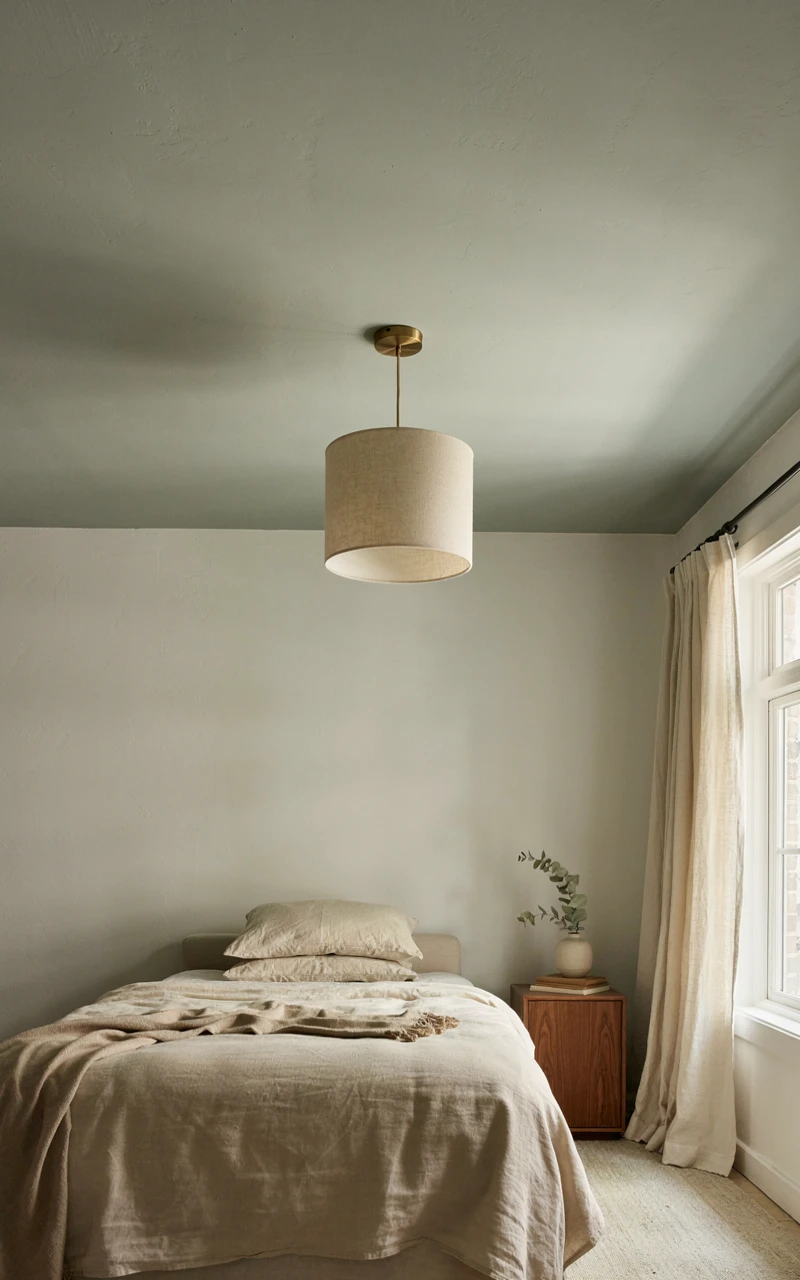
Most of us leave the ceiling plain white without a second thought. Painting it a soft green is a little unexpected, and it makes you feel like you’re lying under a canopy of leaves.
You can go two ways with it. Paint the ceiling the same green as the walls for a cozy, wrapped-up feel, or choose a lighter version of your wall color so the room still feels open.
Painting walls and ceiling all one shade is called color drenching, and I walked through it in detail in my post on color drenching without making your room feel smaller. It works really well in bedrooms.
- Use a flat finish on the ceiling to hide small bumps and patches.
- Get a roller with an extension pole so you’re not balancing on a ladder the whole time.
- Cut in along the edges with a small angled brush before rolling.
- Wear old clothes and a hat, because ceiling paint will drip on you.
A soft green ceiling is especially nice in a room with plain white walls. It adds color without closing the room in.
15. Toss a Chunky Green Knit Blanket on the Bed
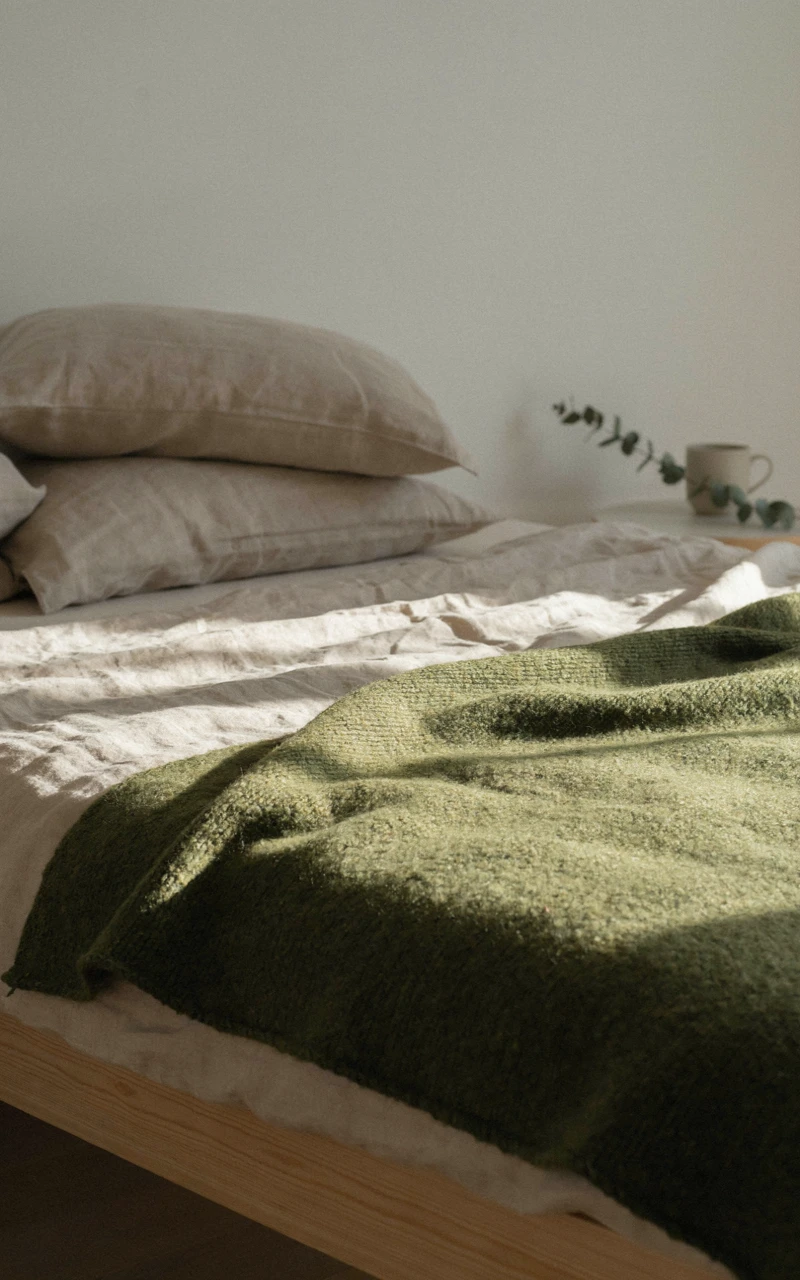
A chunky knit blanket is the easiest way to make a bed look cozy. Those big, squishy loops just beg you to curl up, and in green they add a pop of color that’s simple to change with the seasons.
You’ll mostly see two kinds. Merino wool is soft and warm but needs gentle care, while chenille or acrylic chunky knits are cheaper, don’t shed as much, and are easier to wash.
A throw around 50 x 60 inches (127 x 152 cm) is a good size for draping across the foot of a queen bed. Here are a few ways to style it:
- Fold it into thirds and lay it across the bottom of the bed.
- Drape it loosely over one corner for a relaxed look.
- Toss it over a chair or bench near the window.
For care, most chenille blankets can go in the washer on a cold, gentle cycle and lie flat to dry. Merino usually needs spot cleaning or a careful hand wash, so check the label before you get it wet.
If you like crafts, you can make one yourself with chunky yarn and just your arms. It takes an afternoon and feels so satisfying when it’s done.
16. Style the Nightstand With a Jar of Eucalyptus
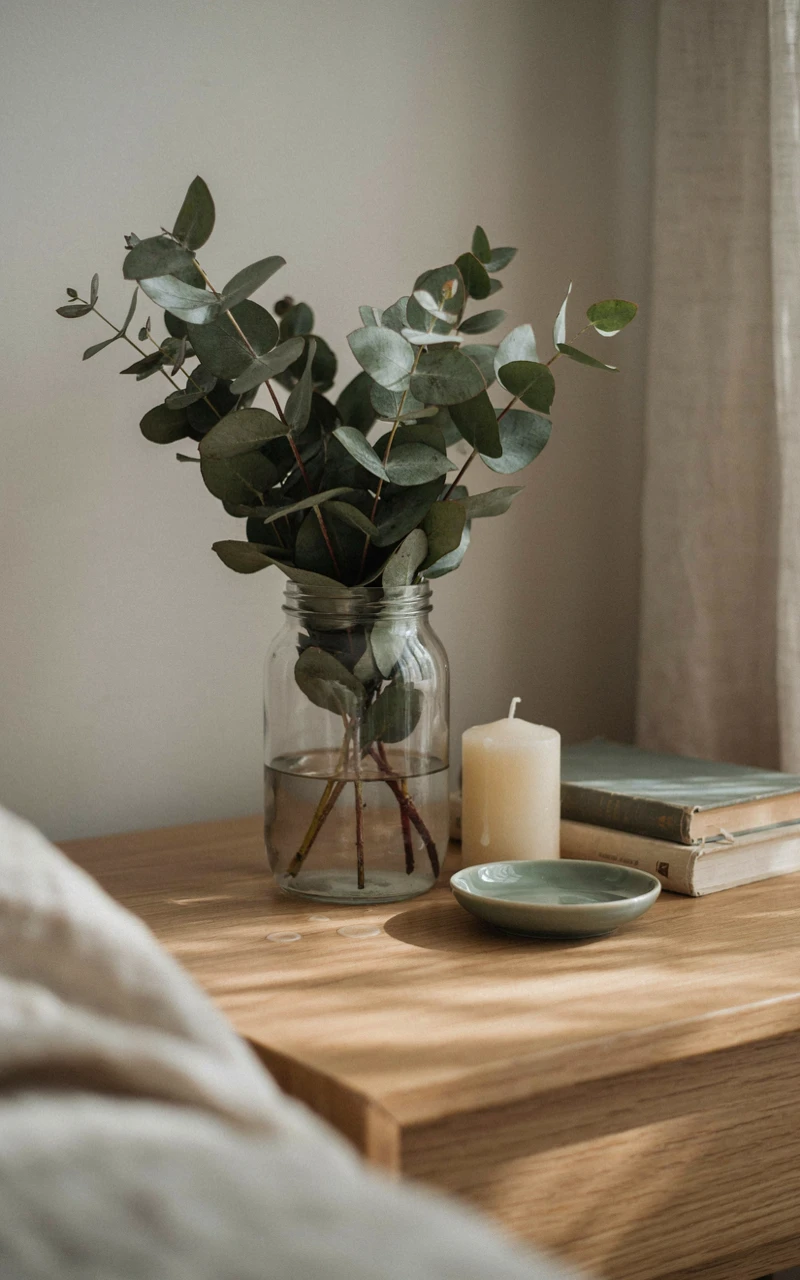
A jar of eucalyptus is the cheapest bit of aesthetic bedroom decor on this list, and it might be my favorite. The silvery green leaves look pretty, and they give off a light, fresh smell that makes the bedroom feel like a spa.
Fresh eucalyptus usually lasts two to three weeks in water. Dried or preserved eucalyptus lasts for months, which is great if you don’t want to keep buying new stems.
To keep fresh eucalyptus looking good:
- Cut about 1 inch (2.5 cm) off the stems at an angle.
- Pull off any leaves that would sit below the waterline.
- Put the stems in a clear glass jar or a stoneware vase with fresh water.
- Change the water every two to three days.
Set the jar next to your lamp and a book, and the nightstand is done. If you have extra stems, hang a small bundle from your shower head, where the steam brings out the smell.
One note for pet owners: eucalyptus is on the ASPCA’s list of plants that are toxic to cats and dogs. If your pets like to chew on things, keep it somewhere they can’t reach or go with a realistic faux bunch.
17. Mix Sage, Olive, and Cream for an Easy Green Bedroom Aesthetic
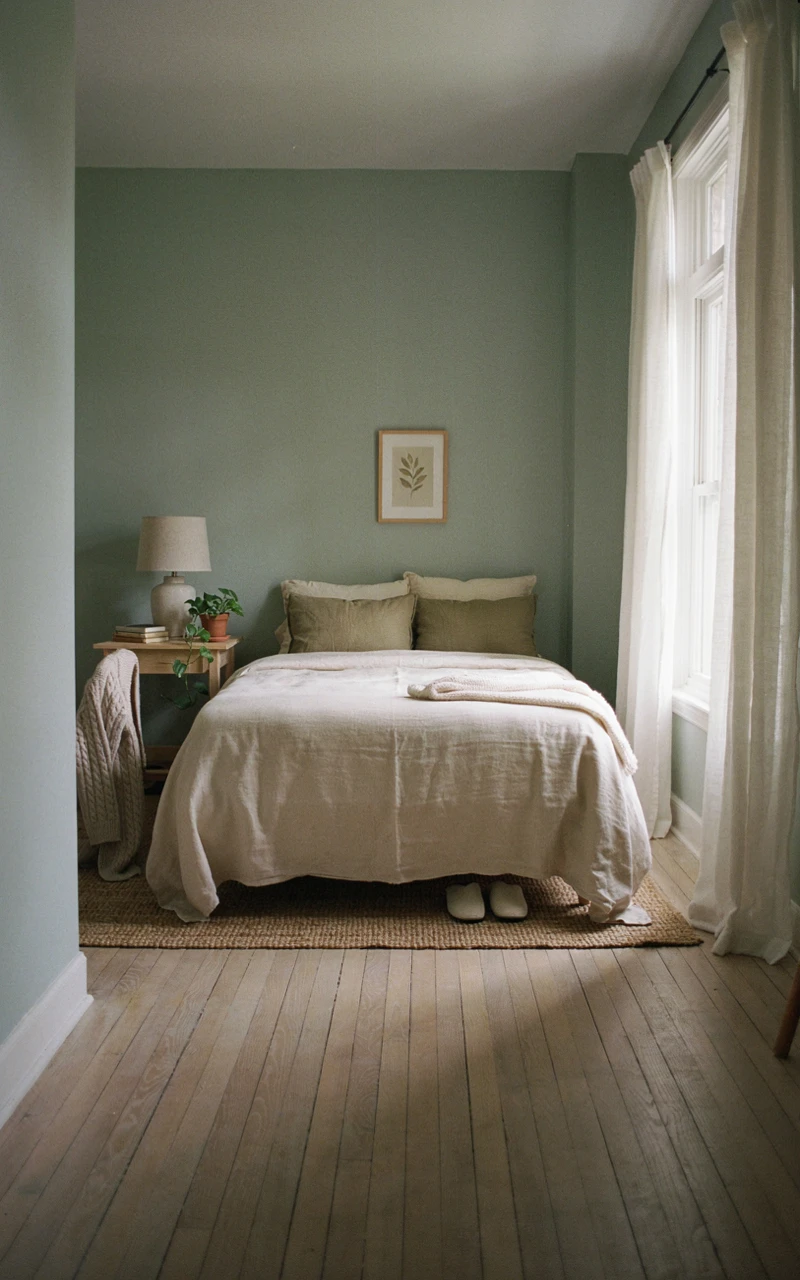
If you’re not sure where to start, this three-color mix is about as foolproof as it gets. Sage, olive, and cream look calm together, and they give you a green aesthetic bedroom that feels finished without a lot of guesswork.
An easy way to split them up is the 60-30-10 rule. Use your main color on about 60 percent of the room, your second color on 30 percent, and your accent on the last 10 percent.
| Color | How much | Where to use it |
|---|---|---|
| Cream | About 60 percent | Walls, sheets, a big rug |
| Sage | About 30 percent | Duvet cover, curtains, a painted dresser |
| Olive | About 10 percent | Pillowcases, a knit blanket, a lamp, plants |
You can flip it around too. If you love green walls, let sage take the 60 percent and use cream for the bedding, with olive as your accent.
Key takeaways:
- Pick one green to lead and keep the others as supporting colors.
- Repeat each color in at least two spots so the room looks connected.
- Add wood and brass to warm everything up.
Once you have this mix in place, every other idea on this list slots right in. That’s what makes it such a good starting point.
Final Thoughts
I started with one sage wall and a lot of doubts, and now green is the color I’m happiest waking up to. Each of these ideas came from trying something small, living with it, and adding the next thing when I was ready.
You don’t need all 17. Pick one or two that make you smile, like a new set of pillowcases or a jar of eucalyptus, and see how your bedroom feels.
A cozy bedroom can come from small, simple changes you make one weekend at a time. Trust your eye, because you know better than anyone what feels like home to you.
I’d love to hear which idea you’re trying first, so leave a comment below and tell me about your green bedroom.