This post may contain affiliate links, which means I may receive a small commission should you decide to click that link and make a purchase. For more information please refer to the Terms & Conditions.
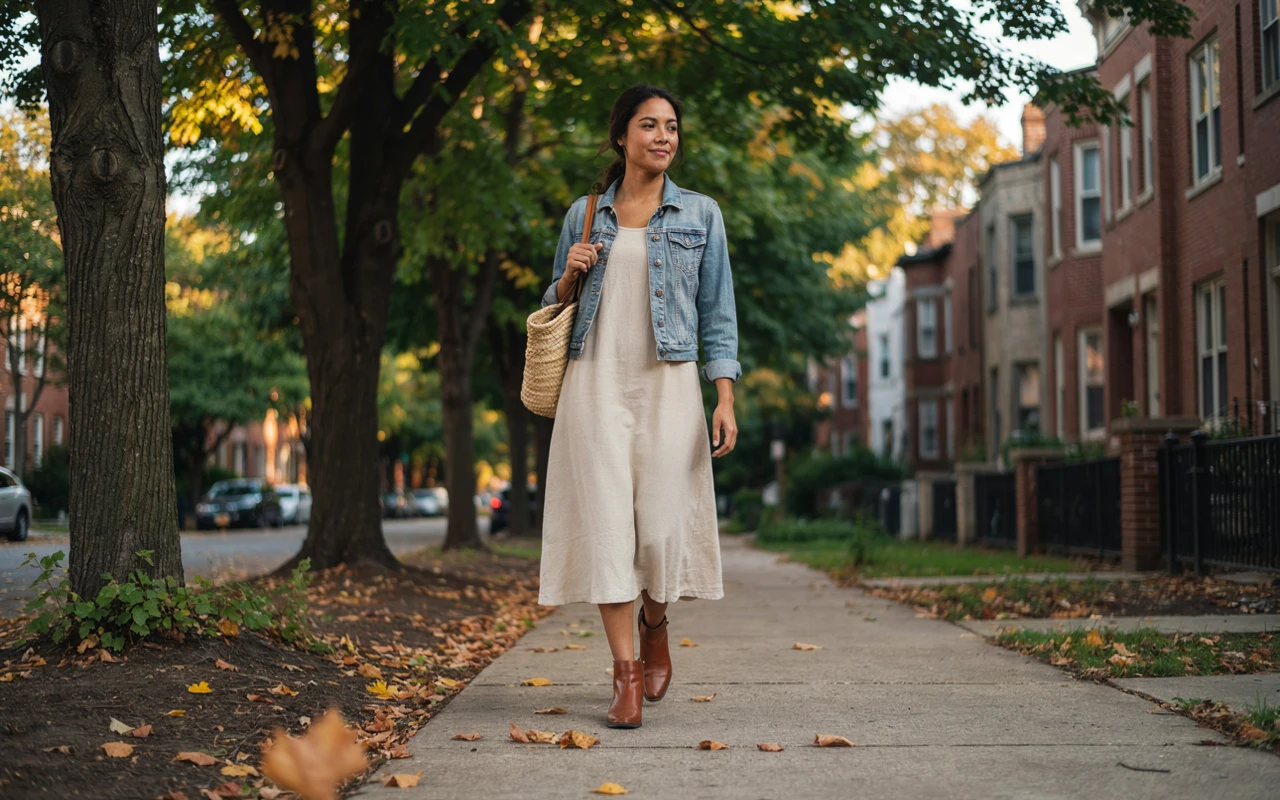
The first chilly morning in September used to catch me off guard every single year, standing in front of my closet in a sundress with goosebumps on my arms. It took me a few seasons of shivering and overspending to figure out how to create summer to fall outfits using the clothes already hanging in my closet.
Back then, I thought fall meant starting over. I’d box up every sundress and linen shirt the week after Labor Day, then head to the mall and buy sweaters I barely wore.
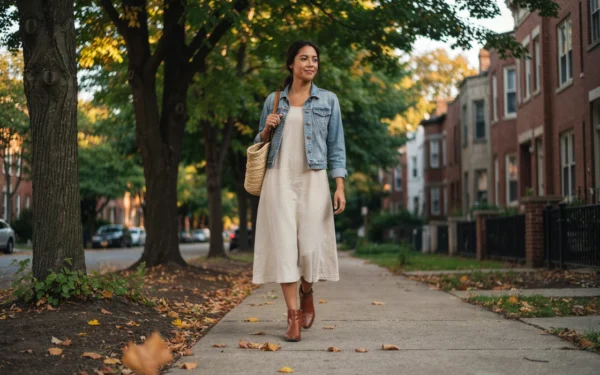
What changed things for me was noticing how many of my summer clothes still worked with one extra layer. A slip dress with a chunky cardigan, a white tee under a blazer, or linen pants with loafers instead of sandals.
Now I spend one afternoon sorting my wardrobe and buy two or three new pieces at most. My mornings are calmer, and my closet actually makes sense.
Below, you’ll find easy steps to transition your summer wardrobe into stylish summer to fall outfits you’ll want to wear, using clothes you already own without buying a whole new closet.
What You Need Before You Start
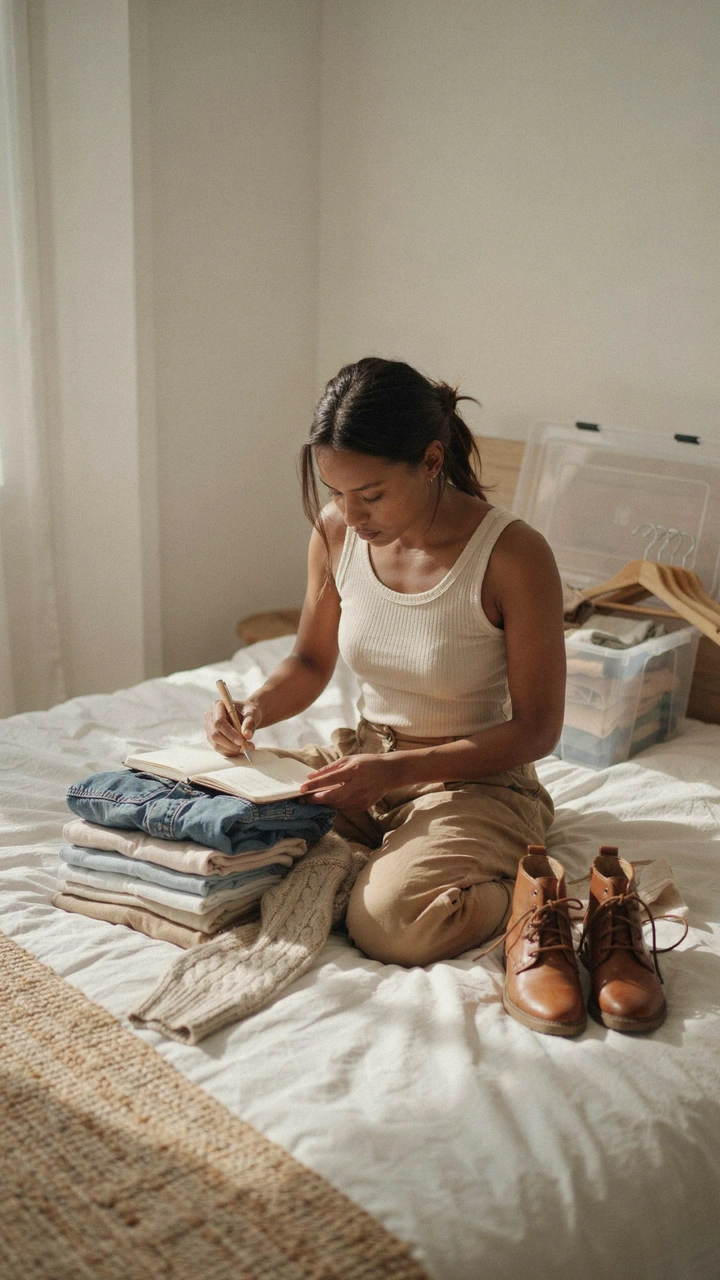
You don’t need anything fancy for this. Most of what you need is already somewhere in your home, and the rest is just a bit of time.
- Two to three free hours. A slow Saturday or Sunday afternoon works best, so you’re not rushing.
- Three laundry baskets or boxes. Label them Keep, Bridge, and Store with a sticky note or a strip of masking tape.
- A donate bag. A big shopping bag is fine for anything you didn’t wear all summer.
- A full-length mirror. You’ll want to see whole outfits, shoes included.
- Your phone. You’ll take quick photos of outfits you like so you don’t forget them.
- A notebook or the notes app on your phone. This becomes your gap list, the short list of pieces you might need to buy later.
- One or two storage bins with lids. A 64-quart (60 L) bin holds most of a summer closet.
- Cedar blocks or lavender sachets. Tuck these into your bins to keep your summer clothes smelling fresh.
- A lint roller and your usual laundry detergent. Clean clothes store much better than worn ones.
That last one matters more than you’d think. Sweat, sunscreen, and little food spots that you can’t see now can turn yellow over a few months in a bin.
Wash or dry-clean everything before it goes into storage, and follow the care tag. In the United States, most clothing has to carry one under the FTC’s Care Labeling Rule, so check the tag before you toss something in on hot.
It also helps to look at your weather for the next couple of weeks. In a lot of places, early fall mornings sit around 50°F (10°C) while afternoons climb past 70°F (21°C), and that swing is exactly why layering works so well.
Clear your bed or a big patch of floor before you begin. You’ll be spreading clothes out, and it’s much easier when you can see everything at once.
If you share a closet with someone, pick a time when you have it to yourself. Sorting goes faster when you’re not working around somebody else’s things.
The Finished Look: Your three labeled baskets sit side by side, your bin and cedar blocks are nearby, your bed is clear, and your phone is charged and ready for photos.
Key takeaway: A little setup up front saves you from stopping halfway through to hunt for a box or a bag.
Step 1: Sort Your Summer Clothes Into Keep, Bridge, and Store Piles
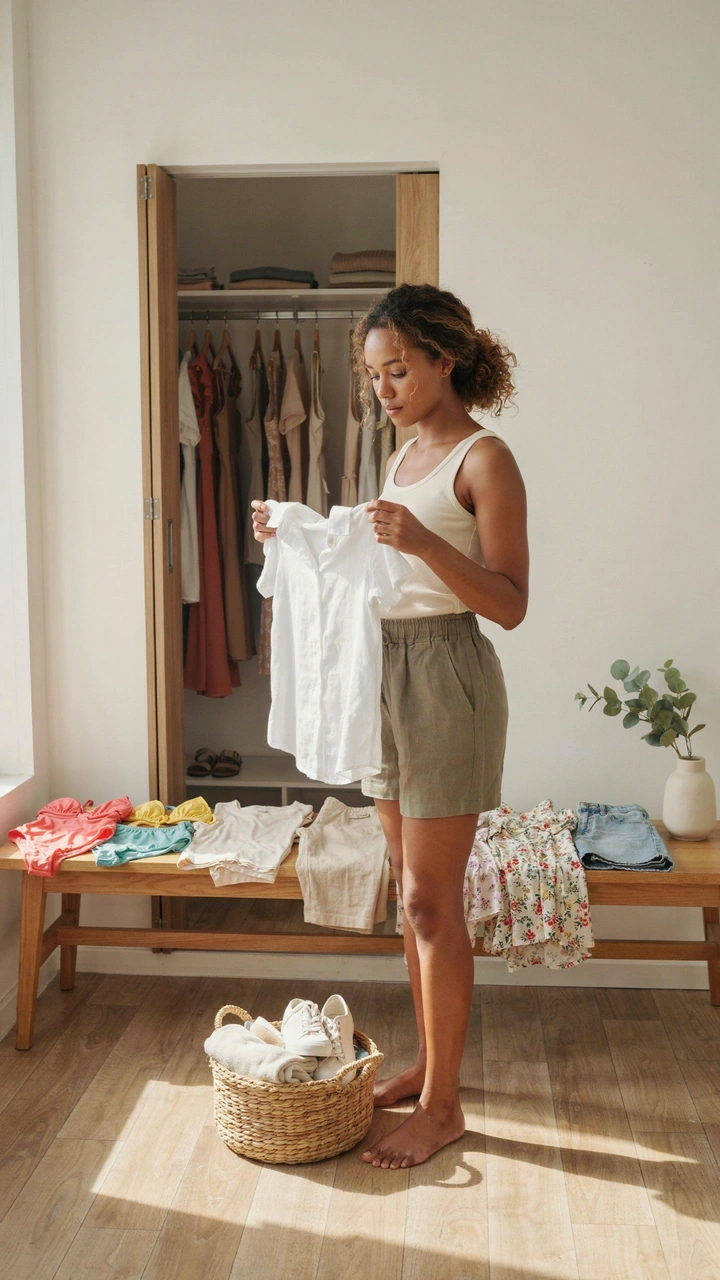
This is the step that makes everything else easier. Once your summer clothes are in three clear piles, you’ll know exactly what you’re working with.
- Take every summer piece out of your closet and drawers and lay it on your bed. Tops in one area, bottoms in another, dresses in a third.
- Pick up one piece at a time and ask yourself whether you could wear it in October with a sweater, jacket, or tights.
- Put pieces you wear all year, like jeans and plain tees, in the Keep basket.
- Put summer pieces that would work with one extra layer in the Bridge basket.
- Put pieces that only make sense on a hot day in the Store basket.
- Drop anything you didn’t wear once this summer into the donate bag.
- Try on anything you’re unsure about in front of the mirror, and give yourself no more than 30 seconds to decide.
Here’s a quick guide to help you sort without second-guessing every piece.
| Pile | What Goes In | Examples |
|---|---|---|
| Keep | Pieces you wear all year | Jeans, plain tees, a white button-down shirt, a denim jacket |
| Bridge | Summer pieces that work with one layer | Slip dresses, linen pants, sleeveless tops, midi skirts, dark floral dresses |
| Store | Pieces that only work in the heat | Swimsuits, very short shorts, strappy sandals, see-through cover-ups, neon tops |
Fabric is a big clue when you’re stuck. Heavier cotton, denim, and silky slip fabrics bridge into fall easily, while thin gauzy fabrics often look out of place once you add boots.
Color helps too. A navy, black, or deep green summer dress works in fall right away, while a bright yellow eyelet dress might feel more like July.
Don’t overthink the Bridge pile. If you can picture it with a cardigan and closed shoes, it belongs there.
Once the sorting is done, wash everything in the Store basket. Fold it, pack it into your bin with a cedar block or two, and slide the bin under your bed or onto a high shelf.
Take the donate bag straight to your car. If it sits by the door for a week, you’ll start pulling things back out.
The Finished Look: Your Store bin is packed and put away, your donate bag is out of the house, and your bed holds only two piles, Keep and Bridge. Those two piles are your fall closet.
Key takeaway: Most people find that their Bridge pile is bigger than expected, which means fewer things to buy later.
Step 2: Choose an Autumn Style Color Palette From What You Already Own
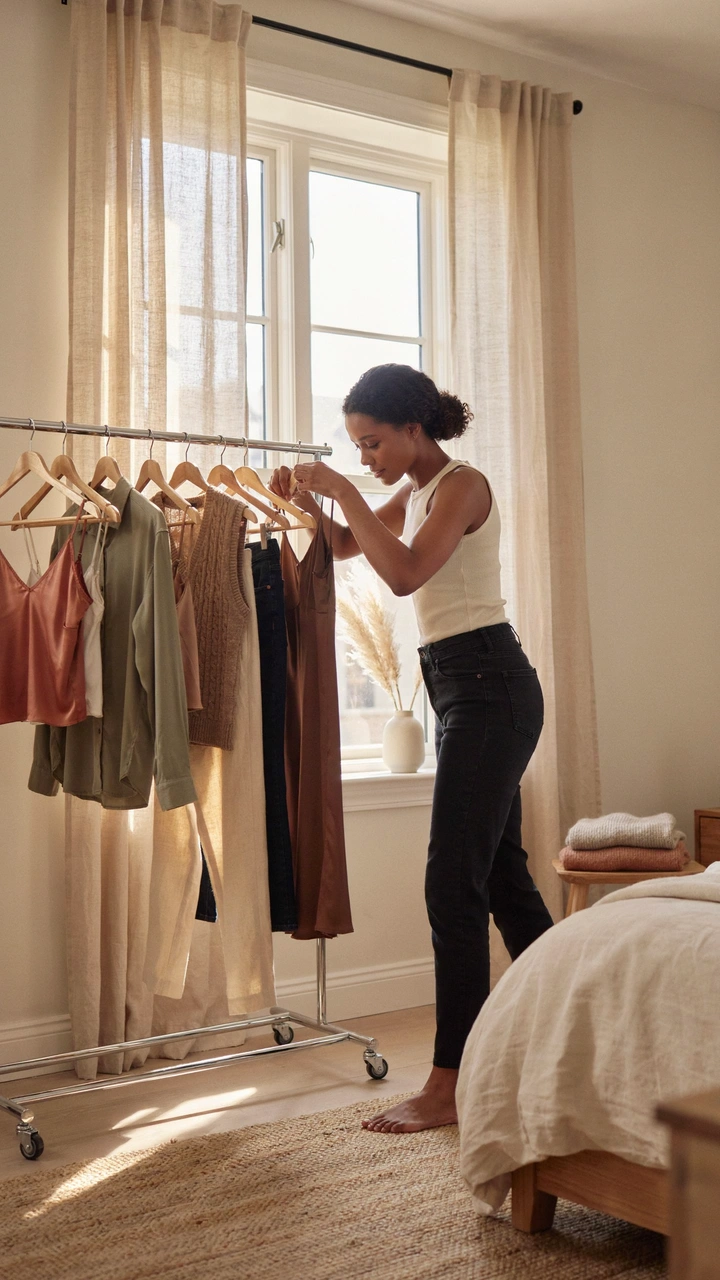
A simple color palette is the reason some people always look put together in fall. It’s not about owning more clothes, it’s about owning clothes that go with each other.
You’re not inventing a palette from scratch here. You’re finding the one that’s already hiding in your Keep and Bridge piles.
- Look over both piles and pull out every piece in a warm or deep color, like brown, camel, olive, rust, burgundy, cream, navy, or charcoal.
- Notice which colors show up the most. Those are your strongest starting points.
- Choose three base colors that go with almost everything, such as cream, camel, and denim blue.
- Choose two accent colors that add interest, such as rust and olive.
- Lay one piece from each of your five colors side by side on the bed and take a photo.
- Save that photo as a favorite on your phone so you can check it when you shop.
Three base colors and two accent colors give you plenty of mixing room. Almost every top will go with almost every bottom, and getting dressed gets quicker.
If you’re not sure where to start, here are a few autumn style palettes that work well together:
- Warm and classic: cream, camel, and denim with rust and olive.
- Soft and pretty: ivory, grey, and light denim with dusty rose and burgundy.
- Dark and simple: black, charcoal, and white with forest green and deep plum.
- Earthy: tan, chocolate brown, and cream with mustard and sage.
What about your bright summer colors? You don’t have to put them all away.
Pair a pastel with something darker and it suddenly feels like fall. A lavender top looks lovely with charcoal trousers, and a mint skirt works with a navy sweater.
Bright prints are trickier, so keep one or two you love and wear them under a dark jacket. That small pop of color can be the best part of an outfit on a grey day.
Your palette can carry over to small things too. If you like your nails to match, these pink fall nail ideas look sweet with dusty rose, cream, and burgundy.
The Finished Look: You have one photo on your phone showing five colors that all go together, and you can spot those same five colors in your Keep and Bridge piles.
Key takeaway: Pick your colors from your own closet first, so every new piece you buy later fits right in.
Step 3: Layer Your Summer Pieces Into Transitional Outfits
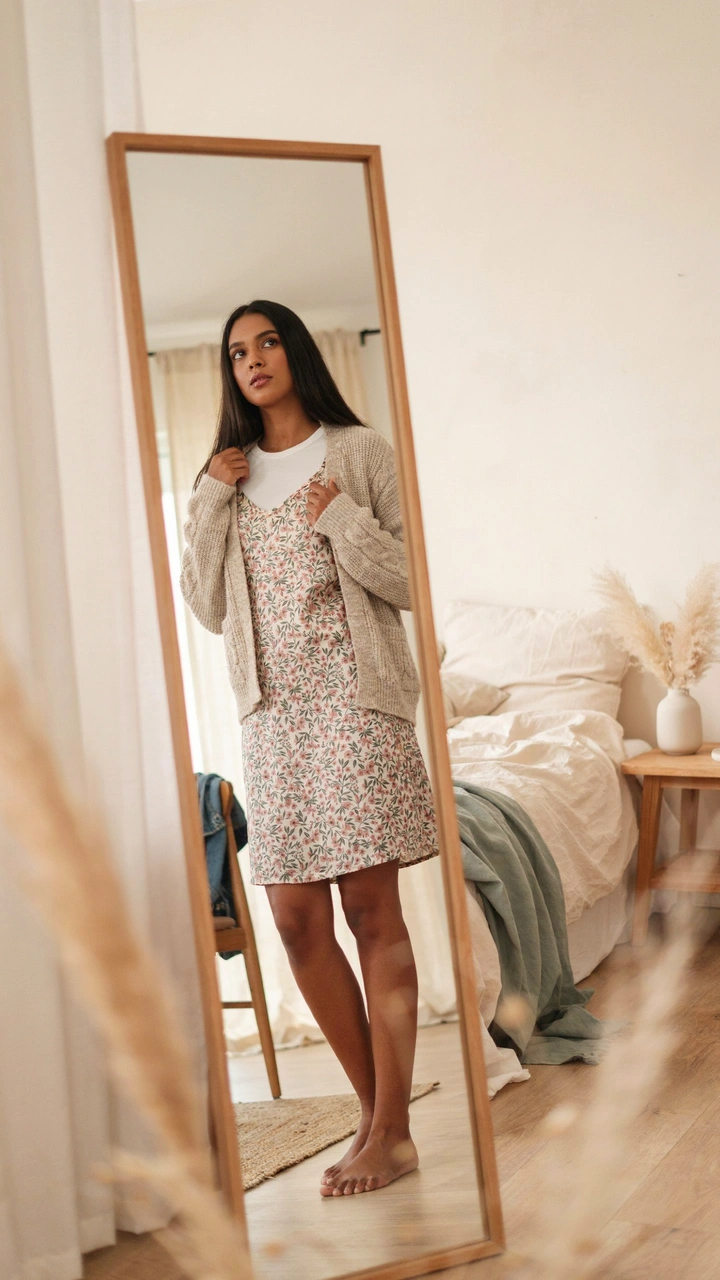
This is the fun part. Layering is what turns a summer dress into something you can wear on a 55°F (13°C) morning.
The trick is building each outfit around one Bridge piece and adding layers to it. You can take layers off as the afternoon warms up.
- Pick one piece from your Bridge pile to build the outfit around.
- Add something warmer on top, like a cardigan, a denim jacket, a blazer, or a shirt jacket.
- Add a thin layer underneath if the piece is sleeveless or low-cut, like a fitted tee or a fine turtleneck.
- Add tights or socks if your legs are bare. Opaque tights around 60 denier keep you warm without looking heavy.
- Stand in front of the mirror and check that the colors match your palette photo.
- Take a photo of every outfit you like before you take it off.
Aim for five to eight outfits in this first round. That gives you plenty to start your week with.
Here are some easy transitional outfits that work with summer clothes most people already own:
- Slip dress + chunky cardigan + ankle boots. Belt the cardigan if you want more shape.
- Sleeveless midi dress + thin turtleneck underneath. A black or cream turtleneck works with nearly any dress color.
- Linen pants + fine knit sweater + loafers. Tuck the front of the sweater in so the pants still show off their shape.
- Denim shorts + black tights + oversized sweater. This one works best on cool sunny weekends.
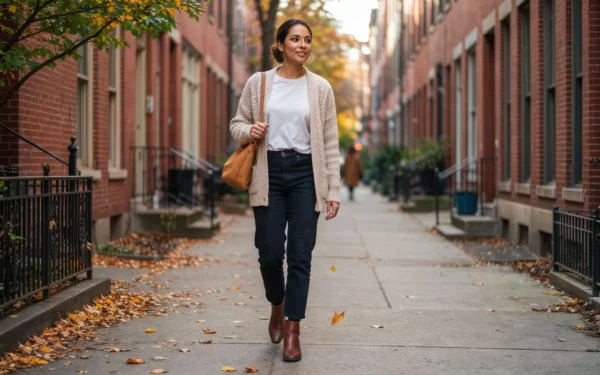
- White tee + blazer + straight-leg jeans. It’s simple, but it looks pulled together every time.
- Floral midi skirt + denim jacket + chunky knit. Darker florals look especially good this way.
- Tank top + button-down shirt worn open + trousers. Roll the sleeves for warm afternoons.
Think about weight when you layer. Put the lightest piece closest to your body and the heaviest on the outside, so you can peel off the outer layer at lunchtime.
Proportions matter too. If the bottom half is loose and flowy, like a wide skirt, keep the top layer a little shorter or more fitted so you don’t get lost in fabric.
If you’d like more help putting pieces together, my guide on how to style a fall outfit with basics you already own goes deeper into simple outfit formulas.
The Finished Look: You have at least five outfit photos on your phone, each built around a summer piece, each with a layer you could take off by the afternoon.
Key takeaway: One extra layer is often all it takes to carry a summer favorite into October.
Step 4: Swap Your Shoes and Accessories for Fall
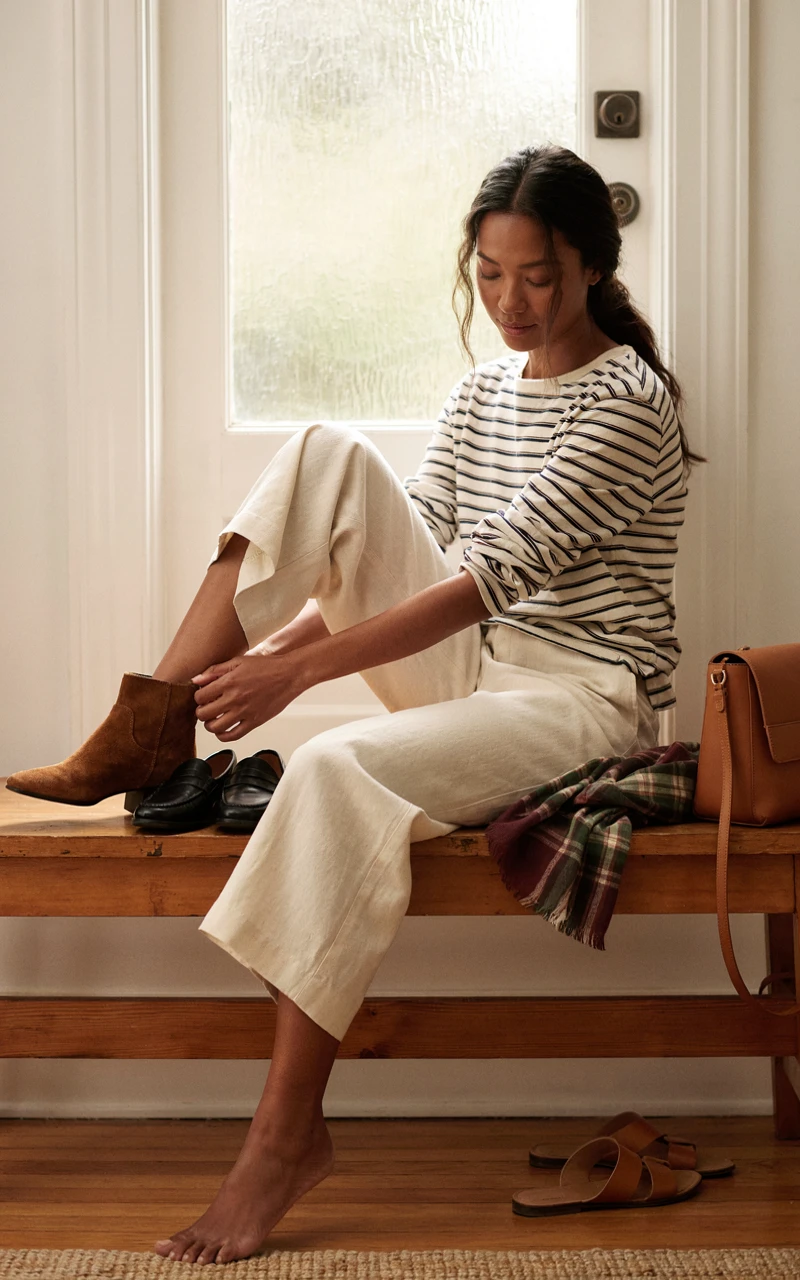
Shoes and accessories make a bigger difference than most people expect. The same linen pants look like August with sandals and like October with loafers.
This step is quick, and it’s the easiest way to make your summer clothes look like fall fashion without changing much else.
- Gather all your sandals, flip-flops, and espadrilles and put them in the Store bin, keeping one pair of slides for around the house.
- Bring out your closed shoes, like ankle boots, loafers, sneakers, and ballet flats, and wipe them down with a damp cloth.
- Swap your straw or canvas bag for a leather, suede, or faux leather bag in one of your palette colors.
- Pull out a scarf or two in your accent colors and hang them where you’ll see them.
- Add a belt in brown or black to wear over cardigans and dresses.
- Swap your straw sun hat for a felt hat or a knit beanie, if you wear hats.
Here’s a quick look at the swaps that make the biggest difference:
| Summer Piece | Fall Swap |
|---|---|
| Strappy sandals | Loafers or ankle boots |
| Straw tote | Leather or suede shoulder bag |
| Canvas sneakers in bright colors | Leather sneakers in white, cream, or brown |
| Straw sun hat | Felt hat or knit beanie |
| Light sunglasses | Tortoiseshell or brown sunglasses |
| Silver and shell jewelry | Gold hoops or a simple pendant |
If you only buy one new thing this fall, make it a good pair of shoes. Ankle boots in brown or black go with dresses, jeans, and trousers, so you’ll wear them almost every day.
Scarves are the cheapest way to add warmth and color at the same time. A large square scarf, around 35 x 35 inches (90 x 90 cm), can be worn around your neck, over your shoulders, or tied on your bag.
Hair counts as an accessory too. A low bun or a soft braid looks great with turtlenecks and scarves, and these easy fall hairstyles take just a few minutes in the morning.
Keep your fall shoes by the front door or on the floor of your closet, right where you’ll grab them. If they’re still in a box on a high shelf, you’ll keep reaching for sandals out of habit.
The Finished Look: Your sandals are packed away, your closed shoes are clean and easy to reach, and your bag, scarf, and belt all match the colors in your palette photo.
Key takeaway: Change the shoes and the bag, and even your lightest summer clothes start to look like fall.
Step 5: Build Your First Week of Fall Outfits
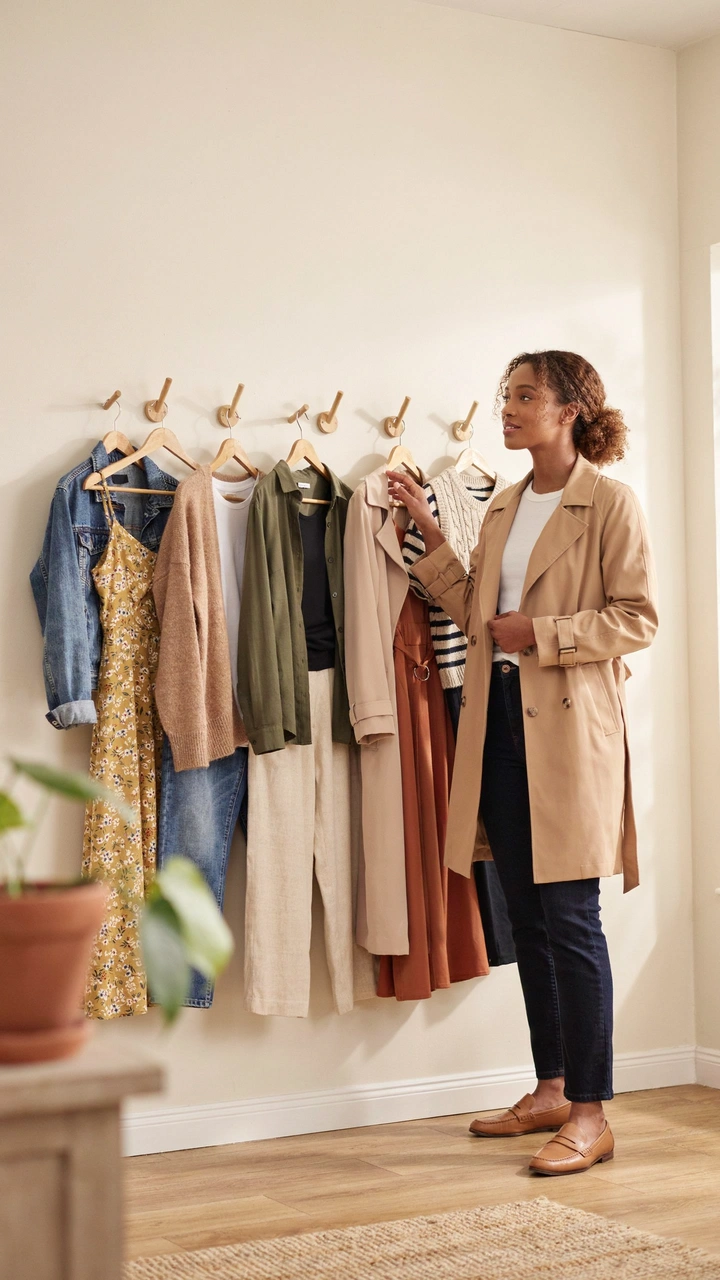
Planning one week ahead takes the guesswork out of busy mornings. It also shows you quickly which outfits work in real life and which only looked good in the mirror.
- Check the seven-day forecast and write the high and low for each day in your notes.
- Match an outfit photo from Step 3 to each day, putting heavier layers on the coolest days.
- Plan five weekday outfits and two easy weekend outfits.
- Hang each outfit together on one hanger, with shoes and accessories noted on a sticky note.
- Line the hangers up at one end of your closet in the order you’ll wear them.
- At the end of each day, jot down one quick note about how the outfit felt.
Here’s a sample week to give you an idea of how it can look:
| Day | Weather | Outfit |
|---|---|---|
| Monday | 52°F (11°C) to 70°F (21°C) | White tee, camel blazer, straight-leg jeans, loafers |
| Tuesday | 55°F (13°C) to 73°F (23°C) | Slip dress, cream cardigan, ankle boots |
| Wednesday | 50°F (10°C) to 65°F (18°C) | Linen pants, olive knit sweater, leather sneakers |
| Thursday | 48°F (9°C) to 62°F (17°C) | Sleeveless midi dress, black turtleneck, tights, ankle boots |
| Friday | 54°F (12°C) to 72°F (22°C) | Floral skirt, denim jacket, ballet flats, rust scarf |
| Saturday | 56°F (13°C) to 74°F (23°C) | Denim shorts, black tights, oversized sweater, sneakers |
| Sunday | 50°F (10°C) to 66°F (19°C) | Leggings, long cardigan, tee, ankle boots |
Your notes don’t need to be long. Something like “too warm by noon” or “loved this, wear again” is plenty.
Pay attention to the outfits you keep reaching for. Those are your best wardrobe ideas for the rest of the season, and you can repeat them with small changes, like a different scarf or shoes.
Watch for the moments you felt stuck too. If you wished you had a warmer jacket on Thursday, or you didn’t have the right shoes for Friday, add that to your gap list.
Don’t worry about repeating pieces. Wearing the same jeans three times in one week is completely normal, and nobody is keeping track except you.
On Sunday evening, take ten minutes to plan the next week the same way. After two or three weeks, you’ll find you hardly need to plan at all.
The Finished Look: You’ve worn seven outfits made mostly from summer clothes, you have a few short notes about each one, and your gap list has a handful of honest entries.
Key takeaway: One planned week teaches you more about your closet than any shopping list can.
Step 6: Fill the Gaps With a Few Fall Fashion Pieces
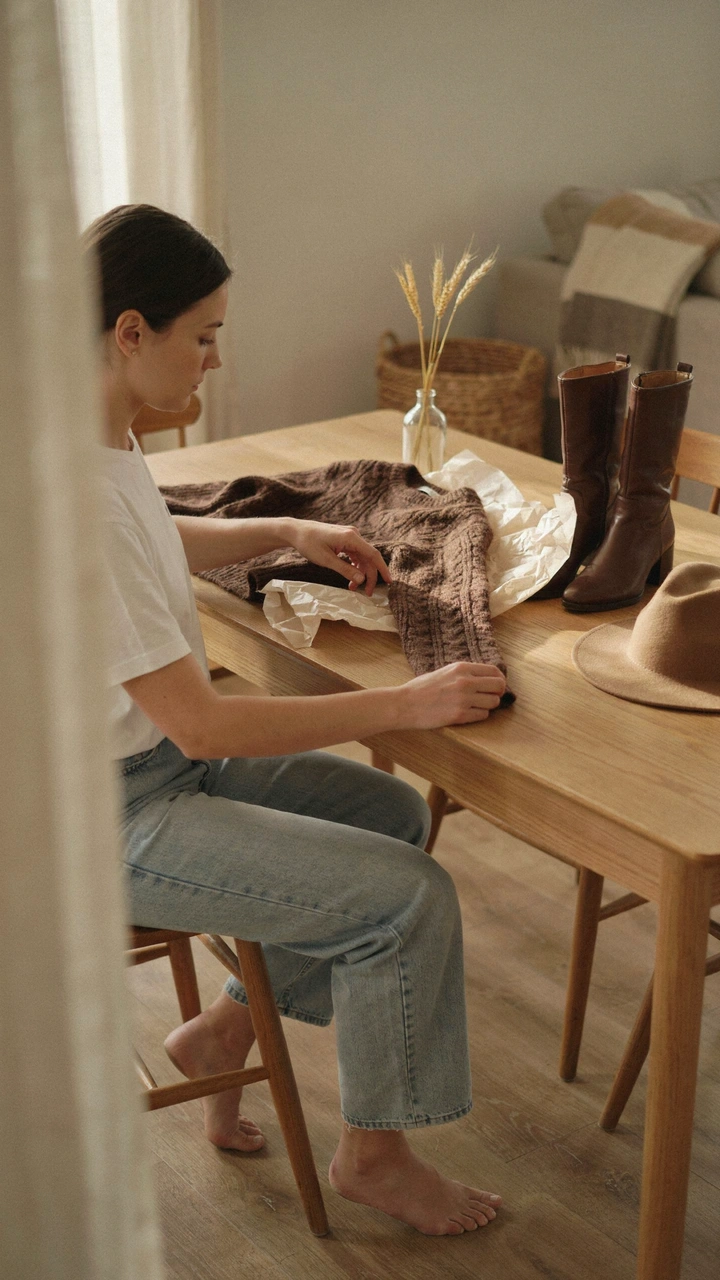
Now that you’ve lived in your fall outfits for a week, you know exactly what’s missing. That’s the right time to shop, not before.
Shopping last keeps you from buying things you already own or pieces that don’t go with anything. It also keeps your spending small.
- Read through your gap list from Step 5 and cross out anything that only came up once.
- Circle the three pieces that would fix the most outfits.
- Set a budget before you shop, such as $150 for all three pieces.
- Check secondhand shops and resale apps first, especially for jackets, boots, and wool sweaters.
- Before you buy, picture three outfits you could make with that piece using clothes you already own.
- Hold the piece up next to your palette photo to check the color.
- Keep the tags on and the receipt handy for a week, in case it doesn’t work with your closet at home.
The three-outfit check is the most useful habit here. If you can’t think of three outfits right away, leave it on the rack.
Most people end up needing one or two of these pieces, which tend to fix the most gaps:
- A mid-weight jacket, like a trench coat, a shirt jacket, or a wool blazer.
- Ankle boots in brown or black with a low, comfortable heel.
- A knit sweater in one of your base colors that works over dresses and with jeans.
- Dark-wash jeans, if all your summer denim is light.
- Opaque tights in black or brown, so you can keep wearing dresses and skirts.
- A thin turtleneck to wear under sleeveless dresses and tops.
Look at the fabric tag before you pay. Wool, cotton knits, and corduroy keep you warm and hold their shape, while very thin acrylic sweaters can pill after a few washes.
Fit matters more than price. A $30 secondhand blazer that fits your shoulders will look better than a pricey one that doesn’t.
Skip trend pieces for now. Once your basics are covered, you can add one fun thing later in the season if you still want it.
The Finished Look: You’ve bought no more than three pieces, each one works with at least three outfits you already own, and your closet holds a full season of fall outfits built mostly from summer clothes.
Key takeaway: Buy last, buy little, and buy only what fixes a real gap.
Looking back, the biggest change for me wasn’t any one piece of clothing. It was realizing that my summer clothes had a lot more life in them than I’d been giving them credit for.
Sorting into piles, picking a few colors, layering, swapping shoes, and planning one week has saved me money and a lot of stressful mornings. I hope it does the same for you.
You already have more good outfits hanging in your closet than you think. Start with one afternoon, one basket, and one favorite summer dress, and see where it takes you.
I’d love to hear which summer piece you’re carrying into fall this year, so tell me in the comments or send me a note through my contact page. You’ve got this.