This post may contain affiliate links, which means I may receive a small commission should you decide to click that link and make a purchase. For more information please refer to the Terms & Conditions.
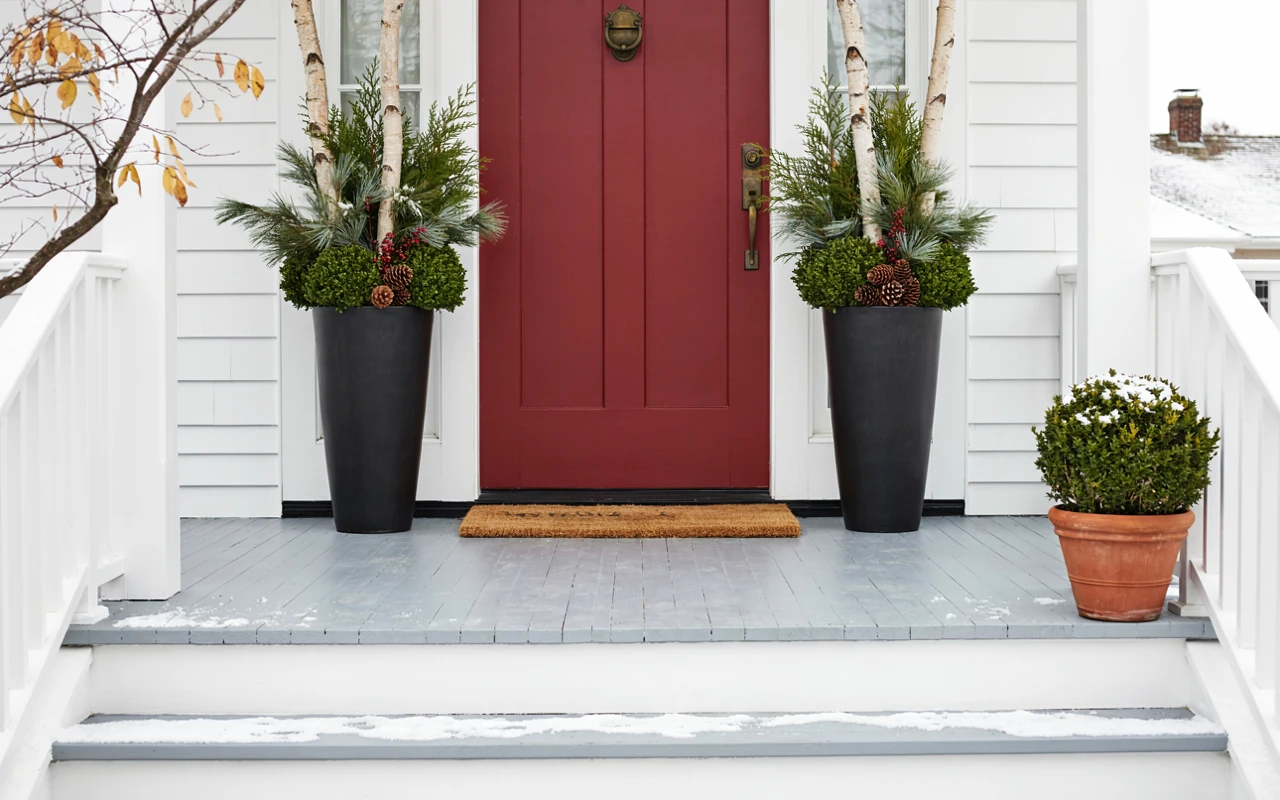
Winter porch planter ideas are an easy way to give your home a beautiful entrance when the garden has gone quiet.
I love the idea of a front door that still looks welcoming in January, long after the holiday lights come down.
You don’t need a big budget or a green thumb to get there.
Most of these planters use simple things like clippings from the yard, a few branches, and pots you already own.
Add a bow, a lantern, or a handful of pine cones, and your porch can look full and finished all season.
Below, you’ll find 11 winter porch planter ideas for a beautiful entrance.
Each one helps you create a front porch that feels warm, cheerful, and ready for guests, from the first frost to the last snow.
1. Mixed Evergreen Planters with Cedar, Pine and Boxwood
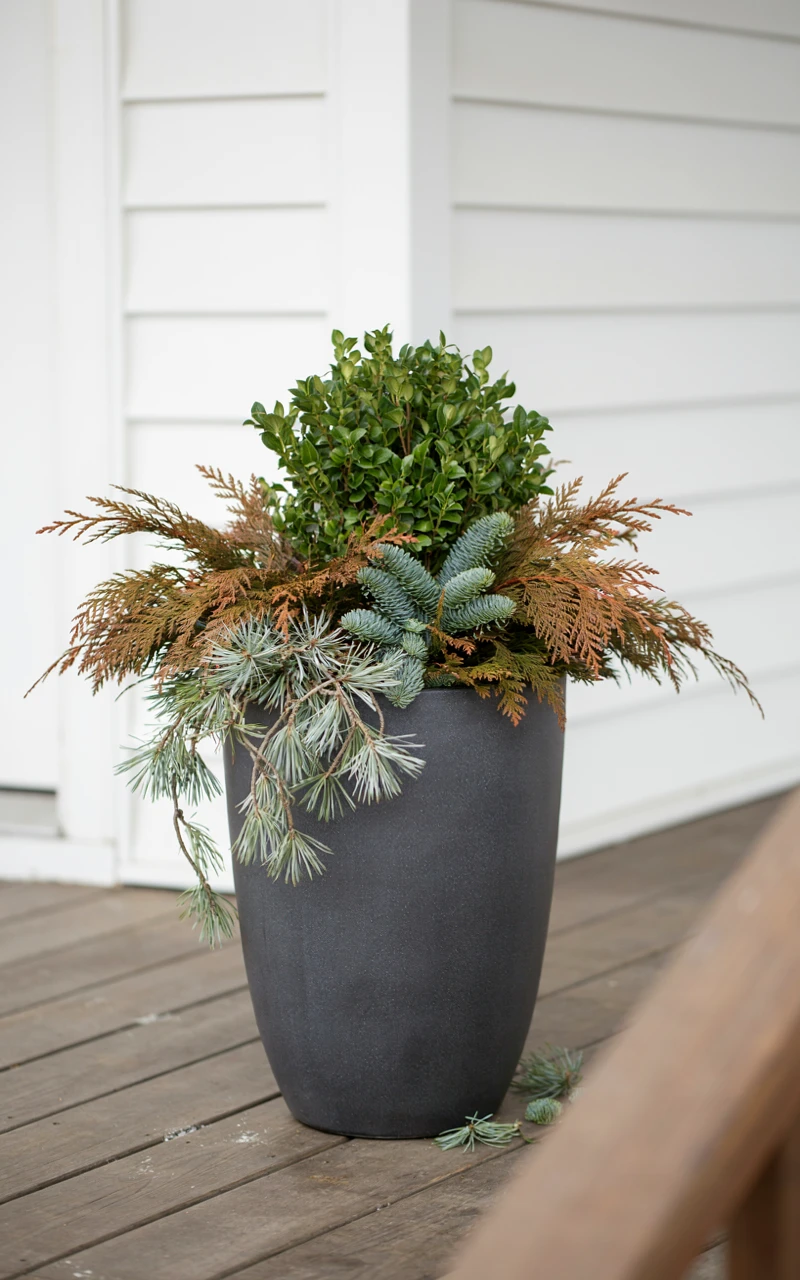
This is the classic winter planter, and for good reason. You take three kinds of cut greens, tuck them into a pot of soil, and end up with a full, layered look that stays green for weeks in cold weather.
It works because each green does a different job. Pine gives you height and a soft, feathery top, cedar drapes over the edge of the pot, and boxwood fills the gaps with small, tidy leaves. Together they look lush without any fuss.
How to put it together: Leave the old potting soil in your summer planters, or top them up with fresh soil. Water the soil well before the ground freezes, then push your stems in about 3 to 4 inches (8 to 10 cm) deep. When the soil freezes, it holds everything in place like glue.
- Start with tall pine or fir in the center.
- Add cedar around the outer edge so it spills over the rim.
- Fill the middle ring with boxwood.
- Finish with a few pine cones or a bow if you like.
Here’s a quick look at the greens that work best in evergreen planters and how long you can expect them to last outside in cold weather.
| Green | What it adds | How long it lasts outdoors |
|---|---|---|
| White pine | Soft, long needles and height | 6 to 8 weeks |
| Cedar | Flat, drapey sprays for the edges | 4 to 6 weeks |
| Boxwood | Small, glossy leaves to fill gaps | 6 to 8 weeks |
| Fraser fir | Sturdy branches with a fresh scent | 8 weeks or more |
| Juniper | Blue-green color and tiny berries | 6 weeks or more |
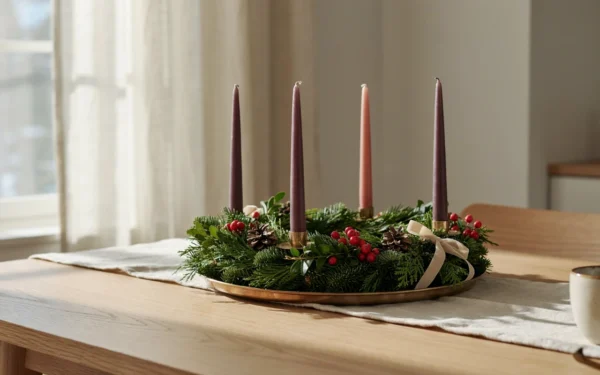
Got leftover clippings? They’re perfect for a tabletop wreath, and this guide on how to make an advent wreath shows you how to use them up.
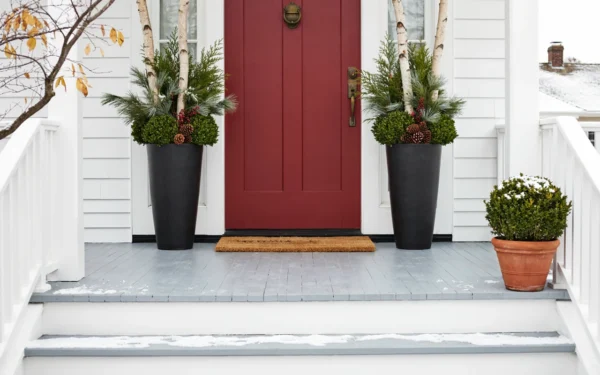
2. Tall Birch Pole Planter for Height and Drama
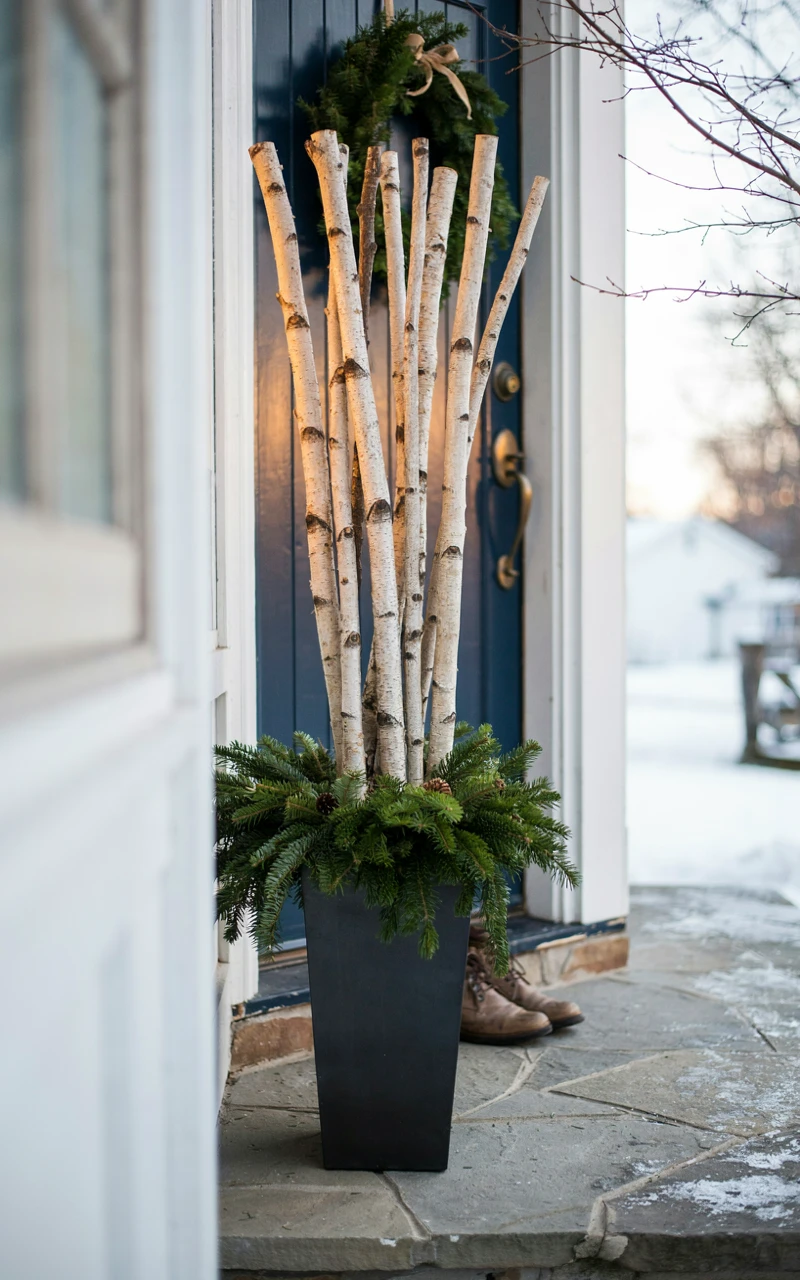
If your door is tall or your pots feel a little flat, birch poles fix that fast. Three to five white birch poles standing up in the center of a planter add instant height and make your porch look grand from the street.
The white bark looks crisp against green branches and dark doors. It also looks good on gray days, when everything else outside seems dull. Birch poles last for years if you keep them dry in the off-season, so they’re a smart buy for winter porch planters.
How to use them: Pick poles about 4 to 6 feet (1.2 to 1.8 m) tall, depending on the size of your door. Group them in the center of the pot and push them deep into the soil, at least 8 inches (20 cm) down. Tie them together with a short piece of garden wire near the base so they don’t lean.
- Use an odd number of poles, like three or five. It looks more natural.
- Cut the poles at slightly different heights.
- Pack pine and cedar tightly around the base to hide the soil and wire.
- Wrap a strand of warm white lights around the poles for evening glow.
One thing to watch: tall poles catch the wind. If your porch gets strong gusts, use a heavy pot or add a few bricks to the bottom before filling it with soil. That extra weight keeps the whole thing from tipping over during a storm.
Tip: If you can’t find birch poles, try thin birch branches with the twigs left on. They give the same white color with a softer, airier shape.
3. Red Twig Dogwood and Winterberry Planter
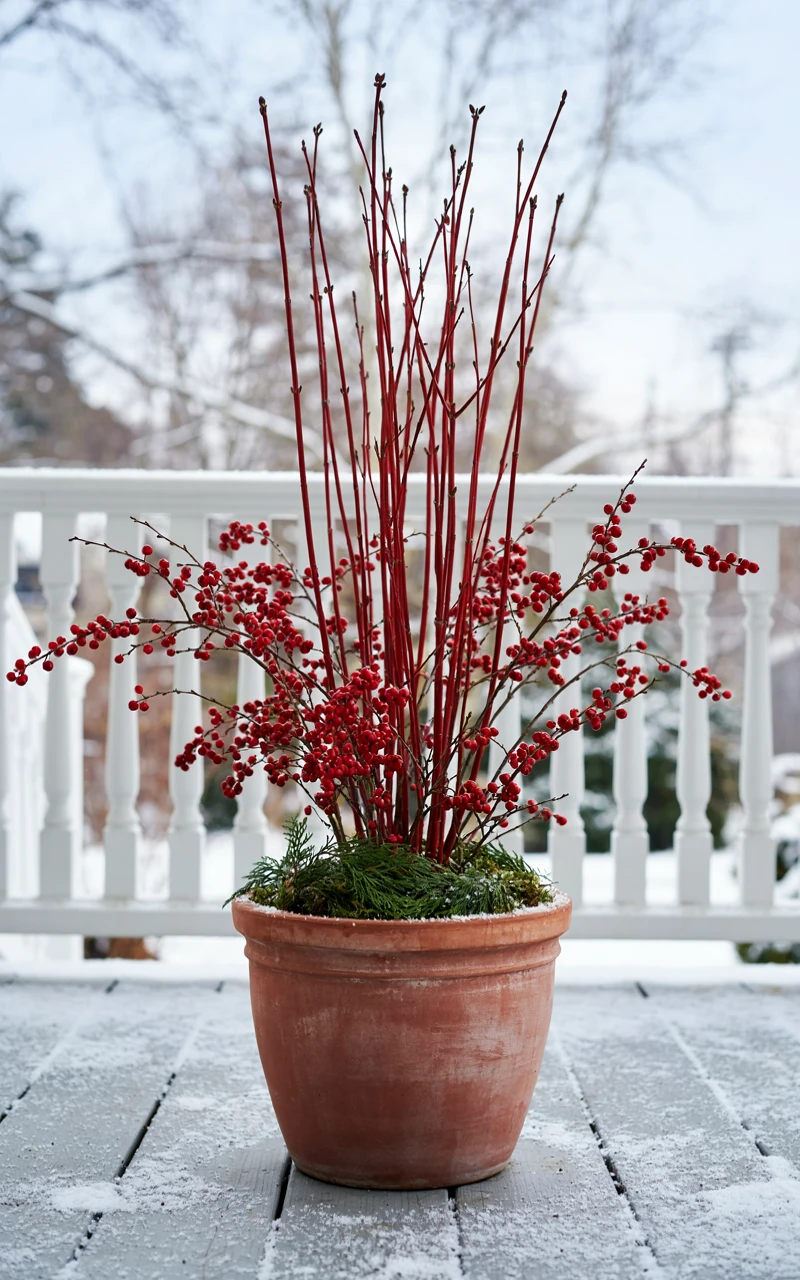
Want color without a single ornament? Red twig dogwood and winterberry bring bright, cheerful red to your porch straight from nature. They look especially pretty against snow.
Red twig dogwood is a shrub with smooth, bright red stems that show up best in winter once the leaves drop. Winterberry is a type of holly that loses its leaves in fall but keeps clusters of red berries along its branches. Put them together and you’ve got a planter that glows on a gray morning.
How to build it: Start with a base of green, like pine or fir, so the red has something to stand out against. Then push a bundle of dogwood stems into the center, about 2 to 3 feet (60 to 90 cm) tall. Tuck winterberry branches in around them, letting a few lean outward.
- Cut dogwood stems at an angle so they slide into the soil easily.
- Use real winterberry for a natural look, or faux berry picks if you want them to last for years.
- Add a plaid or burlap bow if you want a softer finish.
Real berries do attract birds, which can be fun to watch from the window. Just know they may thin out over the season. Winterberry berries aren’t safe to eat, so if you have a dog that chews on plants, faux berries are the safer choice.
This planter also keeps looking right well after the holidays. Since there’s nothing here that says “Christmas,” you can leave it up straight through February.
4. Matching Boxwood Topiaries by the Front Door
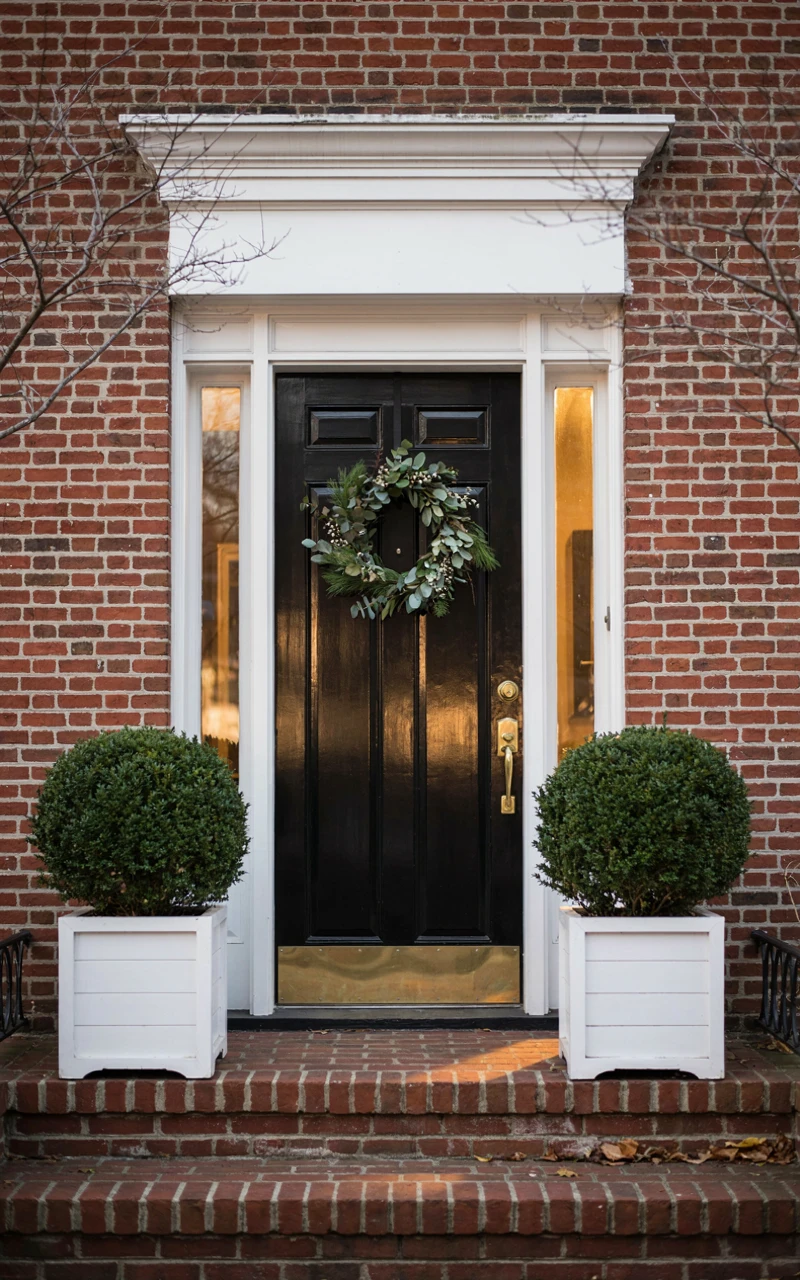
A pair of boxwood topiaries on either side of the front door looks neat, polished, and a little bit classic. If you like a clean, simple look, this one’s for you.
It works because matching pots create balance. Your eye goes straight to the door, which makes the whole entrance look planned and tidy. It’s one of the easiest wins in front porch decorating, and it suits almost any style of home, from a farmhouse to a brick colonial.
Live or faux? Live boxwood topiaries look wonderful, but roots in pots get much colder than roots in the ground. A good rule is to choose plants rated one or two zones colder than where you live. You can check your area on the USDA Plant Hardiness Zone Map before you buy.
If you go with live boxwood, here’s how to help them through the cold:
- Use frost-proof pots, like fiberglass, resin, or thick concrete, so they don’t crack.
- Water deeply before the ground freezes, then again on mild days when the soil thaws.
- Move the pots close to the house, where they get some shelter from wind.
- Wrap the outside of the pot in burlap for extra protection in very cold areas.
Faux topiaries skip all of that. A good-quality faux boxwood ball or cone looks real from a few feet away and lasts for years.
To dress them up for the holidays, wrap a ribbon around the stem or tuck a few red ornaments into the base. In January, take the ribbon off and they still look sharp.
5. Magnolia Leaf and Pine Cone Planter
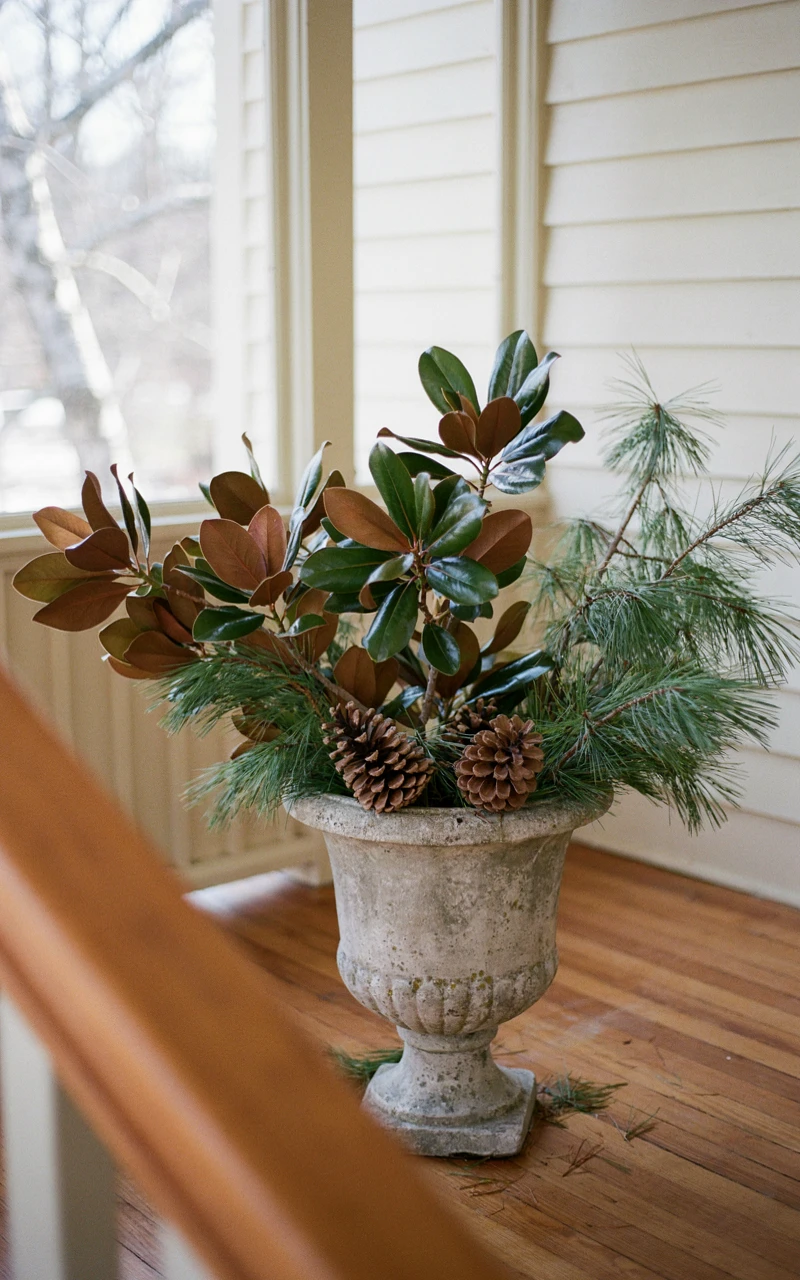
Magnolia leaves are glossy green on top and a soft, velvety brown underneath. That two-tone look makes them perfect for a warm, natural winter planter with a touch of Southern charm.
Pair them with pine cones and you get a planter in rich browns and deep greens that feels cozy instead of flashy. It’s a great choice if you’d rather skip bright red and keep things earthy.
How to put it together: Start with cut magnolia branches in the center of the pot, turning a few leaves so the brown side faces out. Fill in around them with fir or cedar. Then add pine cones in clusters of three, tucked in near the rim where people can see them.
- To attach pine cones, wrap floral wire around the bottom rows of scales, then twist the ends into a stake and push it into the soil.
- Mix sizes, from small cones to big sugar pine cones, for a fuller look.
- Add a few dried orange slices or cinnamon sticks if your porch is covered and stays dry.
Cut magnolia lasts a long time outside, often four to six weeks in cold weather. The leaves slowly dry, but they keep their shape and color well.
If you don’t have a magnolia tree nearby, many grocery stores and garden centers sell magnolia bundles in late fall. You can also find faux magnolia stems that look surprisingly real.
6. Galvanized Bucket Planter with Cut Greens
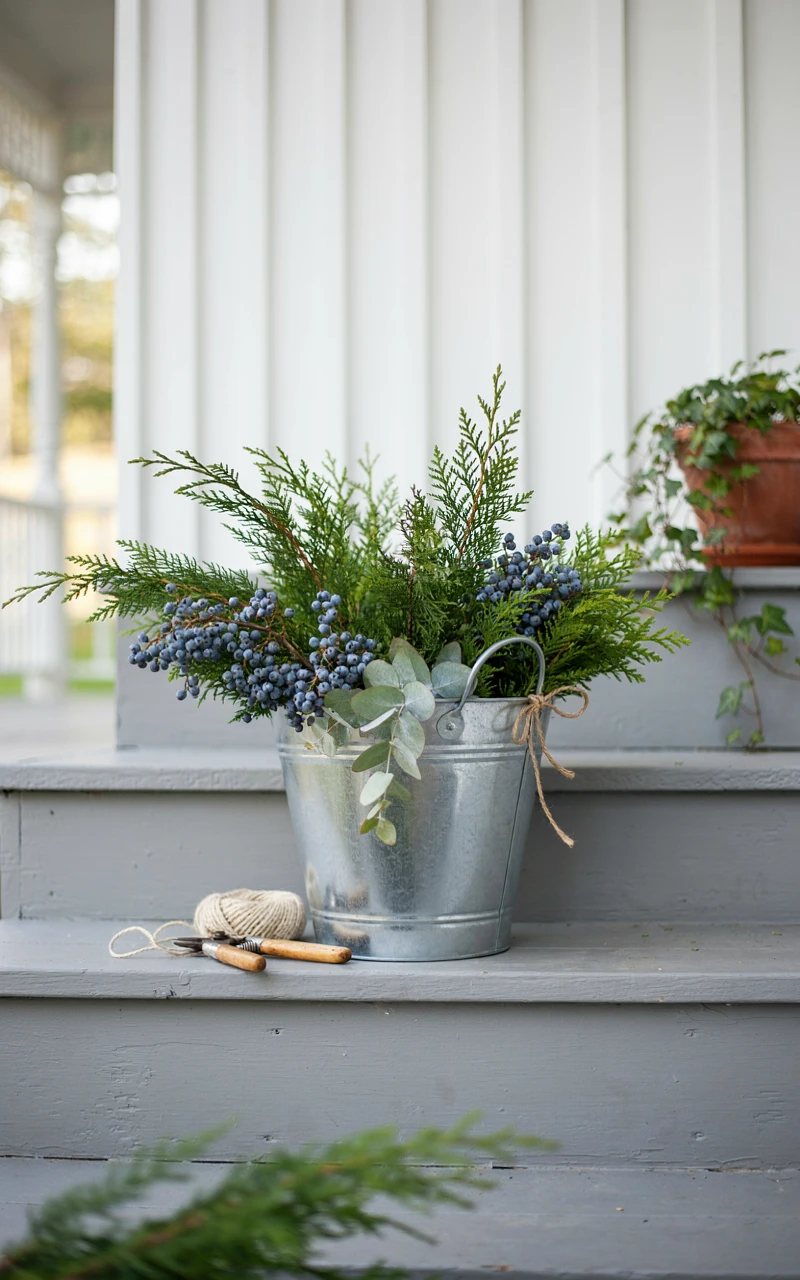
Not every porch has room for big pots. A galvanized bucket filled with cut greens fits on a small step or next to a bench, and it brings a relaxed, farmhouse feel to your entrance.
The silver metal looks great with green branches and plaid ribbon. Buckets are also cheap and easy to find at hardware stores, thrift shops, and garage sales. Older buckets with a bit of wear look even better.
How to make it work outside: Galvanized buckets don’t have drainage holes, so water can pool inside and freeze. Drill four or five small holes in the bottom, or skip soil and fill the bucket with damp sand instead. Sand holds stems firmly and weighs the bucket down.
- Fill the bucket about three-quarters full with soil or damp sand.
- Push in pine, cedar, and a few sprigs of holly or juniper.
- Let some branches hang over the edge so the bucket doesn’t look stiff.
- Tie a ribbon around the handle, or wrap the bucket with a strip of burlap.
For a fun twist, group two or three buckets in different sizes on your steps. It’s one of the simplest outdoor winter planters to put together, and it looks charming in a cluster.
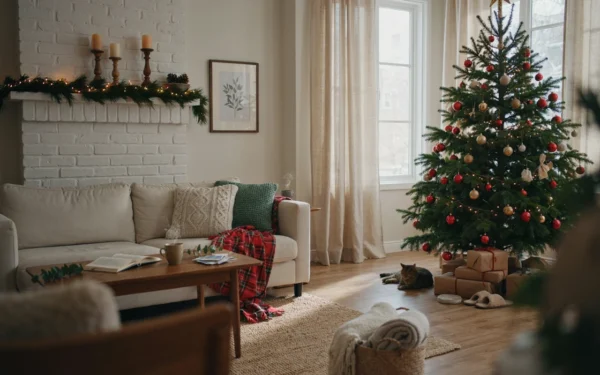
Want to carry this look inside too? These Christmas decoration ideas use the same simple greens and rustic pieces around the house.
7. Planter with a Lantern and Fairy Lights
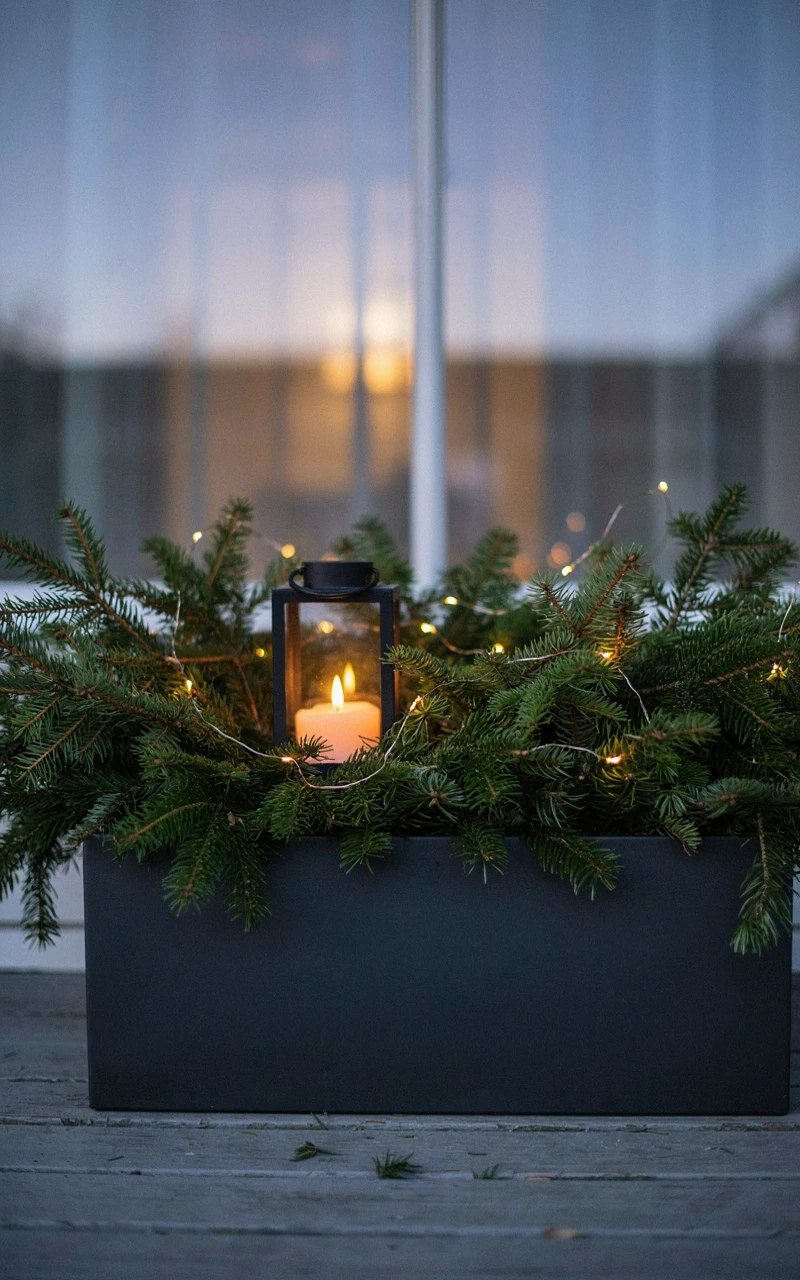
Winter days are short, which means you’ll often come home in the dark. A planter with a lantern and fairy lights gives your porch a warm glow that says “welcome home” every evening.
It works because light makes a porch look friendly from far away. Even a simple planter of greens looks special once it’s lit up at night.
How to set it up: Choose a wide, sturdy pot and fill it with greens like usual, leaving a flat spot in the center. Nestle a lantern into that spot, pressing it down into the soil so it sits level. Then weave a strand of fairy lights through the branches around it.
- Use a battery-operated LED candle in the lantern instead of a real flame. It’s safer near dry branches.
- Pick lights rated for outdoor use.
- Look for lights and candles with a built-in timer, so they turn on at dusk and off a few hours later.
- Warm white bulbs look cozier than cool white.
If you don’t have an outlet near the door, battery lights are the easiest choice. Keep spare batteries in a drawer by the door so you can swap them quickly when they fade.
For a pretty finish, add a few pine cones or a bit of ribbon on the lantern handle. If you love that glowing, welcoming feeling, these ideas for a cozy Christmas home bring the same warmth indoors.
8. Porch Rail Window Box with Cedar and Pine
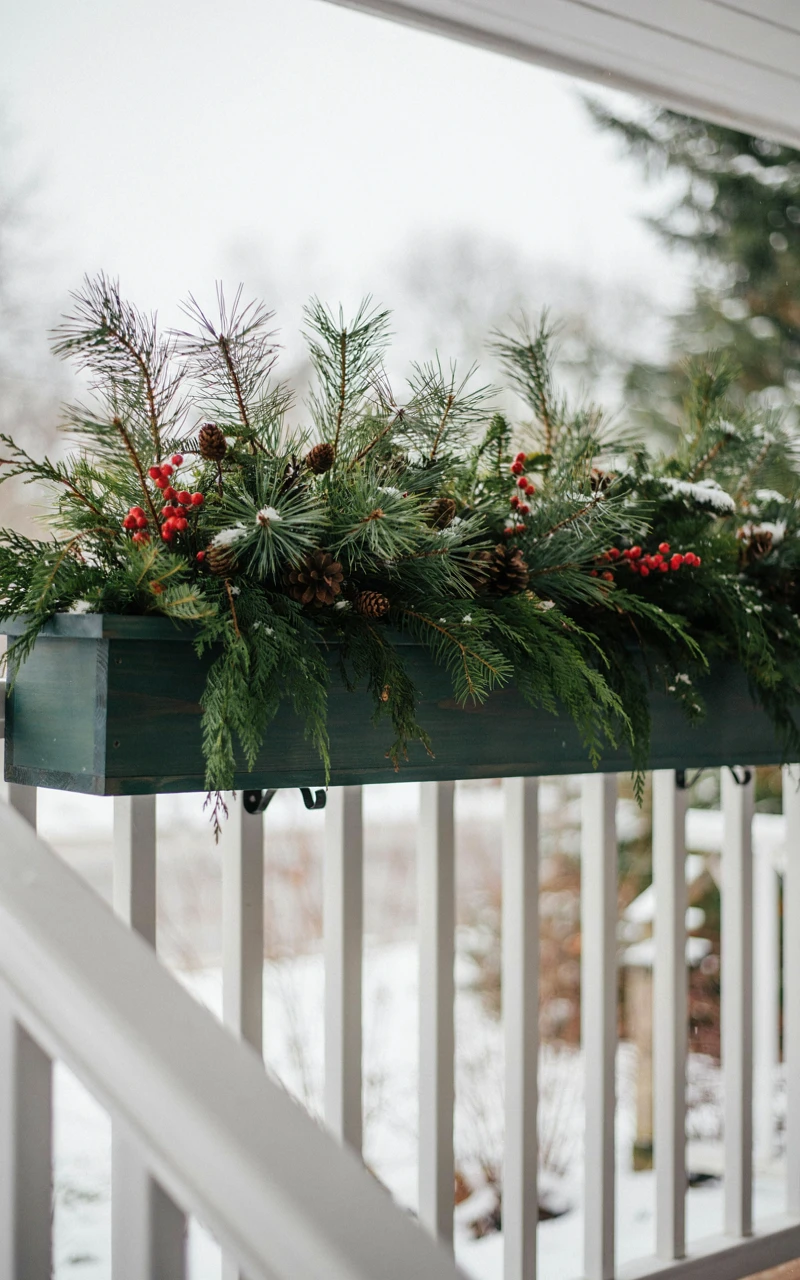
If your porch is narrow, your floor space might be tight. A window box hung on the porch rail uses space that’s usually empty and adds greenery right at eye level.
It works because it stretches your greens across the front of the porch instead of keeping them in one spot. From the street, the whole porch looks dressed up, not just the doorway.
How to fill it: Use rail brackets made to fit your railing width, and make sure they’re tight before you add anything heavy. Fill the box with soil, water it well, and push cedar sprays along the front edge so they spill over the side. Add pine behind the cedar for height, then fill gaps with boxwood or juniper.
- A box about 24 to 36 inches (60 to 90 cm) long fits most rails well.
- Line the bottom with a layer of gravel for weight and drainage.
- Add a few short birch branches or red dogwood stems for a pop of color.
- Tuck pine cones or faux berry picks along the front.
Cedar works best here because it drapes so nicely. Pine stands upright, so together they give the box a soft front and a full back.
If you have more than one section of railing, try repeating the same box two or three times. Matching boxes look tidy and make the porch feel pulled together.
9. Dwarf Alberta Spruce in a Wooden Crate
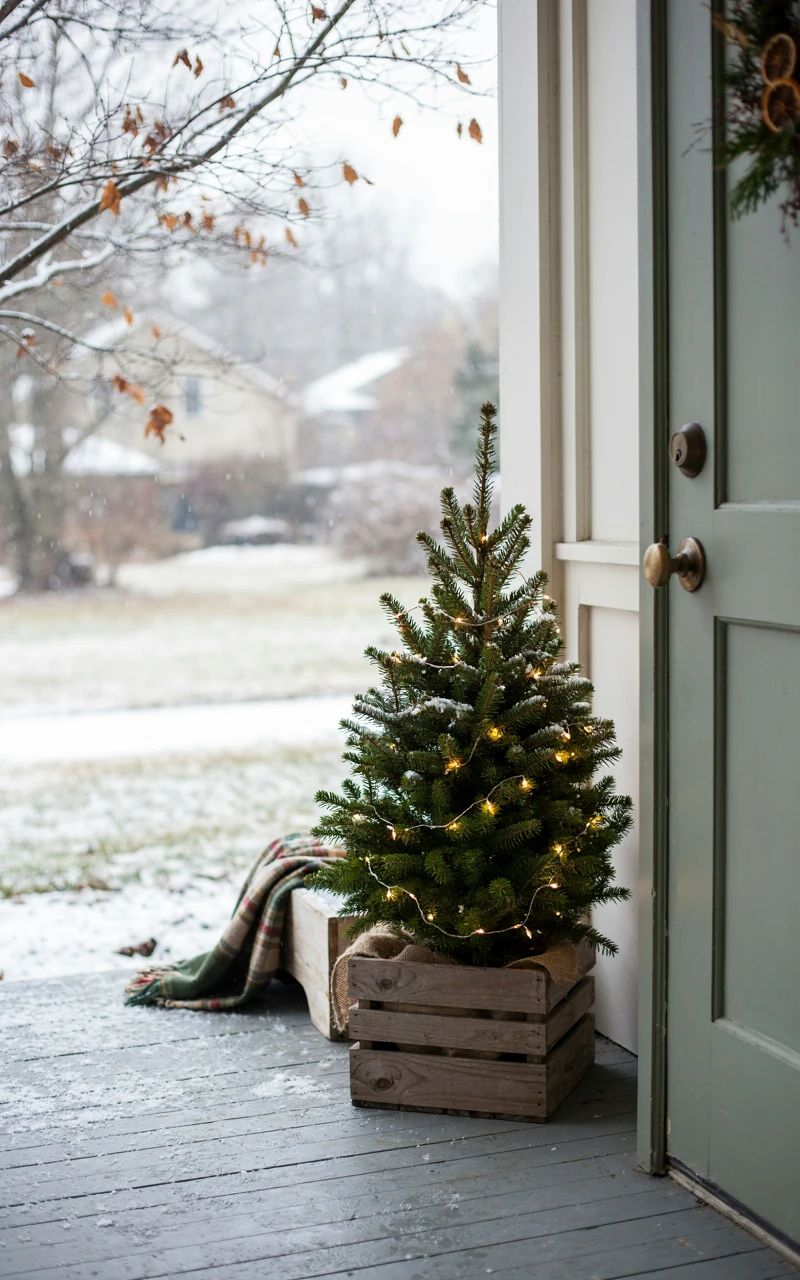
A dwarf Alberta spruce is a small, cone-shaped evergreen that looks like a little Christmas tree. Set one in a rustic wooden crate, and you’ve got a charming planter you can plant in your yard come spring.
It works because the tree’s neat shape needs almost no decorating. The rough wood of the crate keeps it from looking too formal, so it fits a farmhouse or cottage porch perfectly.
How to set it up: The easiest way is to leave the tree in its plastic nursery pot and set the whole pot inside the crate. Fill the gaps with straw, burlap, or cut greens to hide the plastic. That way you can lift the tree out to water it or plant it later.
- Choose a crate a few inches wider than the nursery pot.
- Water whenever the soil isn’t frozen and feels dry an inch down.
- Add a small strand of battery lights or a few wooden ornaments.
- Tie a bit of ribbon or twine around the crate for a finished look.
Keep the spruce outside the whole time. These trees don’t do well in warm, dry indoor air, and bringing them in and out can stress them.
In spring, plant it in a sunny spot in your yard. It grows slowly, so it’ll stay small and tidy for years. You get a porch planter and a new garden plant from the same purchase.
10. Ornamental Kale and Cabbage Planter
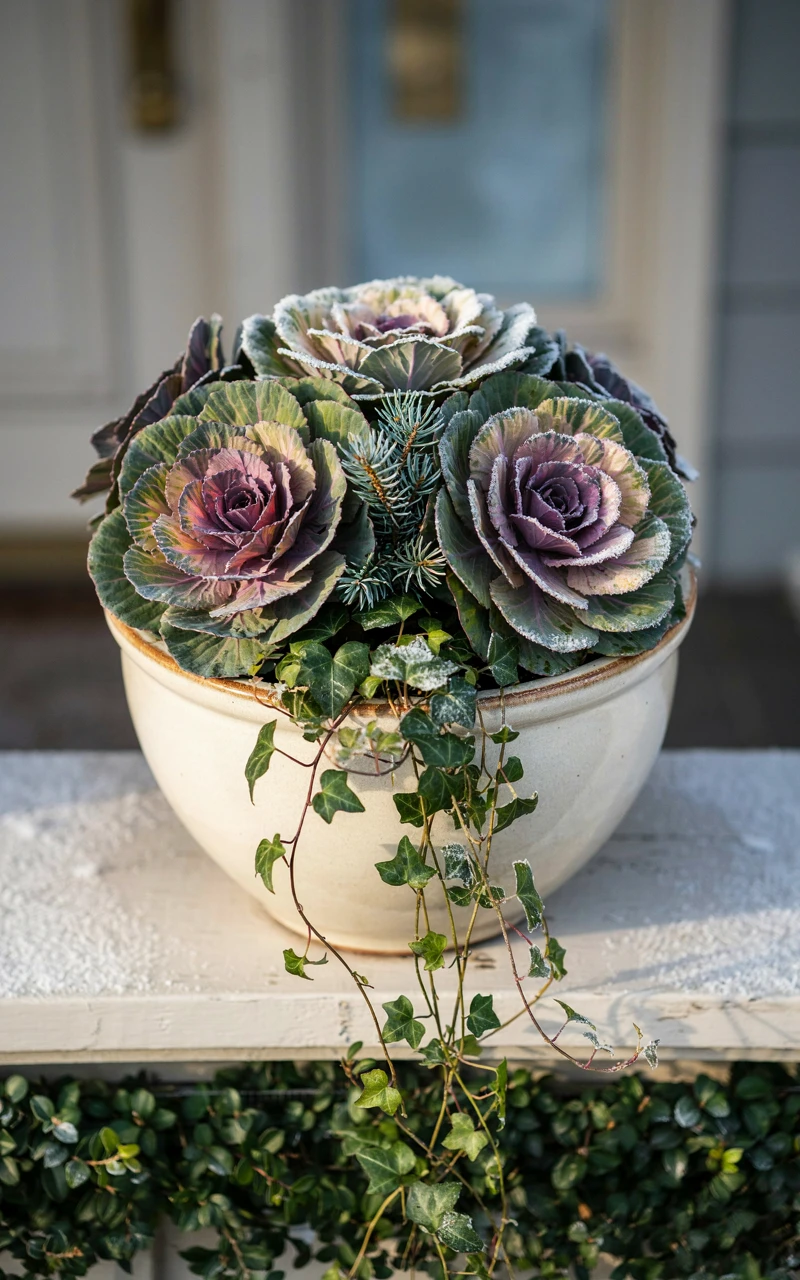
Ornamental kale and cabbage are the rare plants that look better as it gets colder. Their leaves turn deep purple, pink, and creamy white once nights drop below about 50°F (10°C).
They bring real color to a porch at a time when almost nothing else is blooming. The ruffled leaves look like giant flowers, and they pair nicely with green branches.
How to plant them: Buy plants in early to mid fall, when garden centers stock them. Plant them in a pot with fresh potting soil, spacing them close together for a full look. Then tuck cut evergreens around the edges once the weather turns cold.
- Plant three to five kale or cabbage plants in a large pot.
- Mix colors, like purple with white, for a bold look.
- Add a center of tall pine or a few birch branches for height.
- Water when the soil feels dry, especially on sunny, windy days.
Most ornamental kale and cabbage can handle frost and temperatures down into the teens °F (around -9°C to -7°C). In milder areas, they can last right through winter. In very cold places, they’ll usually look good until a hard freeze, then you can pull them and fill the pot with more greens.
These are just for looks, so they aren’t meant for the dinner table. Enjoy them on the porch and leave the eating to the kale from the grocery store.
11. Frosty White Planter with Flocked Branches
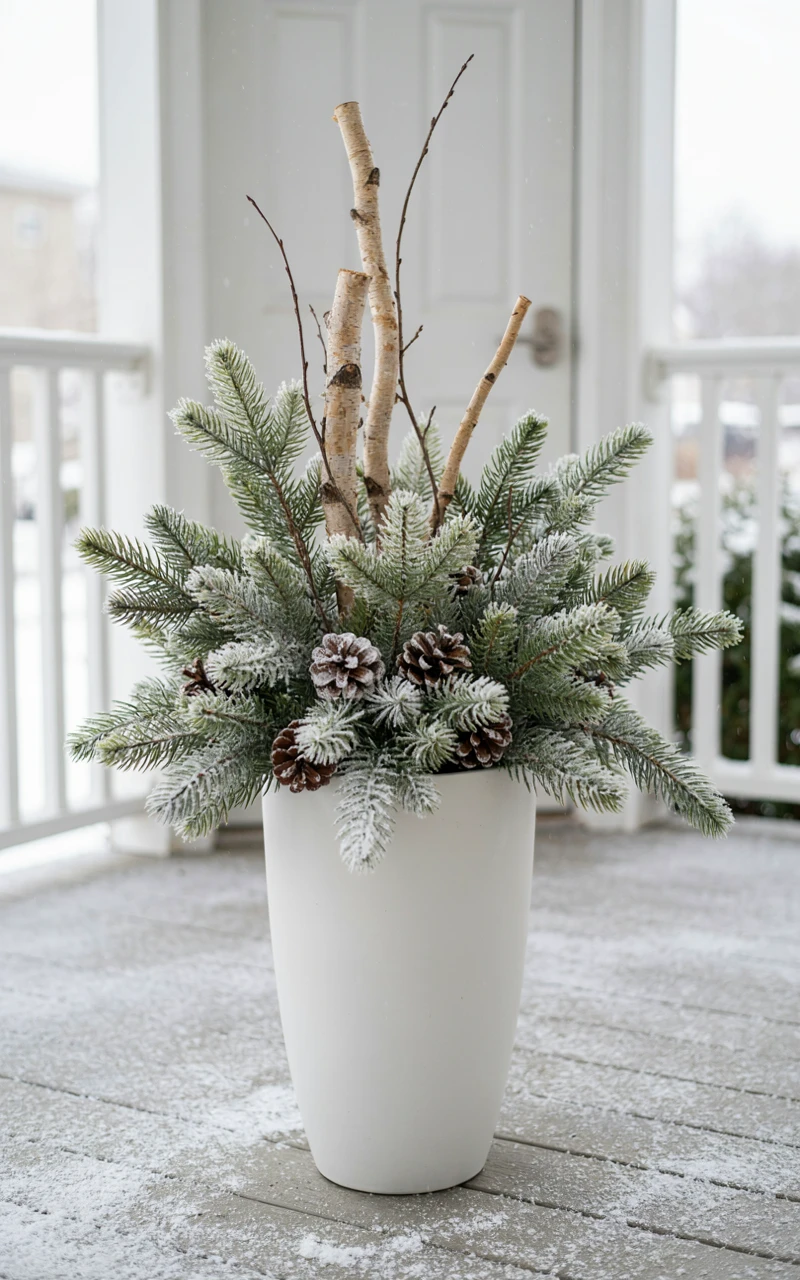
If you love a snowy look, this planter gives you one even when there’s no snow on the ground. White pots, flocked branches, and silver touches make your porch feel bright and fresh, like a winter morning.
It works because white looks clean against a dark door or brick wall. It also lasts all season, since a snowy planter feels right in December and still fits in February.
How to make it: Start with a white or light gray pot. Fill it with flocked faux branches, which have a white coating that looks like fresh snow. Add a few white birch branches for height, then tuck in frosted pine cones and a few silver or white ornaments.
- Use faux flocked branches outside. Spray-on flocking on real greens can wash off in rain.
- Add a strand of cool white lights for a sparkly, icy glow.
- Paint the tips of pine cones with white craft paint for a snowy look.
- Keep colors simple: white, silver, and a little green.
This planter is great winter outdoor decor if your porch is covered. Rain and wet snow are hard on flocked pieces, so a roof overhead helps them stay white longer.
If you like this kind of fresh, out-of-the-ordinary look, these unique Christmas decorations have more ideas you can carry inside.
Final Thoughts – Winter Porch Planter Ideas
I love how a few branches and a pot can make a front door feel so welcoming.
Whether you go with mixed greens, a glowing lantern, or a planter full of purple kale, each of these ideas is simple to put together. Most of them use clippings, pots, and decorations you may already have.
Here’s what to keep in mind as you get started:
- Water your soil before it freezes so your stems stay in place.
- Mix tall, filling, and draping greens for a full look.
- Choose frost-proof pots that won’t crack in the cold.
- Add light, because winter evenings come early.
You don’t need to get it perfect. Start with one pot, tuck in a few branches, and see how it looks.
I’d love to hear which of these winter porch planter ideas you try first. Leave a comment below and share how your porch turns out.