
This post may contain affiliate links, which means I may receive a small commission should you decide to click that link and make a purchase. For more information please refer to the Terms & Conditions.
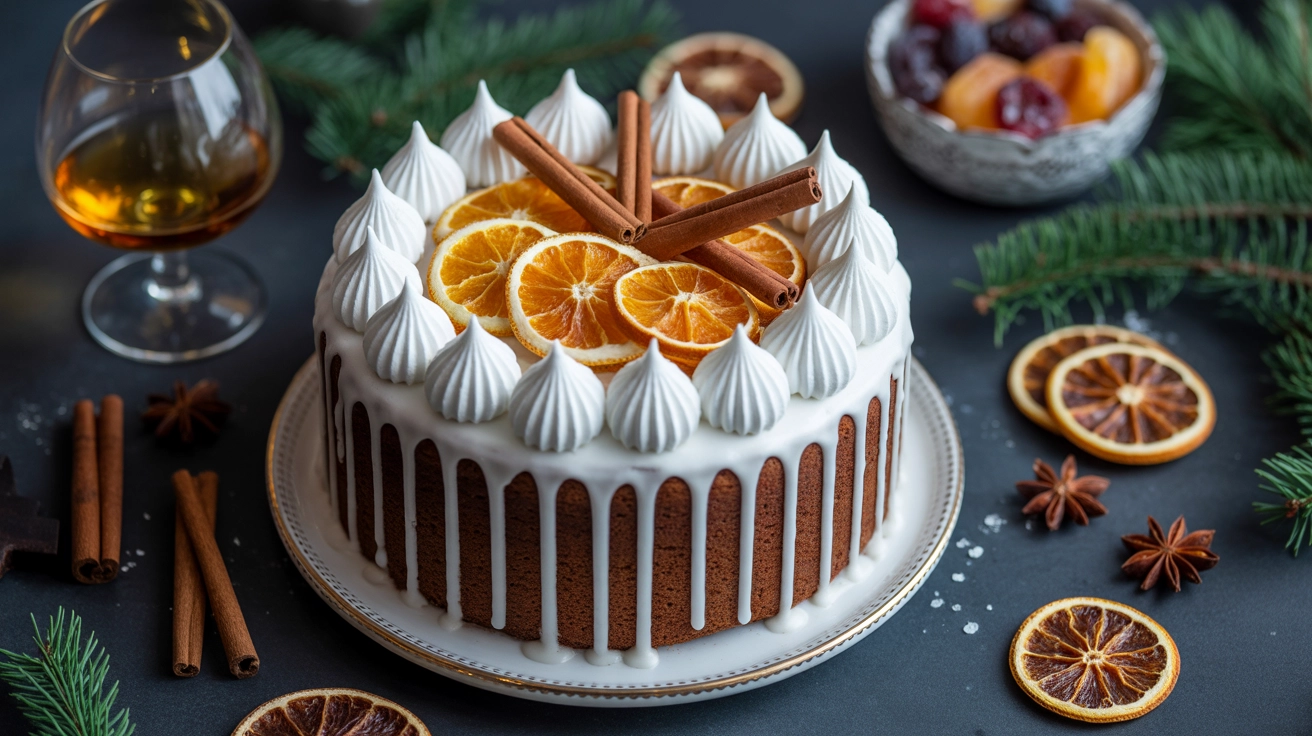
I am absolutely obsessed with baking the perfect Christmas Cake. For years, I struggled. My cakes were either a bit dry or the flavor just wasn’t deep enough. I wanted that decadent, dark, moist Christmas Cake that you see in magazines, the kind that becomes the true centerpiece of the holiday table.
After a lot of trial and error, I finally perfected a method that I’m so excited to share. This isn’t just a recipe; it’s a complete guide. I’ll walk you through every single step, from soaking the fruit to the final decoration.
I want you to feel confident and create a Christmas Cake that isn’t just good, but truly stands out. Let’s get baking!
What Makes This Christmas Cake Recipe Different?
You might be wondering what makes this Christmas Cake guide special. It’s not about a single secret ingredient. It’s about the process. Many recipes rush things. This method is all about building layers of deep, rich flavor over time.
We are going to focus on three key areas:
- The Soak: Giving your fruit proper time to soak makes all the difference. It ensures every bite is plump and flavorful.
- The Bake: We’ll use a low, slow baking method. This technique, along with special tin preparation, stops the outside from burning while the inside cooks to perfection.
- The Feed: This is my favorite part! “Feeding” your cake after it’s baked is the real secret to an incredibly moist and boozy Christmas Cake.
I’m not a fan of dry, crumbly fruit cake. This guide is my personal blueprint for avoiding that. You will be making a traditional, rich, and dark fruit cake that improves with age.
The Timeline: When to Make Your Christmas Cake
This is not a last-minute bake. For the best Christmas Cake, you need to start early.
I recommend baking your cake 6 to 8 weeks before Christmas.
Yes, you read that right! This gives you plenty of time for the most critical step: feeding. A Christmas Cake is like a fine wine; it needs time to mature. The flavors need to mingle, and the alcohol needs to seep into the cake, preserving it and making it unbelievably moist.
- Bake: Late October or the first week of November.
- Feed: Every 1-2 weeks from baking until decorating.
- Decorate: 1-2 days before serving.
If you are reading this in early December, don’t panic! You can still make a “last-minute” version. It won’t have the same depth of flavor as a mature cake, but it will still be a delicious treat. You’ll need to feed it more intensely over a shorter period.
Step 1: Gathering Your Ingredients
Before you begin, gather all your ingredients. This makes the process so much smoother. You are essentially making a vibrant, dense fruit cake.
For the Fruit Soak:
- 1 lb (about 450g) Currants
- 12 oz (about 340g) Sultanas or Golden Raisins
- 12 oz (about 340g) Raisins
- 4 oz (about 110g) Glace (candied) Cherries, chopped
- 4 oz (about 110g) Mixed Candied Peel, finely chopped
- Zest of 1 large Orange
- Zest of 1 large Lemon
- 1/2 cup (about 120ml) Brandy or Dark Rum (I love rum for its sweet, deep flavor). You can also use sherry or even fresh orange juice if you want a non-alcoholic Christmas Cake.
For the Cake Batter:
- 1 cup (2 sticks, or 225g) Unsalted Butter, very soft
- 1 cup (about 225g) Dark Brown Sugar (packed)
- 4 large Eggs, at room temperature
- 1 tablespoon Black Treacle or Molasses (this is key for the dark color)
- 1/2 cup (about 60g) Blanched Almonds, roughly chopped
- 2 cups (about 225g) All-Purpose Flour
- 1 teaspoon Mixed Spice (or use a combo of cinnamon, nutmeg, and allspice)
- 1/2 teaspoon Ground Cinnamon
- 1/2 teaspoon Ground Nutmeg
For Feeding and Decorating (Later):
- Extra Brandy or Rum for feeding
- Apricot Jam
- 1 package (about 1 lb or 500g) Marzipan
- Icing (Royal Icing or Fondant)
Step 2: The All-Important Soaking Process
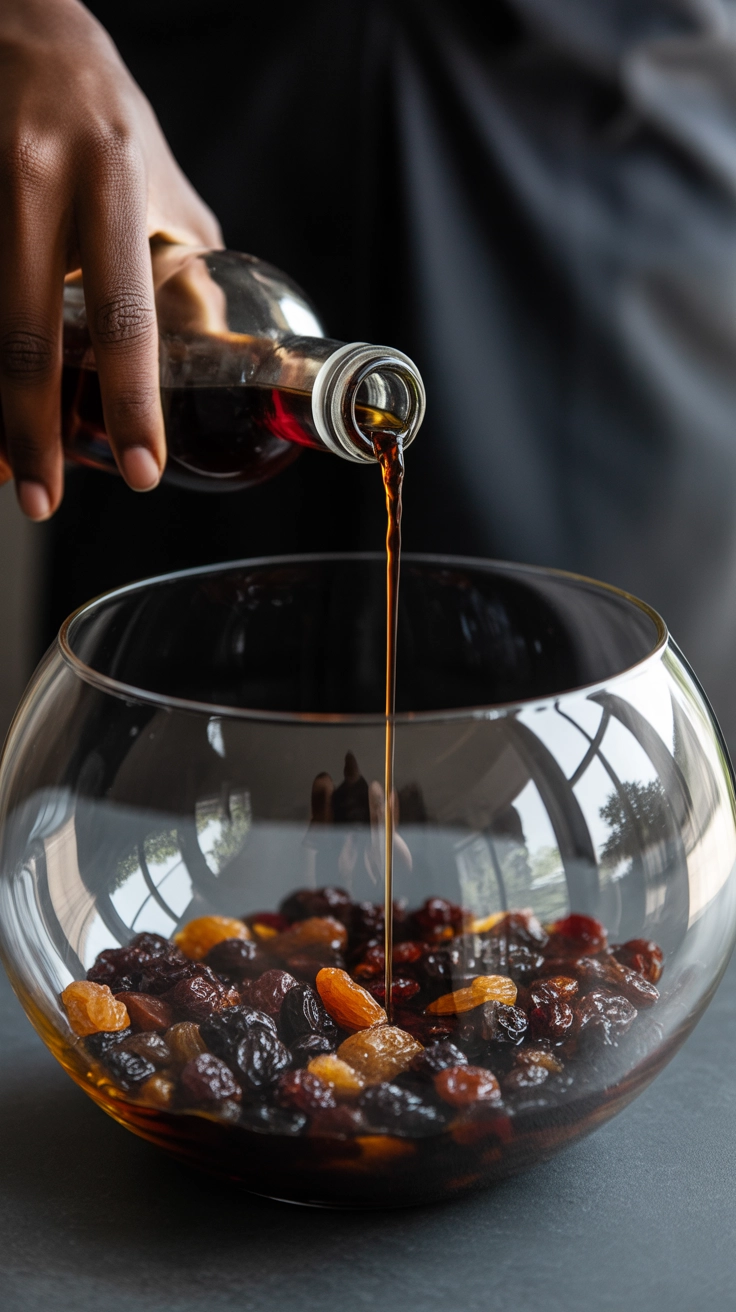
This step is non-negotiable for a moist Christmas Cake.
- Get a huge bowl. Add all your dried fruits: the currants, sultanas, raisins, chopped cherries, and mixed peel.
- Add the fresh orange and lemon zest.
- Pour your chosen liquid (brandy, rum, or juice) all over the fruit.
- Stir everything together until all the fruit is coated.
- Cover the bowl tightly with plastic wrap.
- Let this mixture sit on your counter for at least 24 hours. I personally love to let it soak for 3 days if I have the time.
You’ll see the fruit plump up as it absorbs all that wonderful liquid. This is the first step to guaranteeing your Christmas Cake is not dry.
Step 3: Preparing Your Tin and Oven
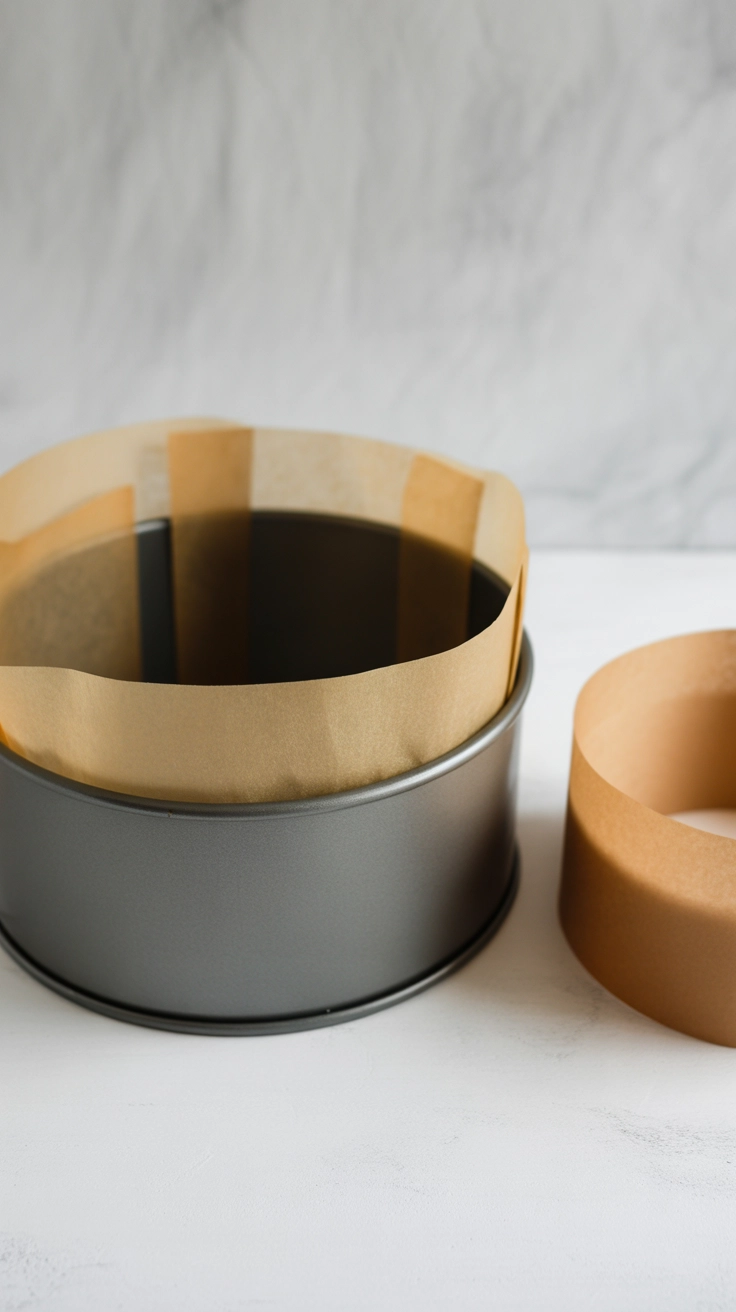
This is the step I initially got wrong. A Christmas Cake bakes for a very long time. If you don’t protect it, the edges will burn long before the middle is cooked.
You will need an 8-inch (20cm) round cake tin or a 7-inch (18cm) square tin. Make sure it’s deep (at least 3 inches).
- Preheat Your Oven: Set your oven to a low temperature. 300°F (150°C) is perfect.
- Grease the Tin: Generously grease the inside of your tin with butter.
- Line the Inside: Cut two layers of parchment paper (also known as baking paper) to fit the bottom of the tin. Place them inside.
- Cut two long strips of parchment paper that are taller than the tin. Line the inside sides of the tin with these two layers. The paper should stick up about 2 inches above the rim. This helps protect the top.
- Wrap the Outside (My Secret Tip): This is a game-changer. Take a large piece of brown paper (like from a paper bag) or a few sheets of newspaper. Fold it into a long band that is thick enough to wrap around the outside of your cake tin.
- Secure this paper band with a kitchen string. This outer layer acts as insulation, protecting the sides of your Christmas Cake from the direct heat.
It might seem like a lot of work, but I promise, this is what stops your cake from becoming a dry, burnt brick.
Step 4: Mixing and Baking Your Traditional Christmas Cake
Okay, it’s time to bake! Your fruit is soaked, and your tin is prepped.
- In a large mixing bowl, add the softened butter and dark brown sugar.
- Using an electric mixer (or a wooden spoon and a lot of energy), “cream” them together. You want the mixture to become lighter in color and fluffy. This traps air in the batter.
- In a separate small bowl, lightly beat your four eggs.
- Add the eggs to the butter mixture, one at a time. Beat well after each addition. My Tip: If the mixture starts to look curdled or split, add a tablespoon of your measured-out flour. This will bring it right back together.
- Once all the eggs are in, beat in the black treacle or molasses.
- In another bowl, sift your flour and all the spices (mixed spice, cinnamon, nutmeg).
- Add the chopped almonds to the dry flour mixture and stir.
- Gently “fold” the flour mixture into the wet batter using a large spatula. Don’t overmix! Just fold until you no longer see streaks of flour.
- Finally, add all of your lovely soaked fruit (and any liquid left in the bowl).
- Gently but thoroughly fold the fruit. You want to make sure the fruit is evenly distributed. The batter will be very thick and heavy.
Baking the Cake:
- Spoon the thick batter into your prepared tin.
- Use the back of a spoon to press the batter down and level the top.
- I like to make a slight, shallow dip or hollow in the very center of the batter. This helps stop the cake from doming too much as it rises.
- Place the tin on a middle rack in your preheated oven (300°F / 150°C).
- Let it bake. This is where patience comes in. A cake this size will take 4 to 4.5 hours.
- Do NOT open the oven door for the first 3 hours.
- After 4 hours, check the cake. You can test it by inserting a wooden skewer into the center. If it comes out clean (without wet batter), it’s done. If not, give it another 15-30 minutes and check again.
- Once baked, let the Christmas Cake cool in its tin on a wire rack for about 30 minutes.
- Then, carefully turn it out onto the wire rack. Peel off all the parchment paper and let it cool completely. It’s best to let it cool overnight.
Step 5: “Feeding” Your Christmas Cake for Ultimate Flavor
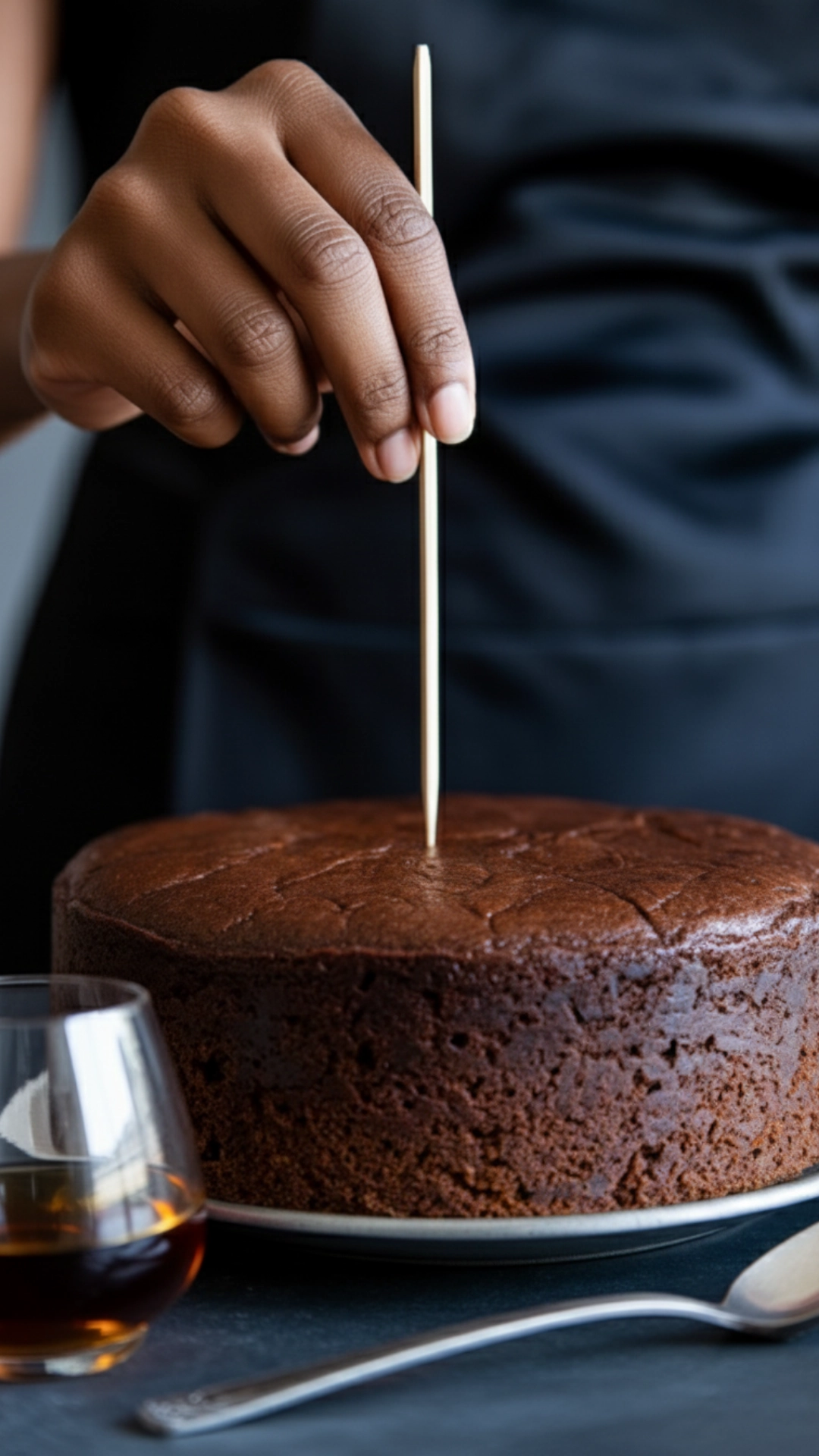
This is the fun part that makes your Christmas Cake stand out.
- Once your cake is completely cool, take a thin wooden skewer.
- Poke holes all over the top of the cake. Go down about halfway through the cake.
- Take your feeding liquid (the same brandy or rum you used for soaking).
- Spoon 1-2 tablespoons of the liquid evenly over the top of the cake, allowing it to soak into the holes.
- Don’t drench it! A little bit goes a long way.
You will repeat this feeding process every 1 to 2 weeks until you are ready to decorate. This step adds incredible moisture and deepens that festive, boozy flavor. I love the smell of the cake each time I unwrap it for its feeding.
Step 6: How to Store Your Christmas Cake Properly
Storage is key to maturation. You need to wrap the cake properly between feedings.
- Take two large pieces of parchment paper. Wrap your cake tightly in them.
- Next, wrap the entire thing tightly in a layer of aluminum foil.
- Place your wrapped Christmas Cake in an airtight container (a cake tin or a large plastic container works perfectly).
- Store it in a cool, dark, and dry place. A pantry, a cupboard, or a garage (if it’s not too cold) is ideal.
- Do not refrigerate your Christmas cake. The fridge is too moist and will make the cake sticky.
Every 1-2 weeks, unwrap it, give it another “feed” of 1-2 tablespoons of alcohol, and wrap it back up tightly.
The Grand Finale: Decorating Your Christmas Cake
About 1-2 days before you want to serve it, it’s time to decorate. This is where you can get really creative. The traditional way involves two layers: marzipan and royal icing.
Part 1: Applying the Marzipan Layer
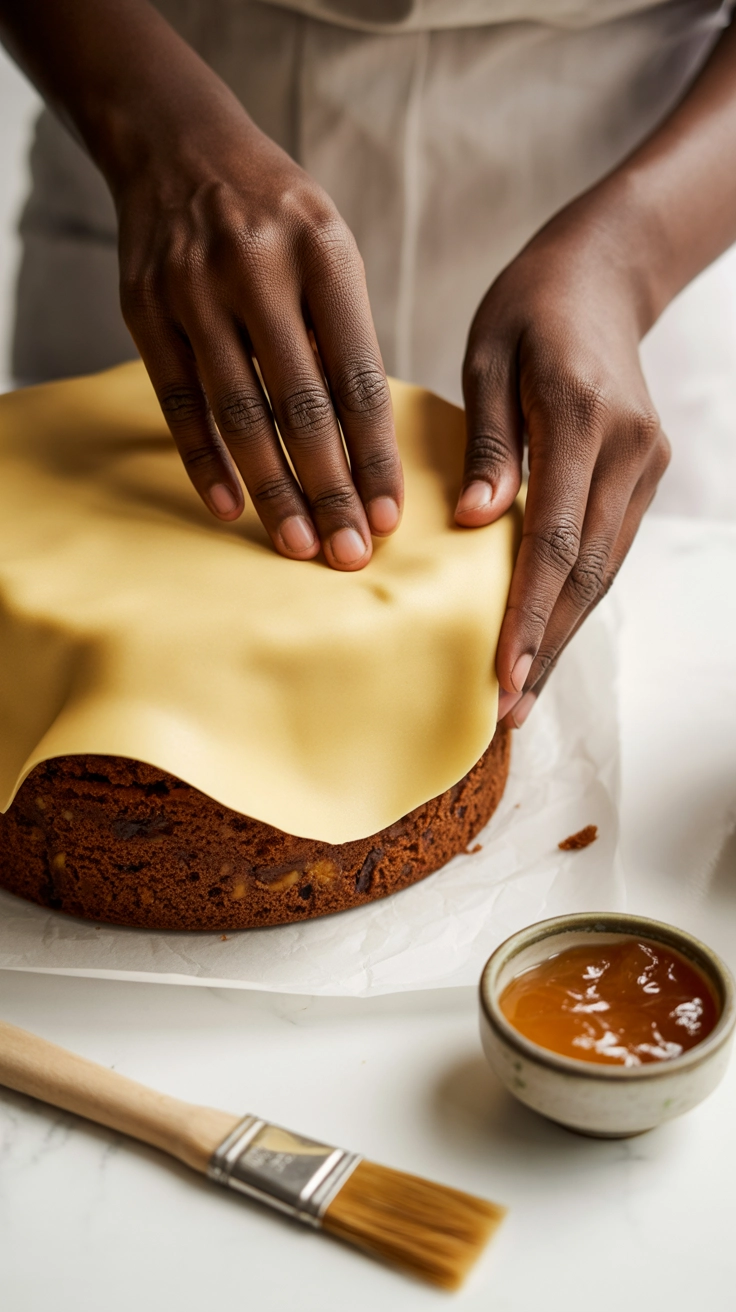
I love marzipan. It not only adds a delicious almond flavor but also seals in all the moisture from feeding, creating a perfectly smooth surface for your icing.
- Unwrap your Christmas Cake. Place it upside down on a cake board or serving plate. The bottom of the cake is usually flatter, so it makes a better top!
- Take about 1/2 cup of apricot jam and warm it gently in a small pot. You can add a splash of water to thin it.
- Sieve the jam to remove any lumps.
- Brush the warm, smooth jam all over the top and sides of your cake. This is the “glue” that holds the marzipan together.
- Dust your clean countertop with a light coating of powdered sugar.
- Knead your block of marzipan until it’s soft and pliable.
- Roll it out into a large circle, big enough to cover the top and sides of the cake.
- Carefully lift the marzipan (you can roll it around your rolling pin) and drape it over the cake.
- Use your hands (or a cake smoother) to press the marzipan onto the top and sides of the cake, smoothing out any wrinkles.
- Trim any excess from the bottom with a sharp knife.
- Important: Let the cake sit, uncovered, in a cool, dry room for at least 24 hours (or up to 2 days). This allows the oils in the marzipan to dry out, which stops them from bleeding into your white icing.
Part 2: Applying the Icing (Royal Icing is Classic)
You have a choice here. You can use ready-to-roll fondant for a super-smooth, modern look. Alternatively, you can opt for a traditional approach with royal icing, which is my personal favorite for a Christmas Cake. It gives you that classic, snowy-white finish.
Here’s a simple Royal Icing recipe:
- 2 large Egg Whites
- 4 cups (about 500g) Powdered Sugar, sifted
- 1 teaspoon Lemon Juice
- 1 teaspoon Glycerine (This is optional, but it stops the icing from setting rock-hard)
Beat the egg whites lightly until they form soft peaks. Then, gradually beat in the sifted powdered sugar. Add the lemon juice and glycerine. Keep beating (preferably with an electric mixer) for 5-10 minutes until the icing is very stiff, white, and holds its shape.
Part 3: Creating a Snowy Peak Finish
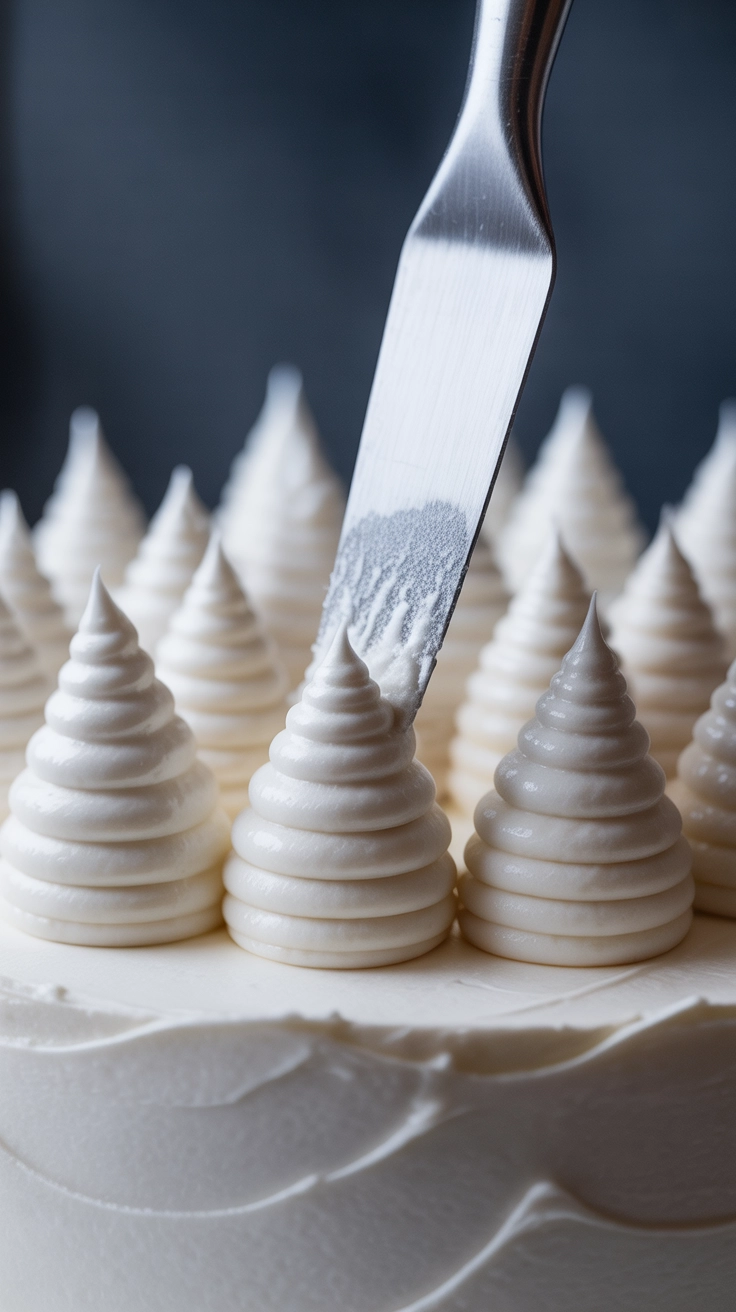
This is the easiest and, in my opinion, most beautiful way to ice your Christmas Cake.
- Before applying the icing, lightly brush the marzipan with a small amount of your leftover alcohol. This helps the royal icing stick.
- Pile the royal icing on top of the marzipan-covered cake.
- Use a palette knife to spread the mixture evenly over the top and sides. Don’t worry about it being perfectly smooth!
- Once the cake is covered, use the flat side of your palette knife or the back of a spoon to “dab” and “pull” at the icing. This will create beautiful, snowy peaks.
- Let the icing dry and harden for at least a few hours, or ideally overnight.
Part 4: Simple Christmas Cake Decorating Ideas
Your snowy cake is now a blank canvas. You don’t need to be a professional to make it stand out.
- Classic Ribbon: The simplest, most elegant look. Tie a wide, festive ribbon (like red or gold) around the base of the cake.
- Rustic Charm: This is what I love to do. Arrange dried orange slices, a few cinnamon sticks, and some star anise on top of the cake. It looks and smells incredible.
- Simple Holly: Use a few sprigs of non-toxic artificial holly. (Real holly berries are poisonous, so be careful if using fresh!).
- Cookie Cutters: Buy some small, festive cookie cutters (like stars or snowflakes). Press them gently into the icing before it sets, or use them to cut shapes out of colored fondant to place on top.
My Top Tips for a Flawless Christmas Cake
- Chop Your Cherries: Always buy whole glace cherries and chop them yourself. Pre-chopped ones are often too small and dry.
- Trust the Low Oven: Resist the temptation to turn up the heat to speed up the baking process. Low and slow is the only way.
- Don’t Over-Feed: Only use 1-2 tablespoons of alcohol per feeding. Too much can make the cake soggy.
- Let the Marzipan Dry: I said it before, but it’s crucial. Don’t ice a “wet” marzipan layer.
- Embrace Imperfection: My first few cakes were a bit lopsided. A “peaked” royal icing finish hides a multitude of sins and looks wonderfully festive.
Conclusion: Your Amazing Christmas Cake Centerpiece
When you finally bring your homemade cake to the table, I know you’ll feel an incredible sense of pride. I love that feeling! You didn’t just bake a cake; you created a centerpiece full of flavor and tradition. I truly hope this guide helps you bake a Christmas Cake that your family will remember for years to come.
I hope this helps inspire you to try it yourself.
