
This post may contain affiliate links, which means I may receive a small commission should you decide to click that link and make a purchase. For more information please refer to the Terms & Conditions.
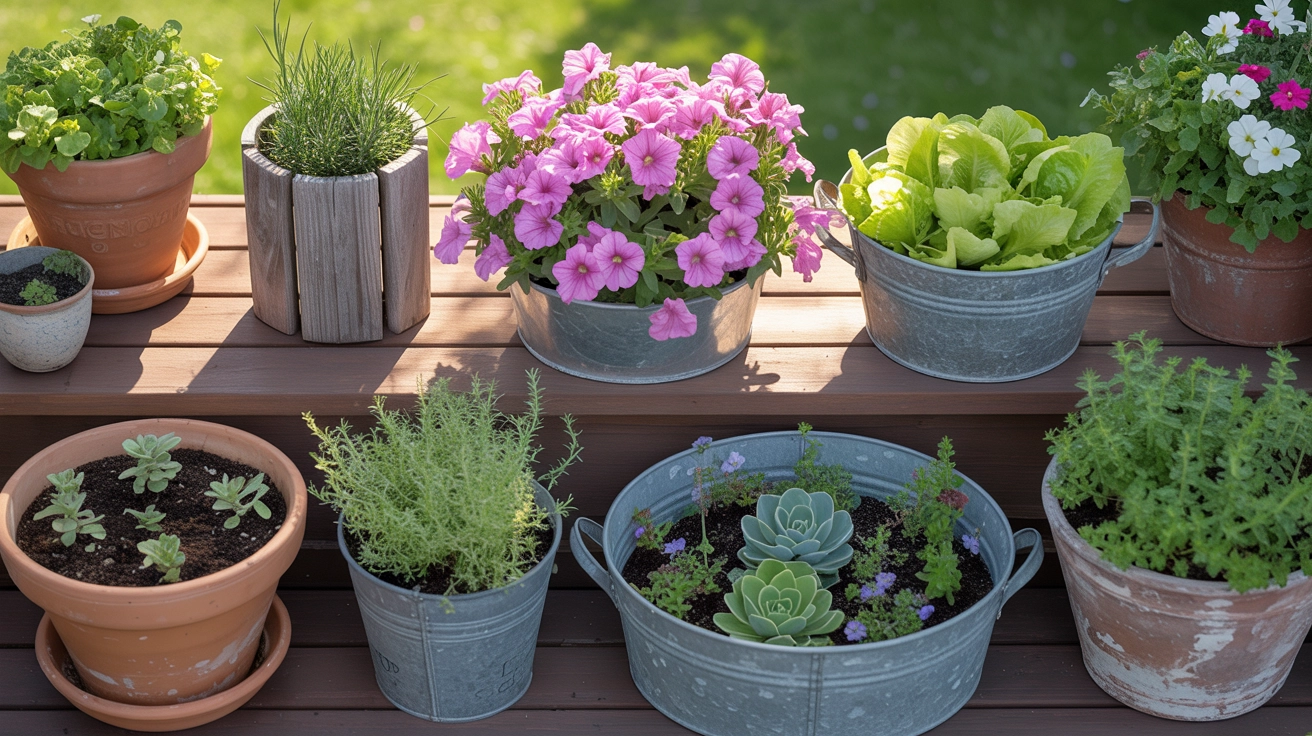
Spring is the perfect time to refresh your outdoor space, and these Container Gardening Ideas for Spring offer the ultimate flexibility for urban dwellers and backyard enthusiasts alike.
Whether you have a sprawling patio or a tiny Juliet balcony, using containers allows you to control soil quality and move your plants to catch the best sunlight.
The Classic Terra Cotta Herb Hearth
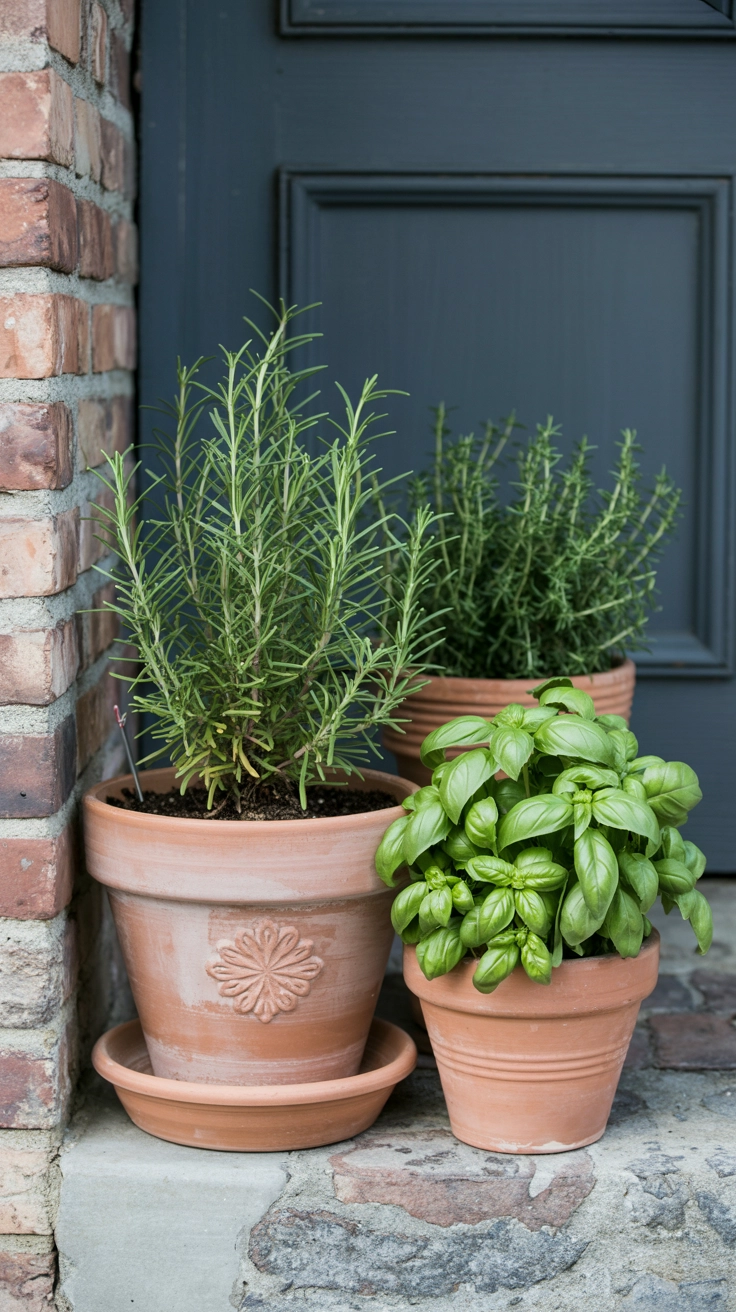
Why You’ll Love This Recipe: This arrangement brings fresh flavors right to your kitchen door. It is a functional, fragrant, and timeless display that makes harvesting sprigs for dinner incredibly convenient.
Ingredients
- 3 large terra cotta pots (30 cm / 12 inches diameter)
- 1 bag (40 liters / 42 quarts) organic potting mix
- 2 cups (475 ml) perlite for drainage
- 1 Rosemary plant (15 cm / 6-inch starter)
- 2 Sweet Basil plants (10 cm / 4-inch starters)
- 1 Thyme plant (10 cm / 4-inch starter)
- 1 tablespoon (15 ml) slow-release organic fertilizer granules
Tools and Preparation
- Hand trowel
- Watering can with a rose attachment
- Small stones or broken pottery shards for drainage holes
- Ensure pots have adequate drainage holes before starting.
Step-by-Step Instructions
- Place a few small stones over the drainage holes at the bottom of each terra cotta pot to prevent soil loss.
- Mix the potting soil with the perlite in a large bucket to ensure a light, airy consistency for the roots.
- Fill the pots three-quarters full with the soil mixture, lightly tapping the sides to remove large air pockets.
- Sprinkle the fertilizer granules into the top layer of the soil and mix gently with your trowel.
- Remove the rosemary from its nursery container and place it in the center of the first pot.
- Repeat the process with the basil and thyme in the remaining pots, ensuring the top of the root ball is 2 cm (1 inch) below the rim.
- Fill the remaining space with soil and firm down gently with your fingers to secure the plants.
- Water thoroughly until liquid runs out of the bottom of the pots, and place them in a spot with 6 to 8 hours of sun.
Common Mistakes to Avoid
Avoid using garden soil instead of potting mix, as it is too heavy and will compact in containers. Do not overwater basil; it prefers to dry out slightly between soakings to prevent root rot.
Variations, Storage, and Final Thoughts
For a Mediterranean twist, swap the basil for oregano or lavender. To maintain these containers, ensure they receive at least 6 hours of sunlight daily and trim the herbs regularly to encourage bushy growth.
These pots can be brought indoors during unexpected spring frosts to protect the tender basil leaves. This setup is a simple and stunning way to start your gardening journey while providing fresh ingredients for your culinary adventures.
The Pollinator Petunia Tower
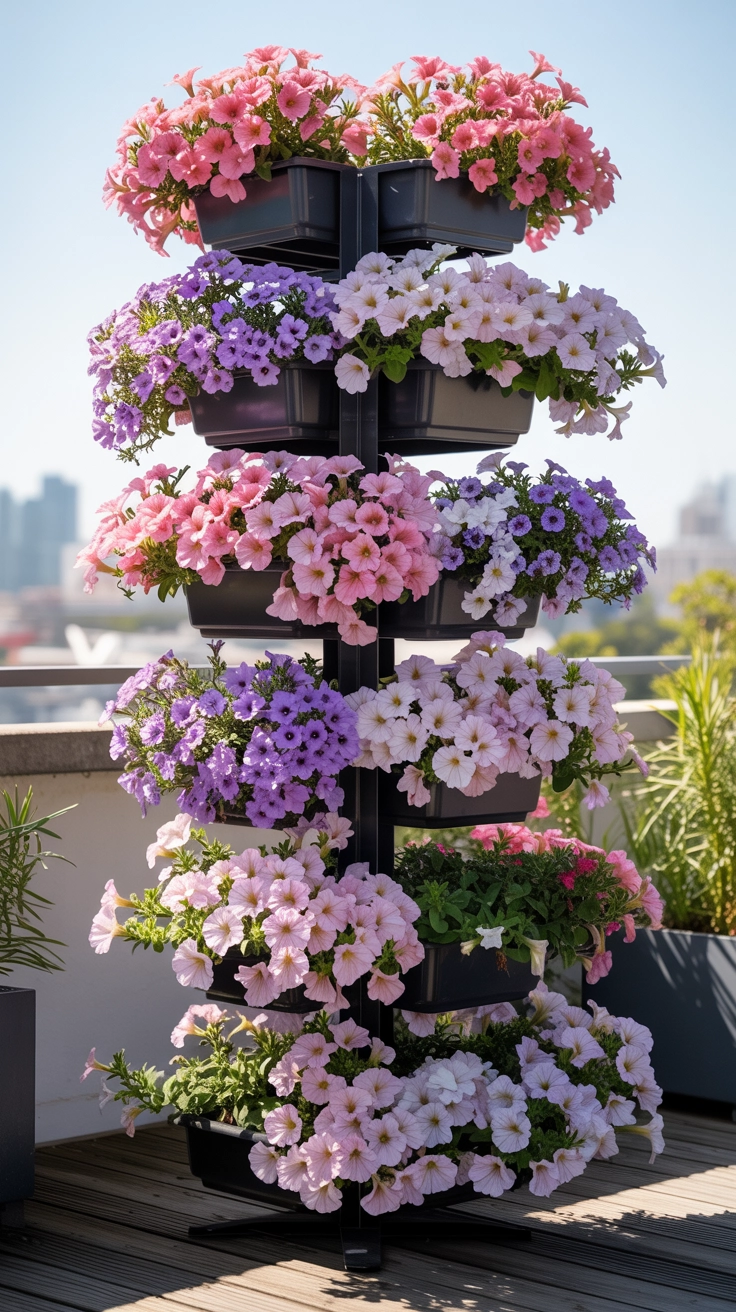
Why You’ll Love This Recipe: This vertical display saves floor space while attracting butterflies and bees to your balcony. It turns a small footprint into a massive pillar of vibrant color.
Ingredients
- 1 vertical planter tower (90 cm / 36 inches tall)
- 1 bag (50 liters / 52 quarts) moisture-retentive potting soil
- 12-15 Petunia starts (10 cm / 4-inch pots) in mixed colors
- 2 cups (475 ml) water-absorbing crystals
- 2 tablespoons (30 ml) bloom-boosting liquid fertilizer
Tools and Preparation
- Watering can
- Garden gloves
- Ensure the tower base is weighted or secured against spring winds.
Step-by-Step Instructions
- Mix the water-absorbing crystals into the potting soil according to package directions.
- Fill the tower base with soil and firm it down to create a steady foundation.
- Insert a petunia into the lowest side openings of the tower.
- Add more soil to cover the roots of the first level.
- Repeat the planting process for each tier, moving upward.
- Plant three petunias at the very top of the tower for a rounded “cap” look.
- Water the tower from the top slowly until water seeps from the bottom holes.
- Apply the bloom-boosting fertilizer once every two weeks.
Common Mistakes to Avoid
Neglecting the top-down watering method can leave the bottom plants dry. Do not forget to “deadhead” or remove spent blooms to keep the tower flowering all season.
Variations, Storage, and Final Thoughts
Swap petunias for calibrachoa if you want smaller, self-cleaning flowers. Store the tower in a garage during winter to prevent the plastic or ceramic from cracking. This vertical garden is a simple and stunning centerpiece that maximizes every inch of your outdoor area.
The Succulent Stone Bowl
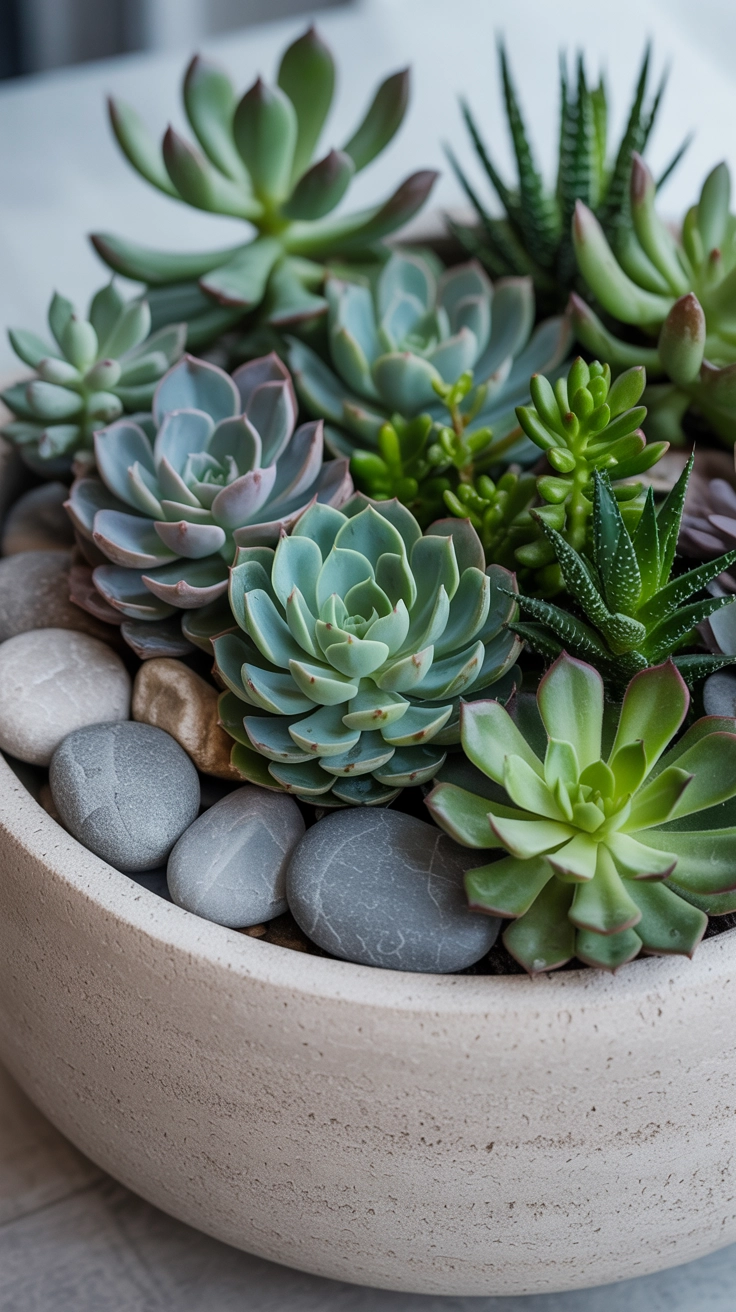
Why You’ll Love This Recipe: A low-maintenance masterpiece that thrives on neglect and adds a modern, architectural feel to any tabletop. It is perfect for those who want beauty without the daily watering chore.
Ingredients
- 1 shallow stone or concrete bowl (40 cm / 16 inches wide)
- 1 bag (10 liters / 10 quarts) cactus and succulent gritty mix
- 1 cup (235 ml) horticultural sand
- 5 assorted Echeveria plants
- 3 Sedum “donkey tail” plants
- 2 cups (475 ml) decorative river pebbles
Tools and Preparation
- Small brush for cleaning leaves
- Tweezers for positioning small plants
- Ensure the bowl has at least one drainage hole.
Step-by-Step Instructions
- Fill the bowl almost to the brim with the cactus and succulent gritty mix.
- Incorporate the horticultural sand into the top 5 cm (2 inches) of soil.
- Arrange the Echeverias in a cluster slightly off-center for an organic look.
- Place the Sedums near the edge of the bowl so they can trail over the side.
- Use tweezers to tuck in any smaller “pups” or offsets.
- Gently brush away any soil that fell onto the fleshy leaves.
- Top the soil with a thin layer of decorative river pebbles.
- Wait one week before watering to allow any bruised roots to callous over.
Common Mistakes to Avoid
The biggest mistake is overwatering; only water when the soil is completely dry to the touch. Avoid using standard potting soil, as it retains too much moisture and causes root rot.
Variations, Storage, and Final Thoughts
Add a “Sempervivum” (Hen and Chicks) for a cold-hardy version that can stay outside longer. In winter, move the bowl to a bright windowsill indoors. This arrangement is a simple and stunning way to bring desert-chic vibes to your spring patio.
The Salad Greens Galvanized Tub
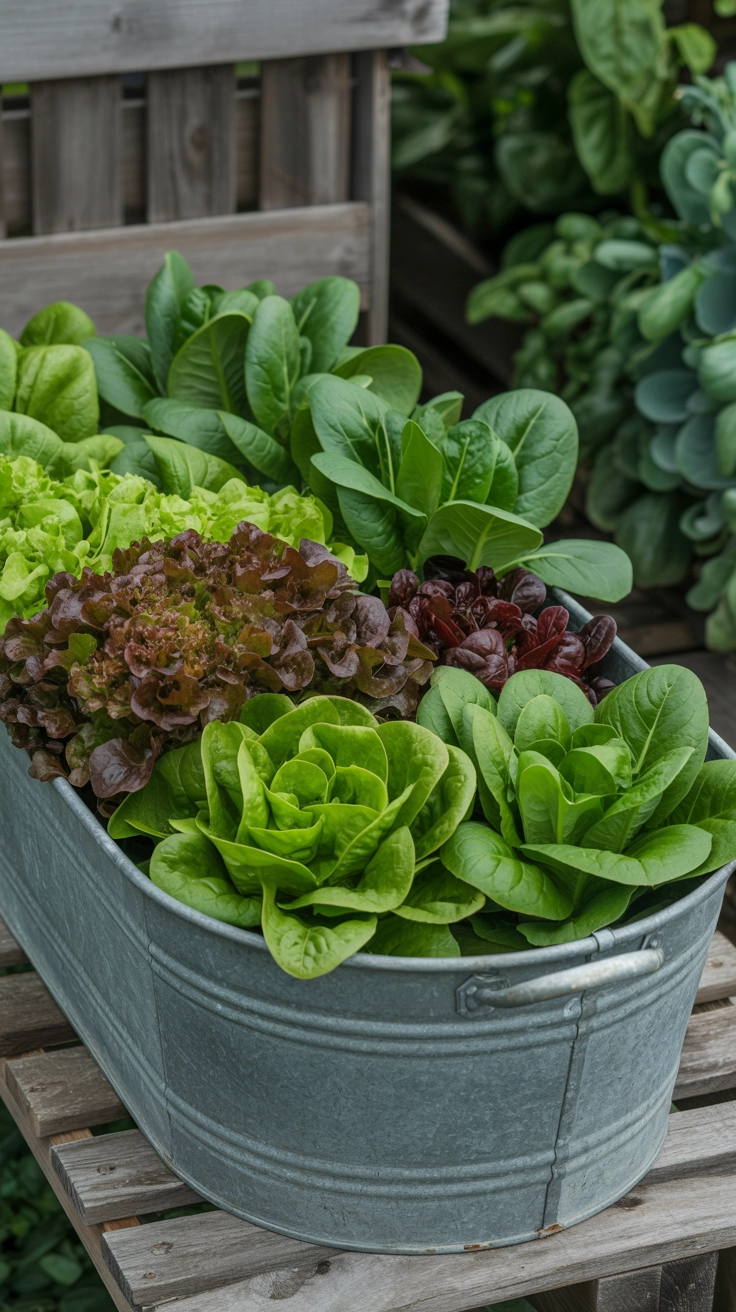
Why You’ll Love This Recipe: Growing your own lettuce is incredibly rewarding and ensures you have chemical-free greens for your spring salads. It provides a “cut-and-come-again” harvest for weeks.
Ingredients
- 1 galvanized metal tub (approx. 56 liters / 15 gallons)
- 1 bag (60 liters / 63 quarts) premium vegetable potting soil
- 1 packet (5 g) Mixed Gourmet Lettuce seeds
- 1 packet (5 g) Spinach seeds
- 1 cup (235 ml) worm castings (organic fertilizer)
Tools and Preparation
- Power drill (to add drainage holes)
- Hand rake
- Spray bottle for gentle watering
Step-by-Step Instructions
- Drill 5-8 holes in the bottom of the galvanized tub for drainage.
- Fill the tub with vegetable potting soil, leaving 5 cm (2 inches) of headspace at the top.
- Mix the worm castings into the top layer of soil for a nutrient boost.
- Lightly rake the surface and scatter the lettuce and spinach seeds evenly across the top.
- Cover the seeds with a very thin layer (5 mm / 0.25 inch) of soil.
- Mist the surface thoroughly with a spray bottle to avoid washing away seeds.
- Place in a location that receives morning sun and afternoon shade.
- Harvest outer leaves once they reach 10 cm (4 inches) tall.
Common Mistakes to Avoid
Avoid sowing seeds too deeply, as they need some light to germinate. Do not let the soil dry out completely, as lettuce becomes bitter when stressed by heat or drought.
Variations, Storage, and Final Thoughts
Add edible pansies or nasturtiums for a pop of color in your salads. Store the tub in a shaded area as the weather warms up to prevent the greens from bolting. This tub is a simple and stunning solution for homegrown produce in a limited space.
The Fragrant Jasmine Trellis
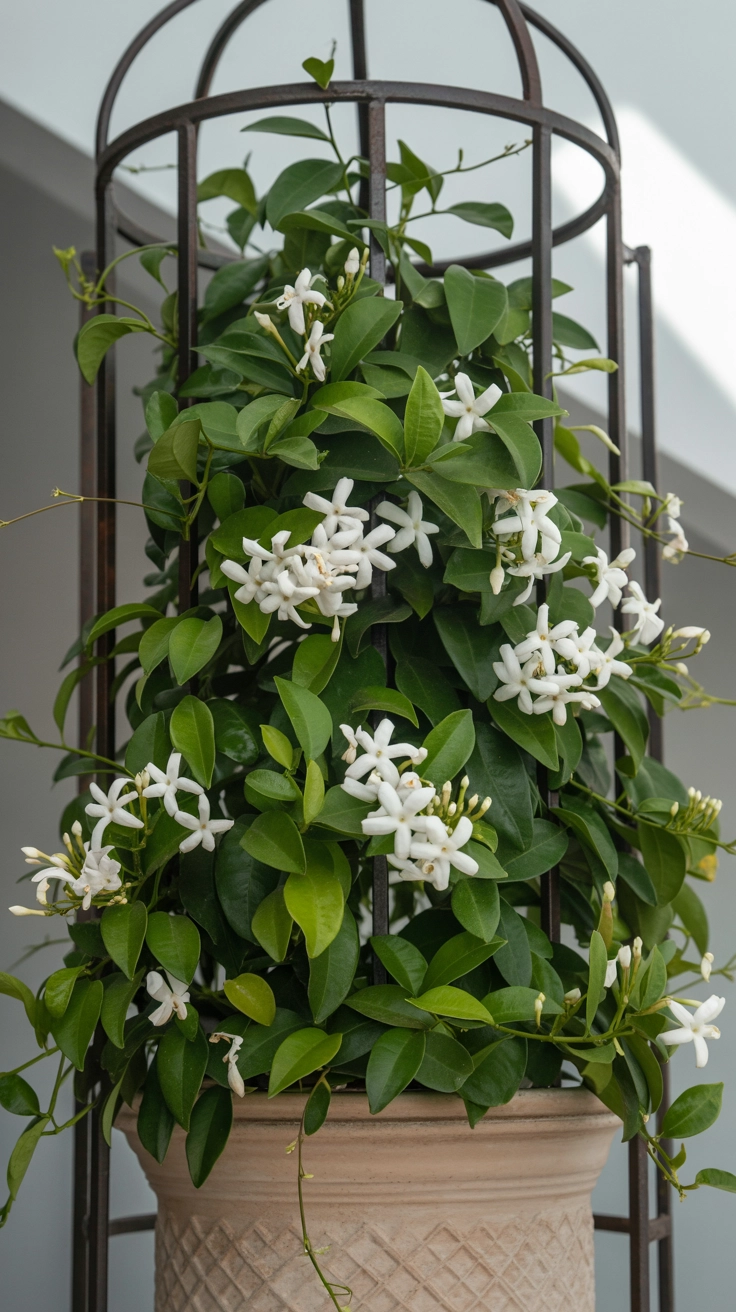
Why You’ll Love This Recipe: Perfect for vertical interest, this container fills your evening air with a sweet, intoxicating scent. It acts as a natural aromatherapy station for your porch.
Ingredients
- 1 large ceramic pot (45 cm / 18 inches deep)
- 1 pyramid trellis (120 cm / 48 inches tall)
- 1 bag (40 liters / 42 quarts) all-purpose potting mix
- 1 Star Jasmine plant (1 gallon / 3.8 liter size)
- 1/2 cup (120 ml) bone meal for root strength
Tools and Preparation
- Heavy-duty gloves
- Garden twine
- Position the pot in its final location before filling, as it will be heavy.
Step-by-Step Instructions
- Fill the pot halfway with potting mix and stir in the bone meal.
- Place the jasmine plant in the center and fill around it with more soil.
- Push the legs of the trellis deep into the soil around the plant.
- Gently untangle the jasmine vines from their nursery stake.
- Weave the vines through the bottom rungs of the trellis.
- Use garden twine to loosely secure any stubborn branches.
- Water deeply until the soil is saturated.
- Place in full sun to partial shade.
Common Mistakes to Avoid
Avoid tying the twine too tightly, which can strangle the growing vines. Ensure the pot is heavy enough so the trellis doesn’t act like a sail and tip over in the wind.
Variations, Storage, and Final Thoughts
Substitute jasmine with Clematis for large, showy flowers instead of scent. Prune back in late winter to encourage new growth for the next spring. This trellis is a simple and stunning way to add height and fragrance to your garden.
The Dwarf Citrus Grove
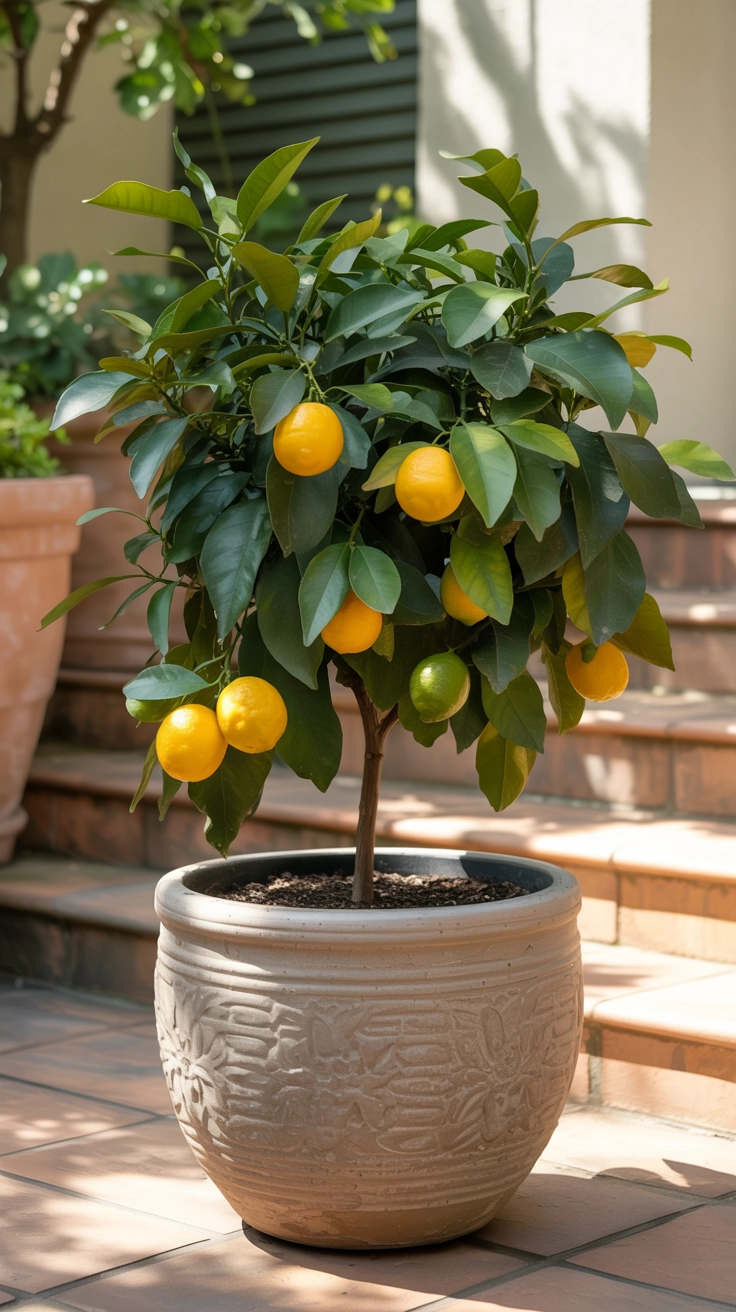
Why You’ll Love This Recipe: Bringing a touch of the tropics to cold climates, these trees offer glossy leaves and fragrant blossoms. It is a long-term investment that provides edible fruit and a high-end look.
Ingredients
- 1 large resin or lightweight pot (50 cm / 20 inches)
- 1 bag (30 liters / 32 quarts) citrus-specific potting soil
- 1 Dwarf Meyer Lemon or Key Lime tree
- 1 cup (235 ml) organic citrus fertilizer
Tools and Preparation
- Large watering can
- Mulch (pine bark or cedar)
- Ensure the pot has wheels or a rolling caddy for easy movement.
Step-by-Step Instructions
- Fill the bottom third of the pot with citrus-specific soil.
- Remove the dwarf tree from its container and gently loosen the outer roots.
- Center the tree and fill the sides with soil, ensuring the graft union (the bump on the trunk) is above the soil line.
- Firm the soil down to eliminate air pockets.
- Apply the citrus fertilizer to the surface and scratch it in lightly.
- Add a 2 cm (1 inch) layer of mulch to help retain moisture.
- Water the tree until the root ball is thoroughly soaked.
- Place in the sunniest spot available (at least 8 hours of sun).
Common Mistakes to Avoid
Never bury the graft union, as this can lead to rot or death of the tree. Avoid over-fertilizing in early spring; wait until you see active new growth.
Variations, Storage, and Final Thoughts
Try a “Calamondin” orange for a hardier citrus variety. Move the tree indoors near a bright window when temperatures drop below 10°C (50°F). This dwarf grove is a simple and stunning luxury for any spring patio.
The Cool-Season Pansy Basket
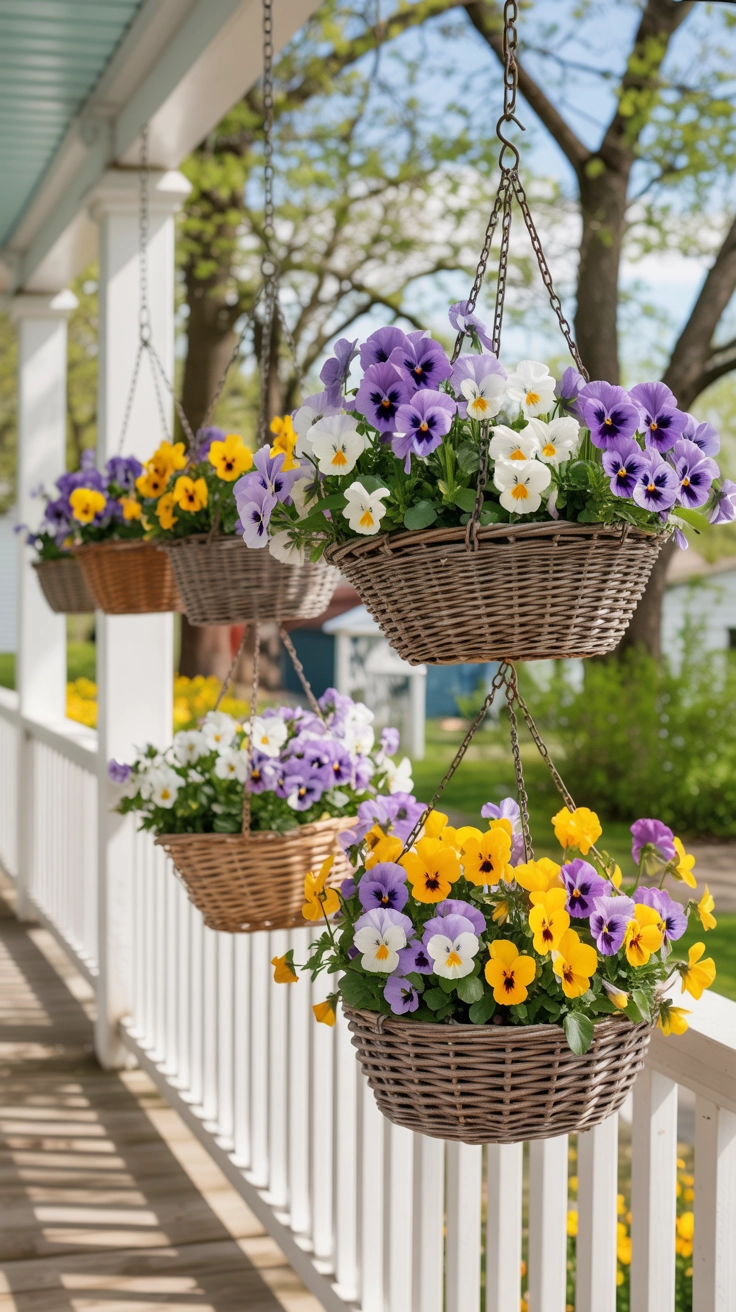
Why You’ll Love This Recipe: These hardy flowers can withstand the lingering chill of early spring, providing instant pops of color. They are the “early birds” of the gardening world, thriving while others are still dormant.
Ingredients
- 1 wire hanging basket (35 cm / 14 inches) with coco liner
- 1 bag (20 liters / 21 quarts) lightweight potting mix
- 8-10 Pansies or Violas (mixed colors)
- 1/4 cup (60 ml) slow-release flower food
Tools and Preparation
- Scissors (to trim the liner)
- Sturdy hook for hanging
- Pre-soak the coco liner in water before filling.
Step-by-Step Instructions
- Place the damp coco liner into the wire basket.
- Cut small “X” slits into the sides of the liner if you want to plant flowers through the sides.
- Fill the basket halfway with potting mix and mix in the flower food.
- Push a few pansies through the side slits from the inside out.
- Add more soil to cover those roots.
- Plant the remaining pansies at the top of the basket, spacing them 5 cm (2 inches) apart.
- Water gently until the liner is dripping.
- Hang in a spot with partial to full sun.
Common Mistakes to Avoid
Don’t let the basket dry out; wire baskets with coco liners lose moisture much faster than plastic pots. Avoid planting them in deep shade, or they will become “leggy” and stop blooming.
Variations, Storage, and Final Thoughts
Mix in some trailing Ivy for a more formal, cascading look. These are annuals that will fade once summer heat arrives, so enjoy them to the fullest in spring! This basket is a simple and stunning way to celebrate the end of winter.
The Strawberry Hanging Pouch
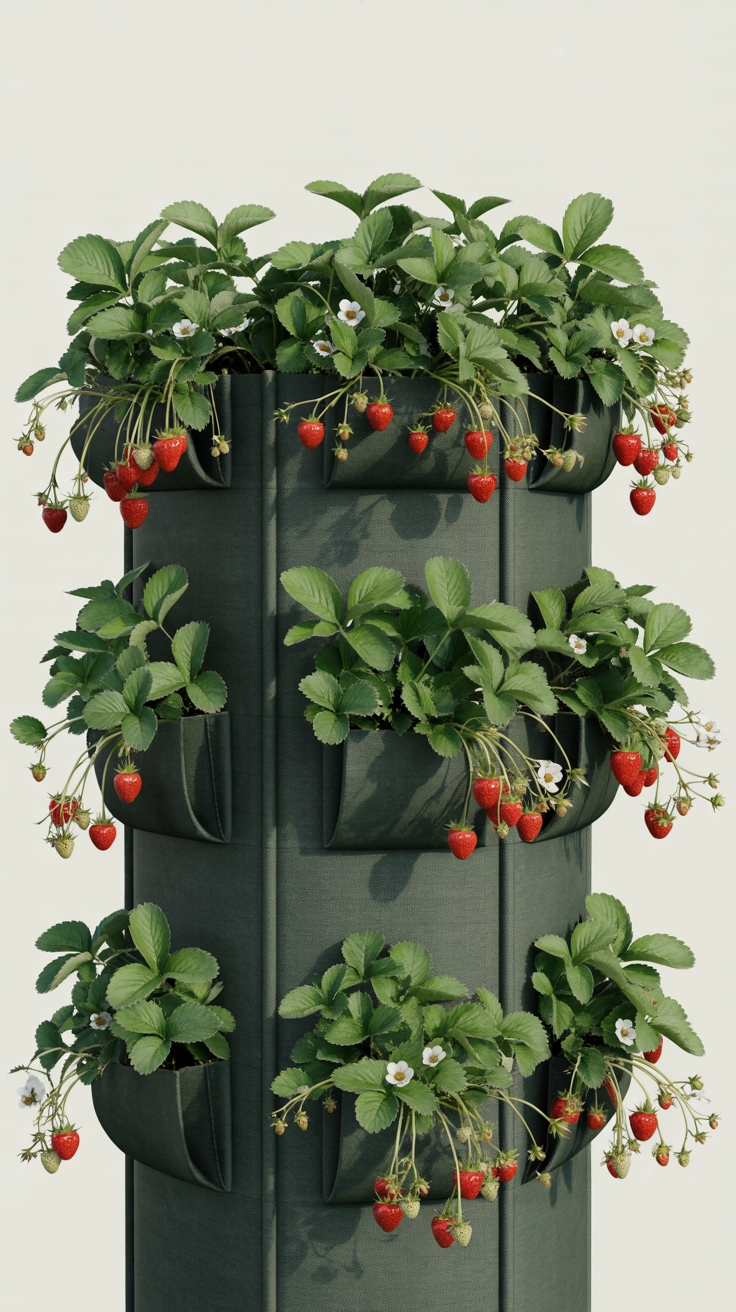
Why You’ll Love This Recipe: Keeps fruit off the ground and away from pests, making for a clean and easy harvest. It is a fantastic project for kids and small-space gardeners.
Ingredients
- 1 heavy-duty vertical planting pouch or bag
- 1 bag (30 liters / 32 quarts) strawberry-specific or high-potash soil
- 10-12 Everbearing Strawberry starts
- 2 cups (475 ml) composted manure
Tools and Preparation
- S-hook for hanging
- Trowel
- Ensure the hanging point can support the weight of wet soil.
Step-by-Step Instructions
- Mix the potting soil with the composted manure for extra nutrients.
- Fill the pouch to the first set of planting holes.
- Insert the strawberry stems into the holes, tilting the roots downward into the soil.
- Add more soil up to the next level of holes and repeat.
- Plant 2 or 3 starts at the very top of the bag.
- Firm the soil as you go to ensure the plants stay in place.
- Water from the top until the entire bag feels heavy and moist.
- Hang in a sunny location and rotate the bag every few days for even ripening.
Common Mistakes to Avoid
Avoid using “June-bearing” strawberries; “Everbearing” varieties provide fruit all season long. Do not forget to water the top holes, or the moisture won’t reach the bottom plants.
Variations, Storage, and Final Thoughts
Use the same pouch for trailing cherry tomatoes later in the season. Protect from birds using a light mesh net if necessary. This pouch is a simple and stunning way to grow your own snacks.
The Ornamental Kale Cauldron
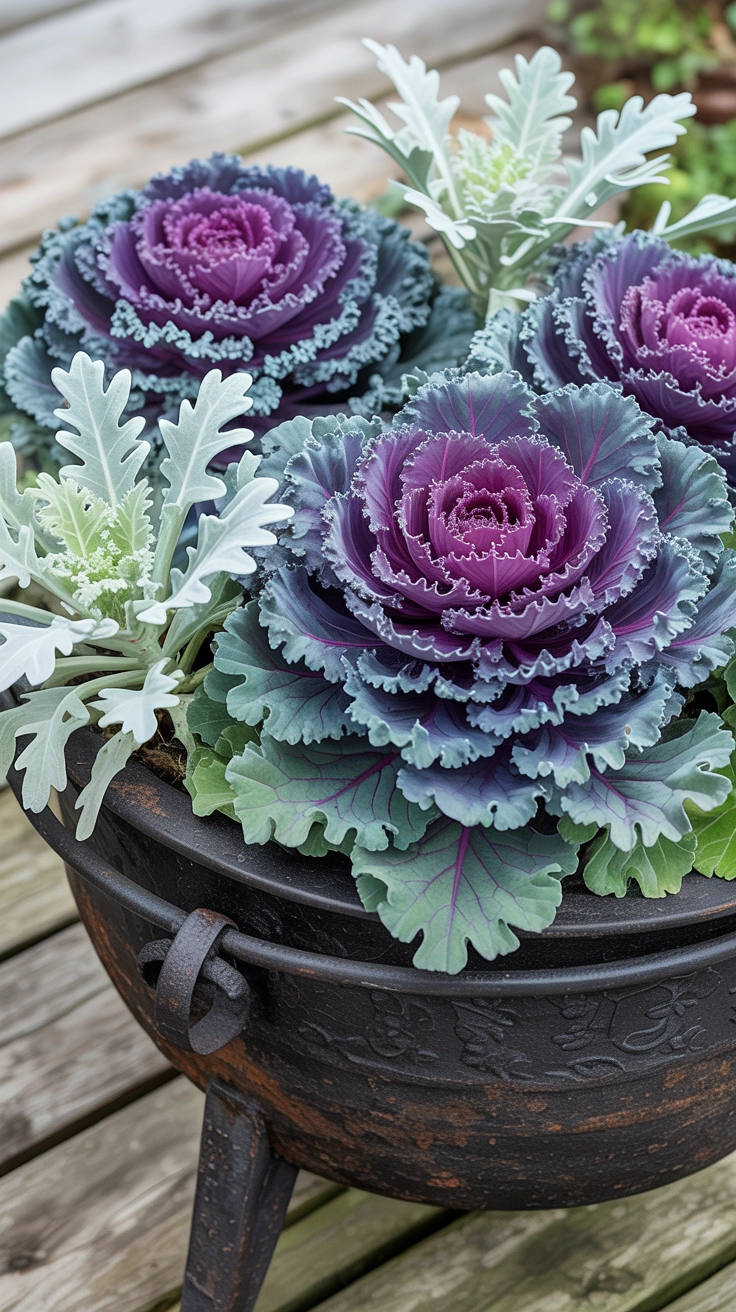
Why You’ll Love This Recipe: Provides incredible texture and purple hues that look sophisticated and withstand fluctuating spring temperatures. It adds a “designer” feel to your entryway.
Ingredients
- 1 large black “cauldron” style resin pot (40 cm / 16 inches)
- 1 bag (40 liters / 42 quarts) standard potting mix
- 3 Ornamental Kale plants (large sizes)
- 2 Dusty Miller plants (for silver contrast)
- 1/4 cup (60 ml) general-purpose fertilizer
Tools and Preparation
- Hand trowel
- Watering can
- Clean the pot surface for a sleek, matte look.
Step-by-Step Instructions
- Fill the pot three-quarters full with potting mix and fertilizer.
- Place the largest kale plant in the center as the focal point.
- Surround the center kale with the two other kale plants.
- Tuck the silvery Dusty Miller plants into the gaps at the edges.
- Fill any remaining space with soil and press down firmly.
- Water until the soil is evenly moist.
- Place in a prominent spot like a front porch or walkway.
- Remove any yellowing bottom leaves as the plants grow.
Common Mistakes to Avoid
Don’t let the plants sit in standing water, which can cause the dense centers of the kale to rot. Avoid planting in late spring heat, as these plants prefer the cool air.
Variations, Storage, and Final Thoughts
Swap the Dusty Miller for white Alyssum for a softer, flowery border. These plants are incredibly tough and will last well into the first heat of summer. This cauldron is a simple and stunning statement piece for your home.
The Tea Garden Teacup – Container Gardening
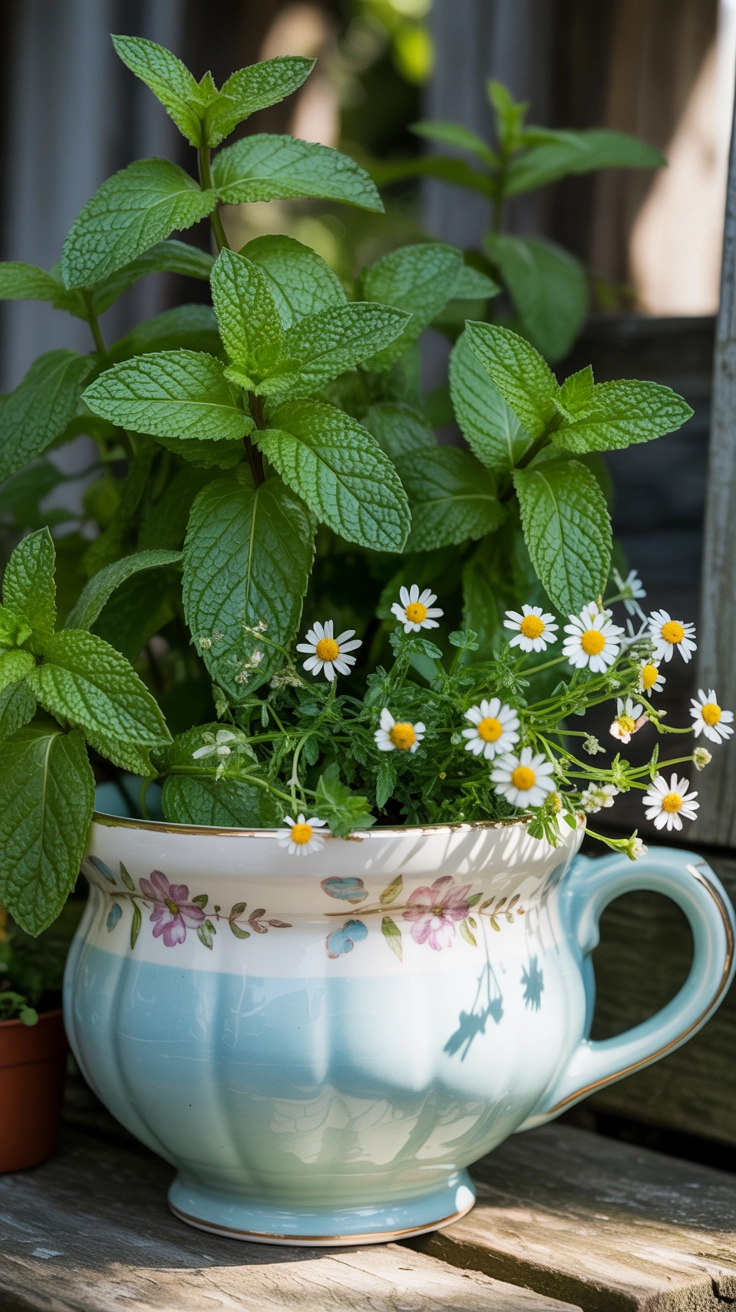
Why You’ll Love This Recipe: A whimsical, small-scale idea using mint and chamomile that fits on even the smallest windowsill. It is the perfect “micro-garden” for an apartment.
Ingredients
- 1 extra-large decorative “teacup” planter (20 cm / 8 inches)
- 2 cups (475 ml) potting soil
- 1 small Peppermint start
- 1 small Chamomile start
- 1 tablespoon (15 ml) of gravel for the bottom
Tools and Preparation
- Small spoon (for planting in tight spaces)
- Small watering bottle
- Ensure the teacup has a drainage hole or use a very thin layer of gravel.
Step-by-Step Instructions
- Place a thin layer of gravel at the bottom of the teacup.
- Fill with potting soil, leaving 2 cm (1 inch) of space from the top.
- Plant the mint on one side and the chamomile on the other.
- Use a spoon to tuck the soil around the small roots.
- Water lightly to settle the soil.
- Place on a sunny kitchen windowsill.
- Pinch off the tops of the mint to keep it from taking over.
- Harvest a few leaves whenever you want a fresh cup of tea.
Common Mistakes to Avoid
Avoid overwatering, as the small volume of soil can become waterlogged easily. Do not plant mint in a large garden bed—it must stay in a container like this, or it will spread like a weed!
Variations, Storage, and Final Thoughts
Try Lemon Balm instead of Mint for a citrusy tea. Replace the soil every spring to keep the herbs vigorous. This teacup is a simple and stunning way to enjoy the ritual of gardening on a tiny scale.
The Midnight Moonflower Pot
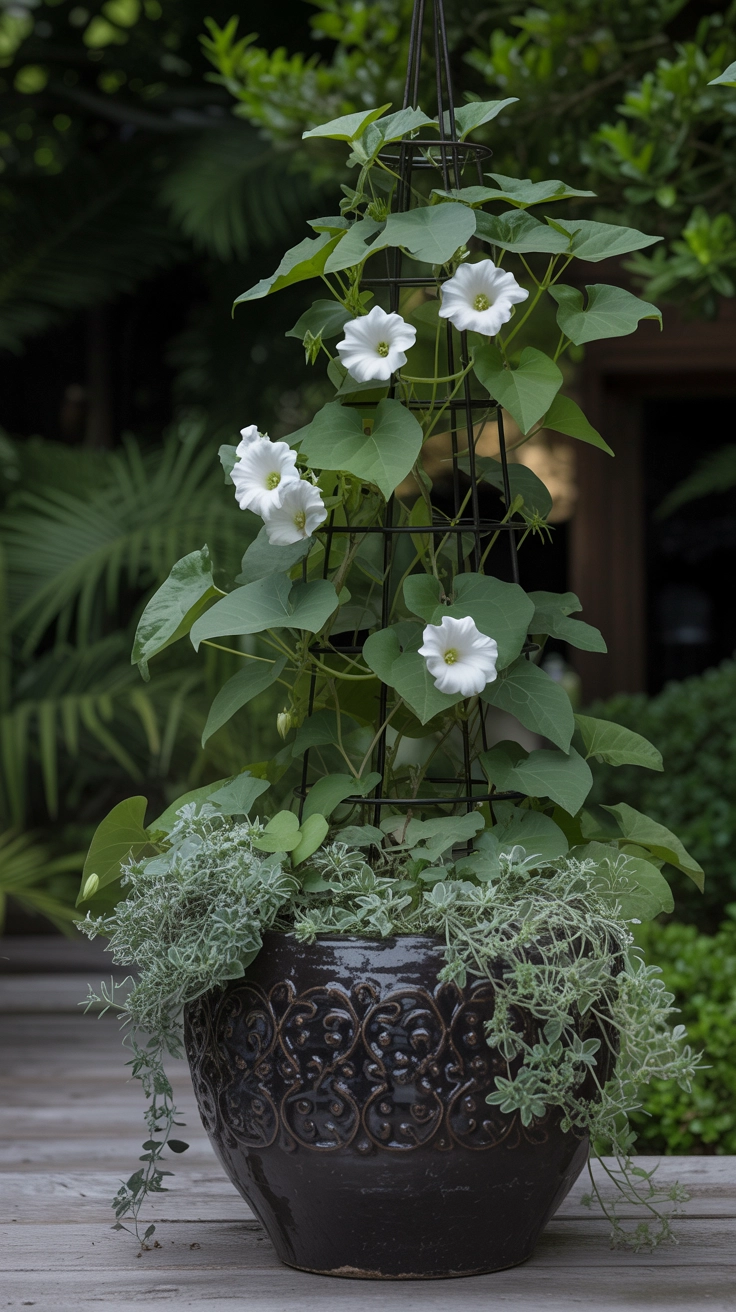
Why You’ll Love This Recipe: Features silvery foliage and white blooms that glow under the moonlight, perfect for nighttime relaxation. It turns your balcony into a magical evening retreat.
Ingredients
- 1 large dark-colored ceramic pot (40 cm / 16 inches)
- 1 bag (40 liters / 42 quarts) organic potting mix
- 1 Moonflower vine (starter or seeds)
- 2 “Silver Falls” Dichondra plants
- 1 small trellis or obelisk
Tools and Preparation
- Garden gloves
- Twine
- Place the pot near a seating area where you spend your evenings.
Step-by-Step Instructions
- Fill the pot with soil and install the trellis in the center.
- Plant the moonflower vine at the base of the trellis.
- Plant the “Silver Falls” Dichondra around the edges of the pot to trail downward.
- Water thoroughly and keep the soil consistently moist.
- Guide the moonflower vine onto the trellis as it grows.
- Watch for the white blooms to open at dusk.
- Enjoy the light fragrance that the flowers release at night.
- Deadhead spent flowers to encourage more nocturnal blooms.
Common Mistakes to Avoid
Don’t be alarmed when the flowers close during the day; that is their natural cycle. Avoid over-fertilizing with nitrogen, which will give you leaves but no flowers.
Variations, Storage, and Final Thoughts
Add white Petunias for even more “glow” during the daytime. Store the pot in a sheltered area if a late spring frost is predicted. This midnight garden is a simple and stunning way to enjoy your outdoor space after the sun goes down.
